
Togo First
How does the diaspora finance Togo’s economy ?
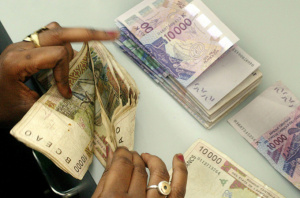
In July, Togo’s ministry in charge of development planning, and the United Nations Development Programme (UNDP) released a report on official development assistance (ODA) in 2017. The document provides precise statistics on official development assistance and remittances in 2017. Here, we provide a brief analysis of remittances sent by the Togolese diaspora in 2017.
In 2017, the diaspora sent $483 million home
In 2017, combining both ODA and remittances, Togo captured more than $856 million. Remittances’ portion in the amount was 56.45% or $483 million.
Remittances exceed both ODA and FDIs
Remittances exceed ODA by $110 million. This amount is almost twice the contribution of Togo’s bilateral partners in the official development the country received over the period reviewed. The transfers also exceed FDIs. Indeed, according to recent data from UNCTAD, the latter stood at $145 million last year.
African diaspora gets lion’s share
It appears that in terms of remittances, the diaspora living in Africa wired the largest portion of the transfers to their home-country in 2017: $176 million or 36% of overall remittances volume. Togolese living in Europe come next with $159.17 million (33%) sent, according to official figures. Then follows diaspora in America (26% or $127.95 million), Asia (4% or $21.19mln) and finally those living in Oceania (1%).
Social sector captures most remittances
Most of the monies sent by Togolese living outside the country were invested in social sectors (food, health and education). 53.67% (CFA1.19 billion) of overall remittances was sent to support family members at home. The second use of the remittances is educational assistance with about CFA240 million spent on school support. Hundred and thirty million was invested in construction projects.
The many investments made in the food, health and education sectors show how significant remittances are for the country’s human development.
Remittances are “in truth” underestimated
According to the World Bank, Togolese remittances in 2017 represented about 8.4% of the country’s GDP. This, the institution says, is one of the highest level in Africa, and should actually be higher if informal traffic was accounted for. In this regard, the UNDP’s report states: “Informal money transfers remain a challenge which should be tackled”.
Building a mechanism to direct the funds to promising sectors
Due to the importance of remittances compared to ODA and FDIs, the ministry of foreign affairs, cooperation and African integration established a department in charge of the Togolese diaspora. This department is currently working to develop an appropriate mechanism to coordinate the remittances and direct them towards promising sectors.
Fiacre E. Kakpo
CNSS informs various business owners about the need to have a safety and health committee
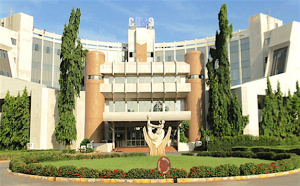
In Togo, the national social security fund (CNSS) gathered on August 27, 200 local business chiefs in Lomé, for a workshop to raise their awareness regarding the creation of safety and health committee, at their firms. Themed Methods, prevention and productivity for a sustainable development, the workshop aims to inform the business owners about the need to create “this committee where issues related to the employee’s safety are discussed”.
This was revealed by Richard Kodjo Ahadji, Service Head at CNSS. For her part, Tchilabalo Pilante who represented the institution’s managing director, said the meeting’s end goal is “to bring social partners to be aware of their responsibilities towards workers in regards to safety and health”.
Truth is, each firm has to establish a safety and health committee as stated under the Labour Code, article n°174. The latter states that all companies with at least 25 employees must have an operational safety and health committee, to properly assess risks to which their workers are exposed.
The committees should strive to improve employees’ working conditions, thus contributing to a greater, yet healthier productivity and a more sustainable development of businesses in Togo.
Established since 1973, Togo’s national social security fund exists to protect workers in the country. It is presently headed by Ingrid Awadé.
Despite the increase, fuel pump prices are still low compared to nations like Benin or Ghana – Minister of Trade
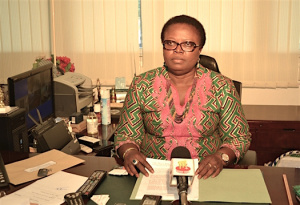
To calm complaints regarding the recent increase of fuel pump prices, Togo’s minister of trade, Bernadette Legzim-Balouki, explained the decision on Tuesday, on Télévision Togolaise, the country’s public TV channel.
“In Benin, super unleaded costs CFA575, gasoil CFA580, and kerosene CFA590. Prices in Ghana, which produces a little oil, are even more expensive. There, super unleaded costs CFA587, gasoil CFA592 and kerosene CFA533, and we recently learned that prices over there increased even further,” the official declared.
Comparing Togo’s actual prices to those in above-mentioned countries, she added: “Togo which does not produce any oil and imports oil products rather is cheaper than other nations in the region”.
Reassuring populations, she then outlined that though prices were increased, this should not cause cost of transportation in the country to augment as well. Instructions were given to ensure that “no matter how limited State budget gets, public transportation cost is not increased. Cereals control divisions of the ministries of trade and agriculture will make sure there is no impact,” Legzim-Balouki said. The only thing left to do is making sure that the various measures are effective in order for populations not to suffer the hike.
Séna Akoda
BOAD denies massive hiring operation, exposes scam
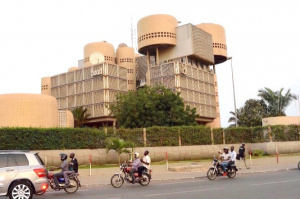
For some days now, some information shared on social networks mainly claims that the West African Development Bank (BOAD) is hiring massively via a firm in Benin. Positions available include financial controller, teller, and analysts, among others.
In a statement released on its website, BOAD officially denied the information. The bank “has appointed no hiring firm to act in its name”, the statement reads. It added that all job offers are released on its website (boad.org), international newspapers, and local newspapers in WAEMU nations.
The Bank warned victims of such scams and to immediately report to Benin’s police forces, the “scam attempt”.
It also threatens to reach out to Benin’s competent authorities in order to fish out those behind the operation and end it to prevent them from further damaging the Bank’s reputation.
Séna Akoda
Keras Resources begins bulk sampling programme at Nayega manganese project
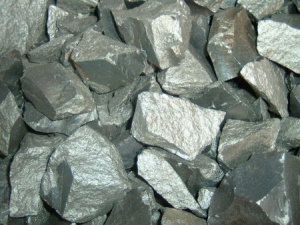
Keras Resources launched this week the 10,000 tons bulk sampling testwork at the Nayega manganese project, in Northern Togo. The programme aims to assess ore ability in smelters, and obtain real-time data on operating costs and logistics involved in exporting the product to end-users.
According to a statement released by the company on Tuesday, Carriere Mines Travaux Public (CMTP), the firm hired to conduct the testworks, has established the site and began extracting the bulk sample, within the set deadline. The mobile screening unit has arrived at the Port of Lomé and will reach Nayega in the first week of September for the second phase of the programme. Final stage which should commence mid-November will focus on washing and scrubbing.
“I am pleased to report that the bulk sampling has commenced as planned and the start of phase 1 yesterday represents another milestone in the Nayega manganese project’s progression towards regulatory approval for commercial production,” declared Keras CEO Russel Lamming.
AIM-listed Keras Resource operates the Nayega project via its subsidiary Société Générale des Mines SARL (SGM) in which it holds an 85% stake.
Louis-Nino Kansoun
“2018-2022 PND will help achieve more balance between economic, social and environmental sectors” – Faure Gnassingbé
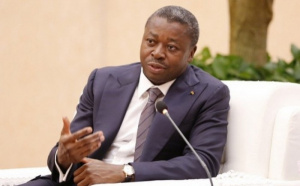
In the columns of the n°3007 issue of French Magazine Jeune Afrique, Togo’s President, Faure Gnassingbé, discussed his government’s national development plan for the 2018-2022 period.
According to the leader, the document which aligns with UN’s 2030 agenda and the African Union’s 2063 agenda, “will help achieve more balance between economic, social and environmental sectors, a condition that is necessary to change Togo’s growth paradigm”.
Togo should have “no reason to fear for its future”, in a world that is fully transforming and in an African continent that is going full throttle in terms of development, Gnassingbé indicated.
What the country needs, he emphasized, is to boost investors’ trust and motivate Togolese… “We are ready to do that, starting now”, the Togolese Head of State declared.
It should be noted that the leader is to start a tour in China on September 2, 2018, on the sidelines of the Forum on China-Africa Cooperation (FOCAC); an event where he very well intends to showcase the PND.
Fiacre E. Kakpo
Togo: AfDB pours CFA16 billion into Kara’s agropole project

To back Togo’s 2018-2022 national development plan, the African Development Bank (AfDB) just granted the country three financings for its agro-food processing project (PTA-Togo).
Total amount of the facilities is CFA16.63 billion. They include two loans and a grant which will all be invested in Kara agricultural hub project.
According to the minister of economy and finances, Sani Yaya, “this major project should help create at least 25,000 agricultural, industrial and service jobs and also contribute to no less than 2% to GDP growth, thus reducing agricultural trade balance deficit from -44% to -38%”.
Double volumes of locally processed products
The PTA is the pilot project for Togo’s 2017-2030 strategic plan to develop agropoles. It aims to promote an inclusive agricultural growth by leveraging on incentives that will boost private investment in processing, and supply of agricultural input and services. The project targets various production sectors including rice, maize, broiler, soybeans, sesame, cashew, fish and vegetables.
It aligns with AfDB’s Feeding Africa project and aims to double the amount of locally processed agricultural products, from 19% to 40%. How? By boosting private investments in agricultural value chains. The PTA whose implementation will start in the Kara basin, should directly benefit 303,000 people, of which 51% are women. Indirectly, it will revolutionize the local economy.
About 70% of required funding has already been secured
Global investment required for the PTA is CFA35.19 billion. 22% of this sum will be supplied through donations. The State itself is expected to provide 17% (CFA6 billion) of the required investment.
Last June, BOAD’s board approved a CFA10 billion financing for the project.
Another investor is the Korean foundation Seamaul which is expected to inject CFA2.6 billion in the project. The institution said it will help Togo develop its agropoles.
CFA190 billion and 17 projects in Togo
AfDB has invested so far, CFA190 billion in Togo, through 17 operations, most of which are focused on the agricultural sector.
Fiacre E. Kakpo
Togo: Between 2010 and 2017, public investment’s contribution to GDP grew by 5.5%
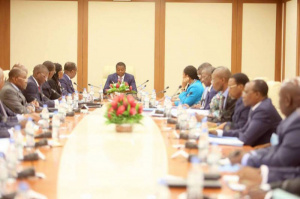
Between 2010 and 2017, public investment’s contribution to Togo’s GDP tripled, rising from 2.5% to 8%. Quite an improvement considering that the figure stagnated at 2.5% between 1990 and 2009.
According to Odilia Gnassingbé, chief executive of the Autonomous Centre for Studies and Skills Building (CADERT), the new figure is above the average in Africa. This, she declared during a two-day meeting started August 27, in Lomé.
In the next four years, Togo’s average annual economic growth should exceed 7%, driven by greater investments in infrastructures and agriculture. This forecast falls under the country’s 2018-2022 national development plan (PND 2018-2022).
CADERT’s meeting aims to help better plan public investment in order to achieve the projected growth. It regroups all heads of regional directorates of planning, development and land use.
Séna Akoda
Togo: Government increases fuel pump prices

In Togo, fuel pump prices were raised on August 27. The news was disclosed in a statement co-signed by Sani Yaya, Essossimna B. Legzim-Balouki and Dèdèriwè Ably-Bidamon, respectively ministers of Economy, Trade and Energy.
Under the statement, the government has set new prices as follows: Super unleaded - CFA548 per litre (against CFA498 up till Sunday); kerosene – CFA490 per litre (against CFA445 earlier); two-stroke oil (CFA646 against CFA599); Gasoil (CFA550 from CFA500).
Only butane’s price remained the same with the 6kg and 12kg gas cylinders sold at CFA3120 and 6500 respectively.
The government has provided no explanation for the price increase, yet.
Séna Akoda
Representatives of ISA pilot nations recently met in Lomé to discuss the project’s implementation
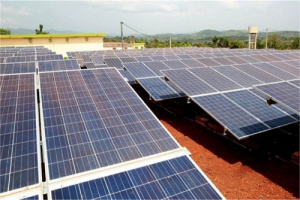
On August 23 and 24, the various representatives of leaders of pilot-nations of the International Solar Alliance (ISA) met in Lomé.
The meeting’s purpose was the following: first, speed up development of solar projects and programs, and also to identify challenges impairing financing of electrification projects in ISA member-States. Actors present at the gathering mentioned the need to mobilize resources to provide people quality and cheap energy, in line with the Alliance’s operations.
Launched in November 2015, ISA is a France-India initiative which aims to significantly boost solar power production in the 121 countries adhering to the Alliance. To this end, it also strives to raise necessary funds and cut production costs slightly, while fighting global warming.
Togo, being part of the Alliance, has committed to constantly improve its population’s access to power. It has thus, in line with its commitment, organized a roundtable gathering various lenders and focusing on its 2030 electrification strategy. Under the latter, the country should achieve full power access by 2030.