

Togo First
Togo: State to audit accounts of public institutions, funds and public organizations, subsidized for 2018-2020 period

In Togo, accounts of public institutions, funds and public organizations subsidized for the 2018-2020 period will be audited. To this end, the State has launched a call for expression of interest to hire a consulting firm to lead the process.
Audits planned will help assess how the targeted entities use their funds and determine if this utilization meets public accountability standards. Additionally, they will allow to determine if goods purchased by the entities were effectively acquired in line with procedures falling under Togo’s procurements code.
The same goes for services provided to the entities. The projected audits will assess the authenticity of supporting documentation submitted for transactions and shed light on account movements for the period reviewed.
Through these audit missions, the State also aims to make sure concerned entities respect procedures for preparing financial statements, in line with standards in place.
Regarding applications submitted by consultants that are interested in conducting the audits, the related evaluation process to pick one will close on September 5, 2018.
Séna Akoda
After a successful simultaneous issuance, Togo seeks to raise CFA20M more on the regional finance market

Togo will next Friday once more make a move on the regional market, to raise CFA20 billion. This follows a good performance it recorded at the end of July when it raised CFA57.49 billion, via a simultaneous issuance, while seeking CFA50 billion.
Agence UMOA-Titres and Togo’s public treasures announced through a tender launched on August 10, 2018, that CFA20 billion worth of fungible treasury bonds will be issued August 17. Corresponding value date is August 20, 2018.
Proceeds from the issuance will be used to meet the State’s financing needs for its 2018 budget.
Regarding the upcoming issuance, nominal value of each security is CFA10,000, and the operation’s interest rate is 6%. Maturity period is 610 days, set to be reached on April 21, 2020.
Séna Akoda
Redd+ commits to helping Togo boost its forest cover

REDD+ stands for Reduction of Emissions from Deforestation and Forest Degradation. This program rewards developing countries that adopt measures to increase their forest cover in order to help these nations increase their carbon-storing capacity and better fight global warming.
On August 13, 2018 in Lomé, under the supervision of the ministry of environment and forest resources, REDD+ coordination officially initiated two analyses that ultimately aim to boost forest cover in Togo.
The first of these two studies will assess Togo’s vegetal biomass so as to estimate the country’s carbon-storing capacity.
The second study should collect key data related to Togo’s forest cover over the 1975-1982 period. This will help establish reference line to boost forest cover.
Over the years, forest areas has ceased not to dwindle. From 449,000 ha in 1970, it slumped to 287,000 ha in 1980 then 140,000 ha in 1990. According to results of the first forest inventory carried out between 2015 and 2016, Togo’s forest area stands at 24.24%.
Togo: Authorities extend by a few weeks its program to collect business data in Lomé

The current three-month data collection program targeting businesses in Lomé has been extended by a “few weeks more”, according to a joint statement issued by three ministries including the ministry of economy and finance.
The program which aims to identify registered and unregistered businesses was initiated by the ministry of finance via Togo’s Revenue Office (OTR) in order to update its personal database. Additionally, the census will help update the country’s taxpayers’ registry (by determining addresses, main and secondary businesses…).
In this regard, authorities ask populations to collaborate with the 150 census workers who can be recognized by their badge. They are to provide a warm welcome, reliable and true answers, the joint statement indicates.
In the long term, the program would help Togo get a reliable tax and land registry, as well as improve its business climate.
Togo adopts bills to better fight illicit trafficking of cultural property

Togo’s parliament adopted at the end of last week two bills to fight illicit trafficking of cultural property.
The first bill allows the ratification of the convention that concerns measures to take to ban and prevent illicit import, export and transfer of cultural property; a convention adopted on November 17, 1970, in Paris.
The second bill greenlights Togo’s adhesion to Unidroit’s convention on stolen or illegally exported cultural goods, adopted on June 24, 1995, in Rome.
The first convention which came into effect in 1972, aims to fight illicit trade of cultural property through international cooperation. This should protect national heritage and ensure good ethics in trading cultural property generally, and artwork especially.
Now that this convention has been ratified, Togo should properly combat theft in museums and religious facilities, looting of archeologic sites or scattering of valuable collections. As for Unidroit’s convention, it will ease repatriation of cultural property to their country of origin.
Victoire Tomégah-Dogbé : “Young people need to be reassured and for that they need dedicated spaces”
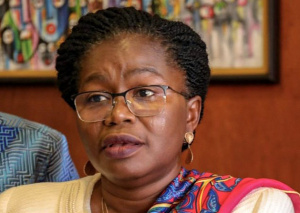
Last Friday, Togo’s minister of grassroot development, craftsmanship, youth and youth employment, Victoire Tomégah-Dogbé met with various media including Togo First. This was ahead of the International Youth Day, held every August 12th, and which this year was themed “Safe Spaces for Youth”.
Togo First: Why did the United Nations decide to celebrate the International Youth Day?
Victoire Tomégah-Dogbé: The United Nations designated August 12, since 1999, as a day where youth’s full potential would be recognized as well as a day to celebrate youth’s major contribution to the development of our societies, of pacific societies most importantly.
The commemoration’s purpose is to promote youth’s effective participation in decision-taking process in our societies.
T.F: How does the government approach the theme picked for this year’s international youth day ?
V.T-D : This year’s theme is “Safe areas for youth”. First, what we must ask is “why the need for safe space for young people?”
Young people have their own needs, specific needs. They need to meet somewhere to discuss. They have potential and skills, and as a result need dedicated spaces to demonstrate this potential. Therefore, it is quite obvious for us to relate to this theme and encourage our leaders to pay more attention to the creation of spaces especially dedicated to young people.
This theme, for our country, is a true whistleblower urging us to boost strategies related to the creation of such spaces.
Since 2012, Togo’s government has become aware of the need to open spaces for youths. A program was actually launched to this end and it enabled the creation of around 15 youth-dedicated spaces. The latter allows young people to perform socio-educative and civic activities. This in turn helps them grow and easily integrate into socio-professional life.
I would like to congratulate and sincerely thank the country’s top authorities for having quickly apprehended the need to create these spaces and for continuously helping investment to be directed to young people.
Youth centers add to measures established by the government to secure young people’s future and help them become able citizens, active and involved in the country’s development.
T.F : In detail, what is the contribution of these centers to the government’s youth promotion strategy ?
V.T-D : Youth centers are multipurpose facilities aiming to facilitate youth’s flourishing and their socio-economic insertion.
At a youth center, it is possible to do socio-educative, sport and cultural activities.
It exist to make young people full citizens and help them unlock their full potential.
The youth centers of Amadohomé and Kara are good examples of such facilities which were both fully funded by the State.
There are also those of Mango, Dapaong, Sokodé that are being built, or even Tandjouaré, Gando…, and many more. This is a program that is being carried out progressively. We launch various activities at these centers; such as the Vacances Utiles (Useful holidays) program which will begin soon. The government wants actually for such initiatives to be launched throughout the year.
Interview by Octave Aholnko Bruce (Intern)
Official Development Assistance: From 2006 to 2015, Togo raised $3,283 mln
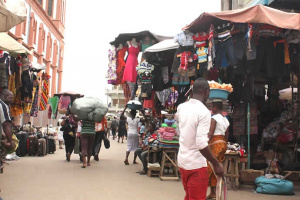
Between 2006 and 2015, Togo received $3,283.54 million of official development assistance (ODA), with an inter-annual variation of $147.53 million. This was disclosed in the ODA report presented on August 9, 2018.
Over the same period, the report states that ODA rose from 3.9% in 2006 to 5.5% in 2015. Meanwhile, debt level decreased significantly from 67.49% to 25.6%.
Looking at the figures, Christophe Akpoto, Head of Bilateral Cooperation at the Ministry of Planing, said ODAs have a positive impact on the country’s growth. Lauding the report, he then added: “What we praise here is the fact that we have a study that lets us know where to focus our efforts to raise more funds to finance the national development plan (PND)”
The assessment which was validated after its presentation, highlights strengths and weaknesses of ODAs in regards to the implementation of development strategies (DSRP-C and SCAPE). It also contains some recommendations.
In Togo, ODAs help invest in key areas such as infrastructures, health, agricultural development, food security, as well as to fight social inequalities. In 2017, ODAs were valued at about $373 million or CFA217 billion.
Togo: Government will spend CFA150 million every year to provide health insurance to national volunteers
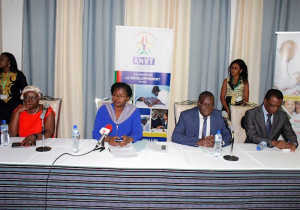
Togo’s National Agency for Volunteering (ANVT) will allocate to national volunteers all over the country a total of CFA150 million every year to finance health insurance for them and their family members (partner and minor children).
The scheme was launched August 9, 2018 in Lomé by ANVT. In addition was signed a convention for social coverage, by ANVT’s director, Omar Agbangba, and Miriam Dossou who heads the National Health Insurance Institute (INAM). This was done in the presence of Victoire Tomégah-Dogbé, minister of grassroot development, craftsmanship, youth and youth employment.
The project will cover 3,800 people including 2,208 registered in INAM’s insured database.
According to Omar Agbangban, it should drive young volunteers to better commit to their missions. For her part, Victoire Tomégah-Dogbé said the State’s decision to support these volunteers aims to help young Togolese flourish, boost financial inclusion and most importantly provide social coverage to all layers of the population.
The minister however added that beneficiaries should use the insurance responsibly. “Protecting this health insurance is your responsibility in order to prevent any possible abuse. This way, you will make sure the initiative lasts and is efficient,” Tomégah-Dogbé told the volunteers.
Togo: Youth Competency Development Center launches top-class certificate to boost entrepreneurship
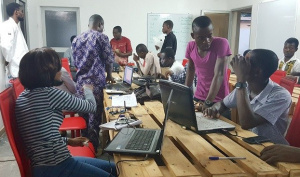
Youth Competency Development Center (Youth CDC), launched its Certificate in Development of Innovation Companies (CDIC) in Togo.
According to the press statement that disclosed the information, the top-class certification is a reference tool that will enable the recognition of people with the potential to create, lead or work in a start-up. It will help tackle various entrepreneurship-related challenges, the statement further indicates.
To tackle youth unemployment, entrepreneurship is, for States, one of the most reliable alternative. However, this alternative deals with many obstacles ; first being early financing and another being a poor understanding of markets or distribution channels.
The CDIC, once recognized in Togo, would help overcome this situation. To get it, one would have to enroll for a Youth CDC acceleration program, which is sponsored by promoters and partners such as the National Agency for Employment (ANPE), Kusuntu Partners or Afric’innov.
“Under the program, students, entrepreneurs or chiefs of SMEs, will get top-class trainings over three months,” the statement reveals, highlighting that the trainings “will focus on issues such as fundraising, digital marketing, business strategy and business law”.
Youth CDC fights youth unemployment in Africa by promoting entrepreneurship. Any person interested in its acceleration program can register online at the following address: https://buff.ly/2MThOcP
Mifa’s coordinator visits farmers in Kovié, Agou and Notsè
Noel Bataka, Coordinator of value chains of Mifa (incentive mechanism for agricultural financing) visited last Tuesday three of the eight sites selected in the framework of the project’s pilot phase.
The visit’s purpose was to assess progress made under the mechanism’s implementation as well as meet with farmers and agricultural advisors.
The three sites visited were those of Kovié, Agou and Notsè.
“For us, Mifa is a great innovation”
The first pilot site visited by the coordinator is that of Kovié/Mission Tové (40km from Lomé). Based in the Zio valley, the site which specializes in rice farming already benefited from Mifa’s technical support and will soon get its first check. Mifa should help increase and better regulate rice production in the area, according to Kossi Djifa Adokanou who heads the Zio Valley Rice Farming Area Management Committee. “Up till now, we faced many challenges, the most important being difficulties in selling our yield. The Mifa provides a major solution to this issue as it will provide us many outlets,” he said. “We will start contract-based production which means that even before the farmer produces, he knows the buyer and selling price,” he added. The official continued revealing that in the next two weeks, the valley should benefit from a subsidy of about CFA500 million. This financing will be used to boost output and optimize yield.
356 hectares dedicated to rice and maize farming in Agou
Next, Mifa’s coordinator went to Agou where the following four planned farming zones (ZAAP) are located: Gadjagan (106ha of arable lands), Nitoé and Akplolo (spanning 100ha each and dedicated to rice and maize growing respectively), and Avétonou, (50 ha).
At Gadjagan, there are 212 farmers who received 0.5 ha each. These farmers welcomed the Mifa and said they were impatient to benefit from the initiative. Expressing himself regarding the mechanism, their president, Sédo Koffi Séményo, declared: “The mechanism will change a lot of things and this will help us increase our output and better take care of our families, given that it takes insurance into account ”
For his part, Folly Notchron, a farmer from the Agou farming area, active since 1914, says: “The issues we used to face before as we sought loans or provided guarantee cautions are now history with the Mifa. We, the farmers, are extremely pleased. We are insured on all fronts, even in the event of bad weather that hamper our work”.
Those in charge of the Avétonou production sites congratulated Mifa’s coordinator and said they were pleased to see their challenges, regarding sales and financing, solved. The coordinator, during his field-visit also discussed with advisors who have been helping registered and trained farmers on a daily basis.
Last destination: Notsè and its cassava producers
To end his visit, the coordinator and his delegation were at Agotové, a village situated 10km from Notsè. There he met a group of women specialized in cassava farming and gari production. The women who were told a few weeks earlier about Mifa and its advantages thanked the President for the initiative, but also its coordinator for visiting them personally.
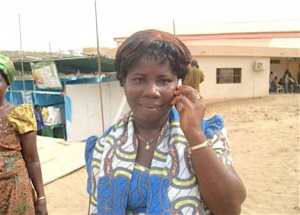
However, Dagnowou Ami (photo), secretary of the Miwoè né gnon cooperative took the opportunity to raise an important issue: conflicts with breeders in the region. “The animals destroy the women’s farms” and their yields, the secretary said, asking for authorities’ help to solve the matter.
“The mechanism sparks in producers’ minds dreams that the implementation must make true, for the good of Togo’s agriculture”
Addressing the press at the end of his visit, Mifa’s coordinator expressed his satisfaction regarding efforts made in the framework of the project. “The president of Kovié’s CGP expressed his desire to improve rice farming in his region ; farmers in Agou were very enthusiastic, due to the opportunities resulting from the mechanism, and said they wished to expand the maize-growing areas. As for the women I met in Notsè, they were reassured by the many advantages of the Mifa and the fact that these would help them better sell their cassava. They also rejoiced over the fact that insurance, which is one of the mechanism’s key pillars, would be effective for them,” Noel Bataka said to sum up his visit.
“The government’s goal is to provide outlets to small producers, allowing them to improve their yield and subsequently their living standards,” the coordinator further indicated.
Officially launched on June 25, 2018, by President Faure Gnassingbé, the Mifa aims at facilitating risk-sharing and improving financing for farmers and other agricultural actors across the country, thus making the sector more professional.
Reportage by Octave A. Bruce