

Togo First
Togo: Access rate to electricity rose by 13% between 2008 and 2016
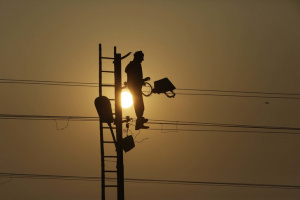
From 2008 to 2016, access rate to electricity increased from 22.5% to 35.6% in Togo. This was revealed by the Prime Minister while presenting Togo’s performances in regards to sustainable development goals (SDGs) during a United Nations Forum.
Access to electricity falls under SDG7 which consists in ensuring access to affordable, reliable, sustainable and modern energy for all. Over the 2008-2016 period access, access rate to electricity in rural areas grew from 3% to 6.3%.
This was achieved as a result of various actions undertaken by Togolese authorities. Amongst these, a major project to electrify around 271 rural communities. The latter was launched in 2017 and should end this year.
Other projects such as the CI-ZO should also help achieve SDG7, by 2030. Regarding CI-ZO, it will result in the installation of mini solar plants totaling a capacity of 600 KWc as well as that of 10,000 light poles across all Togo’s regions.
Séna Akoda
Togo: Construction works at the new fishing port are 65% complete
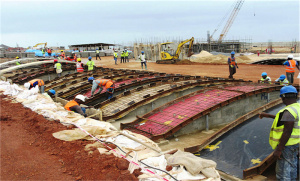
Building and civil engineering works at the new fishing port are respectively 80% and 20% completed. This represents an overall execution rate of 64.7%, according to Ryu Ishii, who heads the firm in charge of works.
Indeed, the executive revealed this to a ministerial delegation including the ministers of fishery and public works, Oura-Koura Agadazi and Ninsao Gnofam, during a visit to the project’s site on July 20, 2018.
Compared to time passed under set schedule, the works are going at a satisfying pace, the minister of infrastructure and transports said. “We trust that the project will be completed on time and would be one of the coast’s most modern fishing ports,” he declared.
This project, let’s recall, is co-financed by the Japan International Cooperation Agency (JICA) and the government, providing respectively CFA14.4 billion and CFA2.1 billon. Area dedicated to the port is seven hectares.
In Togo, more than 22,000 people live off fishing and the activity contributes more than 4.5% of Togo’s agricultural GDP, with an annual average production of 20,000 tons, which is 80% of national output (25,000 tons).
Séna Akoda
Soon, 300 Togolese communities will have access to power, under phase I of 2030 strategy for universal power access
In the weeks to come, Togo’s government will initiate the first stage of its 2030 strategy to achieve universal power access. This stage which covers the 2018-2020 period should enable the country to achieve a 50% power coverage rate.
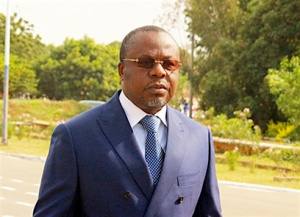
It targets 300 communities that have no access to electricity, the minister of energy, Marc Ably-Bidamon said in an interview with newspaper « Flambeau des démocrates » on July 19, 2018. The communities targeted are yet to be known however.
Still, the minister, based on commitments of investors and lenders, declared that “achieving universal power coverage by 2030 may seem too ambitious but it is doable”.
African Guarantee Fund West Africa to inject $75M in local SMEs over the next five years
Over the next five years, the African Guarantee Fund West Africa will disburse $75 million (CFA41 billion) to support Togolese SMEs.
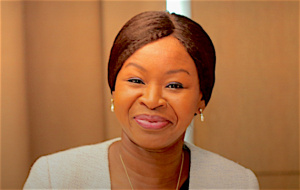
The funds will allow “financial institutions and banks to disburse about $150 million to support business operators, in addition to technical assistance provided to the private sector,” said Adidjatou Zanouvi, Managing Director African Guarantee Fund West Africa on July 20, 2018.
The guarantee fund during a meeting with Togo’s Prime Minister, Komi Sélom Klassou, told the official they considered SMEs to be a priority. Its executives explained their choice saying they believe these enterprises to be the weak link in the economic chain and also because SMEs lack adequate financing to support their growth.
Séna Akoda
Number of containers handled at PAL soared by 283% between 2013 and 2017
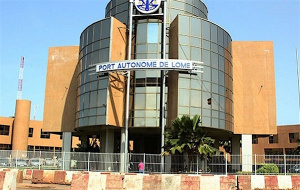
Between 2013 and 2017, the number of twenty-foot equivalent unit (TEU) containers handled at Lomé’s port (PAL) almost tripled, from 311,470 to 1,193,841 (+283%). This was revealed by the 2017 report on official development assistance (RAPD2017), released last week in Lomé.
The report partly attributes this performance to the modernization of port structures and the purchase of new handling equipment, as well to the various measures implemented over the past years to boost maritime security.
Other factors that contributed to the improvement include the simplification of processes and formalities, which made the port, the only deep-water port of the region, more attractive. It also helped make PAL the only port in West Africa to serve many capitals in a day.
In regards to airport traffic, the Gnassingbé Eyadéma International Airport (AIGE) recorded 810,494 passengers in 2017, as against 589,416 in 2013. The surge is attributed to the modernization of infrastructures, in line with the government’s objective to make Lomé a logistics hub.
Fiacre E. Kakpo
Electricity: Nigeria threatens to cut supply to Togo
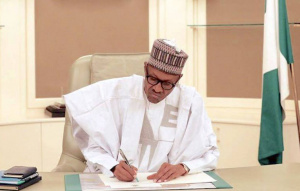
Togo’s minister of power, Marc Ably-Bidamon has recently called a meeting to assess and settle its debt to Nigeria, in the framework of their power supply contract.
This, just a few days after Nigeria threatened to cut power supply to its international buyers which are Togo, Benin and Niger.
The threat from Nigeria should motivate Togolese authorities to speed up and increase investments towards the implementation of the 2030 global electrification strategy which the government recently adopted. Under this strategy, let us recall, 50% of Togo should be electrified by 2020, 75% by 2025 and 100% by 2030, via the installation of thermal and solar plants.
Togo so far still gets 50% of the power it uses from countries like Nigeria and Ghana.
Fiacre E. Kakpo
French firm EDF and Energy Generation team up to train women on solar off-grid jobs
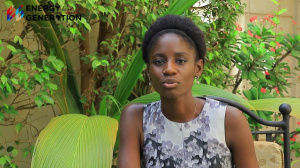
To boost its off-grid offer and develop local skills regarding the installation of off-grid solar kits, French firm EDF, Europe’s leading power producer and supplier, just partnered with Lomé-based institution Energy Generation which provides power to rural people in sub-Saharan Africa.
The related agreement, which focuses on the “Women and Solar entrepreneurship” Program, will help equip women with skills needed to set up and repair off-grid solar systems as well as teach them more about entrepreneurship in the clean power sector.
In detail, EDF will design the training modules while Energy Generation, leveraging on its knowledge of the West African market, will implement these modules at various training centres dedicated to power professions. Under the first phase of this initiative, about 100 women will be trained by end-2019. Beneficiaries will be from Togo, Côte d’Ivoire and Ghana.
“With this program, about 100 women in Togo, Ghana and Côte d’Ivoire will be trained to a promising job with great economic potential, but they will most importantly be taught to be major actors of their country’s energy transition,” said Astria Fataki, CEO Energy Generation.
Established in 2016 by Astria Fataki, Energy Generation already partners with EDF for the EDF Pulse Africa contest which aims to reveal and support African innovators who contribute to power development in Africa.
Fiacre E. Kakpo
BBOXX sold 2,400 solar kits to 12,000 Togolese, since last December
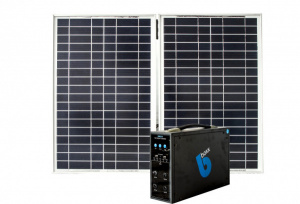
New-generation solar power provider BBOXX, has supplied in Togo more than 12,000 people with BBOXX home smart solar kits, since its establishment in the country, last December.
The firm entered the Togolese market by partnering with the government for the Cizo project which aims to provide access to power to more than two million Togolese citizens by 2022, focusing on rural areas mainly. It has so far sold 2,400 of its solar kits across the country, and the number of its customers soared by 45% during the month of May 2018, alone.
BBOX says it created around 100 jobs in local communities in the framework of its activities in Togo. Also, it now has 10 stores in the country; stores able to serve all of Togo’s five regions. This number is quite an improvement compared to the two stores it had in 2010.
“It is very interesting how BBOXX’s activities, in the past six months only, has impacted Togo. We have great ambitions for our expansion in the country and aim to sell 10,000 kits more before the year ends,” said Mansoor Hamayun, Managing Director BBOXX. “BBOXX keeps having a great impact in the region, fostering a greater financial inclusion by providing reliable power that be used for smartphones, lamps and other household appliances,” the executive added.
According to the firm’s chief, it also plans to engage in the mobile payment market. Additionally, it will start selling, this year, new devices such as solar fans.
Besides Togo, BBOXX operates in Rwanda, Kenya, Nigeria, Cameroon and the DRC where it plans to supply solar kits to 2.5 million people, by 2020. The company has already raised CFA2.5 billion from UTB to expand its activities in Togo.
Fiacre E. Kakpo
Afreximbank to support Togo’s development plan
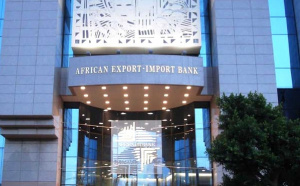
Resolutely engaged in the development of Inter-African trade which represents just a minor part of the trade by African countries, Afreximbank, the Pan African import-export bank based in Cairo, could provide its financial support to a pool of African countries, Togo included.
“Projects of about $1.5 billion have already been funded and some are being funded in Côte d’Ivoire, Nigeria, Gabon, Togo, Chad and Burkina Faso”, Benedict Oramah, managing director of Afreximbank, revealed in a statement at the end of the bank’s annual general assembly on July 16, 2018.
According to the manager, these projects are aimed at the development of the industrial park. As far as Togo is concerned, in its national development plan, it aims to build two industrial parks integrated and turned towards export industries which require intensive labor force like the textile industry by 2022.
In addition, projects aimed at the development of Export Processing Zones’ in Africa are targeted.
This financing announced since January 2018 by Coface should support the national development plan which seeks to transform Togo into a logistics hub of excellence and a first-class business center in the sub-region.
Meanwhile, Togo which is one of the shareholders of this bank is activating its file. This is evidenced by the review of the bill authorizing the complete adherence to the agreement created by Afreximbank at the ministers’ council on June 13, 2018.
Let’s note that in 2017, the institution’s revenues grew by 25% to reach $645 million. The shareholders will share dividends worth $57.53 million while the dividends were $37.96 million in 2016 (a 51% growth).
Let’s also remind that Afreximbank is a Pan African institution created in 1993 to facilitate, finance and develop commercial exchanges between African countries as well as trade with the rest of the world. In 2016, thirteen African countries, Togo included, became shareholders of this bank raising the number of country shareholders to fifty.
Fiacre E. Kakpo
The first ever Afrofuturism in Togo to be held on July 25, 2018

On July 25, 2018, at 8 AM, the US embassy in Togo and the Goethe Institute in Lomé, in collaboration with the cultural association Tre-kah, will launch a big event on the concept named Afrofuturism at Canal Olympia Lomé.
The director of Goethe Institute, the US ambassador, the Togolese minister of communication and renowned officials of the political, cultural, literature, scientific and philosophy world will take part in the event during which, debates, panels, conferences and film projections will be organized.
According to the organizers, this event which is a first in Togo will initiate decisions at the national level between political, university actors and artists as well as social entrepreneurs to pave the way for a new society in Togo and Africa in general.
Five panels will be held around specific themes namely, architecture and urbanism, political institutions, Afrofuturism in art, medicine, health and agriculture as well as religion, solidarity and African values.
Let’s remind that the Afrofuturism concept is based on the idea that the solution to human problems lies in Culture, tradition and African ingeniosity. The term was coined half a century ago by the author Mark Dery in his essay “Black to the Future”. It was brought back to life by the movie Black Panther, with its representation of the Wakanda.
By the way, the theme “Afrofuturisme, quel est ton rêve, quel est ton Wakanda”?(Afrofuturism: what is your dream, what is your Wakanda?) is inspired by the idea vehiculated by the film which will be shown at the end.
Registration is open and will be closed on July 23, 2018. It is free and can be done here by anybody wishing to participate.