
Togo First
Togo : FDIs soar by more than 400% standing at $145 million in 2017 (UNCTAD)
Foreign direct investments (FDI) in Togo surged back in 2017, after a negative performance (-46.5 million $) the year before.
According to data from the UNCTAD, FDIs in Togo in 2017 stood at $145 million, thus hiking more than 400%, over a year.
Despite the fall in prices of commodities, oil’s most significantly, having reduced FDIs flow to Africa in general, West Africa suffered more from the crisis and distinguished itself as the second region of the continent to receive the most FDIs after North Africa. Indeed, the region captured 21% of all FDIs captured by the continent, or $11.3 billion (-11% compared to 2016).
Though West Africa performed relatively well, compared to other parts of the continent, in terms of FDIs captured in 2017, the overall slump was spurred by lower performances recorded by Nigeria (-21% to $3.5 billion), Guinea (-64%), Mali (-25%) and Liberia (-45%). Ghana also attracted more FDIs over the period reviewed.
Besides these few countries, others in the sub-region such as Togo did quite well. Truly, the latter recorded a 400% surge. There is also Sierra Leone (+300%), Benin (+40%), Burkina Faso (+24%), Côte d’Ivoire (+17%), Senegal (+12.7%) with respectively $560 million, 184 million, 485.9 million, 674.7 million and 532.3 million of FDIs captured in 2017.
Fiacre E. Kakpo & Séna Akoda
Source: http://www.unctad.org/en/Pages/DIAE/World%20Investment%20Report/Annex-Tables.aspx
WAEMU: Togo implements 65% of the community reforms
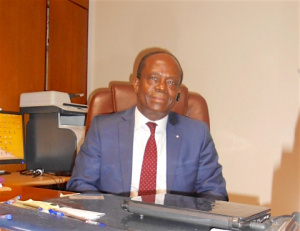
Out of the 122 WAEMU community reforms engaged on a community level, Togo implemented 79 and is a community model in that regard. This was revealed by Kossi Toffio (photo), the chief of staff of the economy ministry during this year’s edition of the annual review of the political reforms in the framework of WAEMU’s programmes and projects, launched on July 16, 2018, in the Togolese capital.
The aim of this meeting is to measure the efforts made by Togo in the implementation of such reforms.
As far as these reforms are concerned, the country’s implementation rate is 65%, a bit above the average in WAEMU (62%) in 2017.
Such performance is due to the adoption of the uniform act on money laundering and terrorism financing in WAEMU. In addition, there was the publication of three series of decrees on the protection of the roadway heritage and related equipment, the regulation of electronic services and transactions as well as the universal electronic communication and services.
Séna Akoda
Togo : CFA95 million provided to farmers in the framework of MIFA
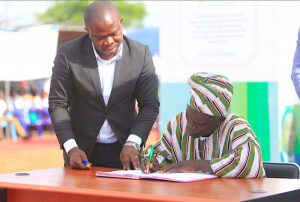
MIFA (Mécanisme Incitatif de financement agricole), the scheme launched with great enthusiasm to encourage investments in the agricultural sector receives a great boost.
On July 13, 2018, the cooperative of rice and Cassava producers of Tagnamboul, Dankpen, a region known for its high agricultural potential, received the first check in the framework of the initiative inspired by the Nigerian success-story NIRSAL.
In Kara, in the North, for the Evala celebration, Faure Gnassingbé, the Togolese president took this opportunity to meet actors of the agricultural sector and gave them a check of CFA95 million (a financing from SOGEMEF-Société Générale de Micro et Méso Finance). This will help the producers improve their production and competitiveness.
Let’s remind that the MIFA was officially launched on June 25, 2018, by Faure Gnassingbé, to develop the agricultural sector (which provides jobs to about 70% of the active population with a contribution to GDP estimated at 40% and a participation to economic growth estimated at 1.7% in 2017). It is a risk-sharing scheme aimed at increasing the funds destined farmers. Thanks to it, 6,000 farmers should receive loans at preferential interest rates, by the end of this year.
This scheme which will involve banks and microfinance institutions in the development of the agricultural sector is also aimed at promoting mechanization, innovation, and the use of agricultural inputs. Above all, it wants to transform the sector into a real pillar for job and wealth creation.
Bloomfield Investment assigns Oragroup "A" long-term ratings; stable outlook
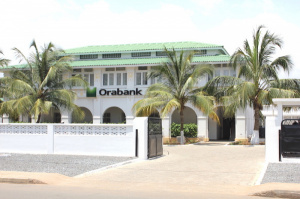
Ivorian ratings agency Bloomfield Investment gave Oragroup SA, holding of Lomé-based Orabank Group, its very first financial ratings.
Hence, Oragroup was rated A (for the investment ratings category) with stable outlook regarding its long-term credit quality. In the short-term the group was rated A2 (for the same category) still with stable outlook.
The performance of the group which operates in 12 West and Central African nations, is mainly attributed to financial robustness and the implementation of best governance practices by the major stakeholder, Pan-African private equity firm Emerging Capital Partners (ECP), which joined the group’s shareholding in 2009. However, institutional shareholders like Proparco, DEG, BIO, BIDC, and the Gabon Fund for Strategic Investments, also contributed to the performance, given their strong financial situation.
In detail, Oragroup’s total balance sheet is estimated at CFA1,794 billion ($3.28 billion). Total deposits recorded by the group stand at CFA1,179 billion while lending amounts is CFA1,085 billion.
The group’s net banking product is valued at CFA108 billion ($197.4 million). Meanwhile its net result soared by 45% to CFA21.97 billion ($40.1 million).
These are performances that Oragroup plans to strengthen even further in the future. Indeed, the group wants to become a pan-African reference and its expertise was actually recently requested by a Cameroonian microbank that recently turned into a universal bank.
Fiacre E. Kakpo
BOAD to launch a contest for startups engaged in the solar power sector, for its 45th anniversary
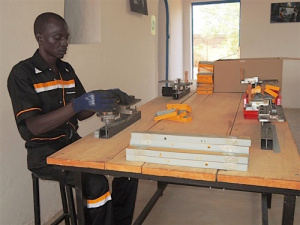
The West African Development Bank (BOAD) will launch a contest for startups operating in the solar power sector, on the sidelines of its 45th anniversary, next November.
The event will reward the best solar projects, in line with BOAD’s vision to support development projects. More information will be disclosed in this regard in the days to come.
Last May, BOAD, let it be recalled, had already announced it would raise, by 2021, CFA50 billion to support projects that tackle global warming, thus clean energy related ones.
For Togo, the Lomé-based institution has already raised, in 2017, CFA1.3 billion as grants, from the Global Environment Fund (GEF) for clean energy development.
Backed by EU, IMF will help Togo better manage its public finances
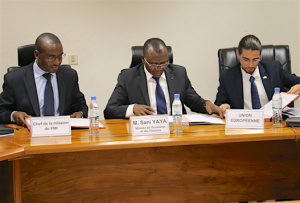
Last Tuesday in Lomé, a convention for a project to provide technical assistance regarding public finances management was signed by the Togolese government, the International Monetary Fund (IMF) and the European Union.
The agreement was initialed in the presence of the minister of finance, Sani Yaya, the acting Chargé d’affaires of the European Union Delegation in Togo, Vincent Vire, and the head of mission and head economist of the IMF’s public finance division, Lewis Murara.
Financed by the European Union and implemented by the IMF, the project backs the various “major reforms” initiated in the past years by the government of Togo. This project will help Togo better prepare its budgets, improve quality of budget-related information and treasury management, all to ultimately improve public debt management, so that it exceeds WAEMU standards.
Managing public funds well is vital to ensure that collected revenues, actions undertaken by the government and public institutions efficiently contributes to economic and social development, said Vincent Vire.
Sani Yaya for his part reiterated the government’s desire to implement more reforms to boost public funds collection while improving their management. He also emphasized on the importance of transparency in regards to budget-related data, a factor that is key to attract private investments and get citizens more engaged, fiscally.
Determined to streamline its public finances, Togo has initiated some years ago a process to modernize financial management. This project aligns with guidelines adopted by the WAEMU’s ministers’ council in 2009. These guidelines aims for the country’s public finance management methods to meet the best international standards.
Fiacre E. Kakpo
West African Development Bank to launch picture contest ahead of its 45th anniversary
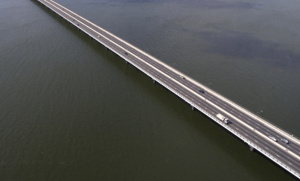
Ahead of its 45th anniversary next November, BOAD will launch a picture contest focused on the projects it finances with the West African Monetary Union (WAEMU).
Details related to the contest will be revealed in the next days. However, it aims to raise awareness about the bank’s various projects across the union.
In line with its mission, the Lomé-based bank which is led since 2011 by Christian Adovelande, financially supports various projects in WAEMU’s eight member States. These projects cover sectors such as rural development, agriculture, agroindustry, health, energy, environment, infrastructures and transports.
Togo: Official Development Assistance amounted to about $380 million in 2017

In 2017, Togo’s official development assistance (ODA) amounted to $372.84 million (CFA217 billion). This was disclosed by Christophe Komlagan Akpoto, Head of Bilateral Cooperation at the Ministry of Development Planning.
This, he did during a workshop to validate the 2017 ODA report. The latter took place July 10, 2018, in Lomé. The report was supported by UN Development Program (UNDP) which provides reliable, up-to-date and exhaustive data on schemes and projects financed with ODA. The workshop aimed at facilitating decision-taking regarding allocations and other various sources of financing.
The report, among its major highlights, reveals that grants represented 76.63% of ODA in 2017 while 23% of this figure corresponds to loans. Also, it appears that the European Union was the country’s major ODA provider (21.62%) last year.
According to Christophe Komlagan Akpoto, official development assistance in 2017 was directed to all sustainable development goals (SDGs), except SDG 12 (responsible consumption and production) and SDG 14 (Conserve and sustainably use the oceans, seas and marine resources).
Similarly, all five axes of the Strategy of Accelerated Growth and Promotion of Employment (SCAPE), which will soon be replaced with the national development plan (2018-2022 PND), were also funded, the official revealed.
Fiacre E. Kakpo
PUDC to set up multipurpose solar platforms in new rural areas
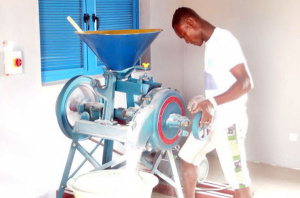
The Community Development Emergency Scheme (PUDC) will purchase and set up 40 new multipurpose solar platforms in various rural communities across the country, a source obtained by Togo First stated.
In details, the platforms will provide power to the benefiting communities, enabling them to earn revenues, mostly with agriculture-related activities. For example, the power supplied via the solar platforms will facilitate shea processing, rice or corn husking, welding, reloading batteries, etc.
The ministry of grassroots development has launched an international tender subdivided into five lots for the project. Firms selected through the process will supply and set up the solar multipurpose platforms.
The project, let’s note, is financially backed by the government, in line with the national programme for multipurpose solar platforms development (PN-PTM).
Séna Akoda
BOAD to organize next November a forum on solar power, in Lomé
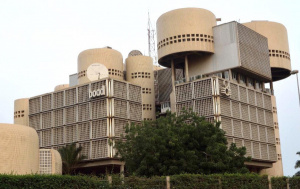
In November 2018, Lomé will host a top-class regional forum on solar energies. The event will be organized by the West African Development Bank (BOAD).
Themed “Solar energy in WAEMU States: Overview, Challenges and Policies”, this forum will gather experts from various parts of the WAEMU and elsewhere, to review issues related to clean energy with a focus on solar power.
The event will also look at BOAD’s interventions in the sub-sector, involve an analysis of the market and ecosystem in relation to development strategies affecting solar power in WAEMU. On this occasion, participants will learn from partners such as AfDB, AFD, EIB or World Bank.
Government members, development partners, some NGOs, and other actors contributing to the development of clean energies within WAEMU Will also be present,.
The forum will take place on the sidelines of the 45th anniversary of the BOAD, which finances development projects across the union’s eight member countries.