

Togo First
CCIT delegation to promote Togolese agro-industry in Shanghai

Togo’s chamber of commerce and industry (CCIT) will be in Shanghai, China, from November 5 to 10, 2018. There, it will attend a fair where it will showcase local agro-industrial products, with a group of economic operators active in the sector.
CCIT’s chairman, Germain Mèba, said while making the announcement: “We will not only position ourselves as importers, but exporters also. We will pick some economic operators active in the agro-industrial sector to valorize our products during this trip to China”.
Besides valorizing local products, actors invited will benefit from technology transfer, during the event. Also, economic ties between China and Togo would subsequently tighten.
Séna Akoda
TIRSAL : Government launches call to tender

On the sidelines of the 58th anniversary of Togo, President Faure Essozimna Gnassingbé launched the Togo Incentive-Based Risk Sharing System for Agricultural Lending (TIRSAL). This is a project aiming to boost agriculture and agro-industry. It will help producers and entrepreneurs to secure funds from banks, which so far had been reluctant to do so.
In this framework, the government launched a call to tender, which can be accessed here.
Offers available are: Managing Director ; Administrative and Financial Director ; Partnership Director (partnership for development of agricultural value chains and government entities) ; Head of market systems for value chains ; head of procurements provision ; Head of Marketing and Communication.
Interested candidates must send their CV as well as a motivation letter to the following addresses, latest by May 30, 2018: This email address is being protected from spambots. You need JavaScript enabled to view it. ; This email address is being protected from spambots. You need JavaScript enabled to view it. and This email address is being protected from spambots. You need JavaScript enabled to view it.
“We aim to reduce property transfer delay to 15 days,” head of land affairs says
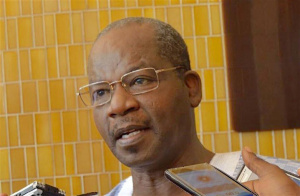
Togo still has much to do regarding property transfer, according to the Doing Business. This indicator, holds a significant place in the various reforms that the country started implementing since the beginning of the year to improve its land management. This include reducing delay and fees for land registration, creating a special office, among others. The measures were lauded by the AfDB in its latest outlook on African economies who said property transfer, alone, could drive private investment up by a two-figure digit, over the next two years.
Agreeing with the projections, the Millennium Challenge Corporation (MCC) approved a $35 million threshold program to support the land sector in Togo.
A 10% annual growth, that is AfDB’s forecast for investment in Togo. However, the national directorate in charge of land affairs and cadaster aims higher. In this interview, the head of the institution, which is attached to the Togolese Revenue Office (OTR) provides an overview of the land sector, with its challenges and forecasts.
Togo First : In its 2016 African economic outlook report, the African Development Bank (AfDB) said Togo’s land tenure system is the slowest of Africa. What is being done to change this situation ?
Abby Toyi (AT) : Truth is, in 2016, it took 21 days to complete property transfer process. This said, we cannot be told it is the slowest! It might even be one of the best record given that in some countries it takes as long as 90 days. However, I agree that registration can take up to 283 days, but what the Doing Business looks at is property transfer, not registration. And in this regard, in January 2018, property transfer took 9 days average. This duration might increase throughout the other months of the year. It could take up to 15 days. Some time ago, it was indeed slow due because we were moving to a different location.
Togo First : Sure, but what measures were concretely implemented to help shorten this delay ?
AT : We had a staff issue but now DADC has enough staff members. We also did not have equipment to proceed to demarcation, but this also was fixed. As a result we started dematerializing processes, scanning about 97% of land titles. This made it easier to access information on a specific land. Throughout the process, government supported us and now we even have a single desk dedicated to property transfer, solely.
After dematerializing already existing titles, we plan to make new ones digitally, with electronic signatures. This will bring about a true revolution. It was in this framework that we were attached to OTR.
This year, we aim to reduce property transfer delay to 15 days and to become in Africa the best country in that regard, after Rwanda, by 2020.
Togo First : In the 2018 African economic outlook report, AfDB said accelerating property transfer process could boost private investment. What do you think of this statement ?
AT : It is true. I believe it will boost private investment and we are encouraging firms in that direction. For example, the current State budget, on the President’s initiative, was designed in such a way that the fee required to create a firm costs almost nothing. Moreover, he (the President) decided to set aside 20% of public procurements for young people and women.
Beside, lenders and investors trust properties, as guarantees, more when they have a deed. Yes, I truly believe this reform would boost private investment. In fact, I think private investment could grow by 20% annually, twice what AfDB forecast, with property transfer process accelerated. Given our current pace, in two or three years, we will become the reference.
Togo First : Many countries are organizing themselves to tackle agricultural land speculation and grabbing. Côte d’Ivoire for example guaranteed the exclusive right to own agricultural lands to its citizens. Does Togo plan any similar reform?
AT : Togo was actually the first State to protect its real estate assets and ownership rights of its citizens. And now, other countries are taking a leaf out of our book. After becoming an independent country on April 27, 1960, a law was passed on August 5, the same year, to protect Togolese land rights. The concept of prior approval for transfer falls under this bill. It refers to the need for a citizen wishing to sell his or her property to a foreigner to get State’s approval beforehand. This is to protect the seller from eventually ending up being stripped from his or her assets. It we hadn’t done so, Togo might have not been what it is today. Take for example the Volta Region; once it was part of Togo but part was taken by Ghana and the other by Benin.
So, before any land is purchased by a foreigner, the Prime Minister must give his approval. In the past, this was done by the President. This is to tell you that we already have a good system to protect citizens’ property rights.
Togo First : To date, what are your relations with notaries now that newly introduced reforms are restricting their leeway ?
AT : We are have good relations with them. We met with them every time we faced a given challenge. We discuss this issue with them and try to find appropriate solutions. At first, it was not so but we were able to change that overtime. I would like on this note to thank those that helped us achieve this; especially the previous bureau of notaries for the lobbying it did. They are the one that helped us. In the past, most claimed DADC was not doing its job. But when they came, they noticed we lacked means. We had to go through a lot of workshops before gaining back the people’s trust, even if some still complain. We asked those to provide more details about their complaints.
We had sent a mail to the president of the order of the Chambre des Notaires to which we attached a list of cases notaries estimate are being delayed. It is true that we come across various issues but most of the time the fault is not ours. Take for example a case where someone, not its rightful owner, sells a given property. At our level, we still have the property registered in the name of the initial owner since he was not the one sell the property. The thing is, one cannot sell a property that is not his, even if that person is the son of the rightful owner, in the event this one dies. Succession should be first done in a proper manner. Under no circumstances should an individual sell what is not his. Yet, that is often the issue with our friends (ed. note: notaries). These are the kind of cases that are delayed and cause people to believe we do not do our work properly. In the past, it would cause much trouble but now we exchange on such matters and solve them out. Beside this, we are in good terms. If we, at DADC have an issue, we call notaries and they help us out. We also help them out when they are in need.
Togo First : Regarding rural areas, what are the challenges they face currently ?
AT : There are a lot of issues in rural areas. First, they are not demarcated or registered. It is a major issue. If those were done, each and every one would know its limits. However, even owners do not have a clear idea of their land’s acreage. In this case, any person around can take over part of your land. Land demarcation and registration prevent this. We were told of a story that occurred near Tsévié: one day, a man came to a farmer and offered to buy his lands; not knowing the boundaries of his property, the farmer would sell the man lands every time he would come. Finally, the buyer came to demarcate the whole village, since he had purchased it all. You see? Right there, that is ignorance. People do not seek information. Meanwhile, rural areas, especially those around main cities, are much coveted. Everyone wants some by anticipation, since our laws are quite liberal. Properties are sold or used recklessly. Unfortunately, this profits only the most cunning buyers, which often acquire properties cheaply to later sell them at a higher price. They buy a lot and often villagers are left with no choice. These are issues that almost all African communities have to deal with. These lands can be valorized; but they must be delineated to allow lenders and youths desiring to exploit them, to do so easily.
The second issue is the dichotomy of modern and customary laws. When conflicts arise, decisions are not always the same, and this brings about a major problem.
Third issue. Women in rural areas do not have access to lands even if they are the ones that work on these lands mostly. I believe this is a very serious concern… It is true that we have laws in place preserving women’s access to lands. Sadly, these laws are not known by many, I would assume, looking at the current situation.
Togo First : You talked about issues related to cadaster. What are you actually doing to overcome this challenge?
AT : It was in order to overcome this issue that we have been attached to OTR. We have designed a plan for this purpose since 2012. It includes various steps. First, we planned to establish a cadaster for Togo’s eight main cities, namely : Lomé, Aného, Kpalimé, Tsévié, Atakpamé, Sokodé, Kara, Dapaong and its surroundings. In 2012, we submitted this plan to our leaders. However, we did not get any funds to finance this project, since focus seems to be on other priorities. If we could get financing for the project, we would establish a cadaster for the whole territory.
Fortunately, we found our first partner which is the Millennium Challenge Corporation Threshold program (ed. Note: recently approved). Hence, we picked seven prefectures across each of Togo’s regions that will be covered by the cadaster project, before extending it to other parts of the country. Once this is done, MCC’s Compact (ed. Note : more important than the Threshold program) will cover expenses for the rest of the operation. That is what we hope.
Togo First : Over the next decade, what do you estimate will be the main challenges to achieving sustainable land management in Togo ?
AT : The first challenge will be to establish a full cadaster for the whole territory. Fortunately, we now have access to the latest technologies and if we would done it all. Indeed, we have already mapped the whole country, but what we lack are details about who owns which land and who does not. This would reduce land conflicts considerably. It would also solve issues related to delays and high costs. So that is it, our first challenge is having a complete cadaster.
Togo First : What about geographic information systems (GIS) ?
AT : A geographic system stores all types of geographical data in a given country ; it is not the same as a cadaster. A cadaster goes into details and obviously it is complementary with GIS. Without a cadaster, we will not be able to successfully develop agropoles, and subsequently boost our agricultural sector. This is why we had our whole system digitized and interconnected. For example, offices in Dapaong should not have to wait before getting data from this side. It must be immediate. They should be able to issue land titles in situ. That is what we have to overcome.
Interview by Fiacre E. Kakpo
Togo and Senegal’s bilateral trade boosted by the economic and business days
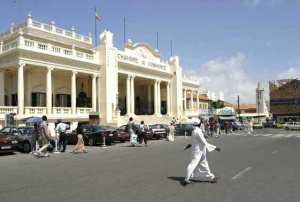
Spurred by the economic and business exchanges (whose second edition has just ended in Lomé), trade between Togo and Senegal has been significantly boosted.
“Before the business days, trade between our countries was estimated at $3-4 billion. Now, it is $8 billion”, says Daouda Thiam, president of Senegal’s chamber of commerce, agriculture and industry. So, since the first edition, trade between the two countries has doubled.
According to some participants of the event’s second edition, it helped them build partnerships for commercial representations in both countries. Others said they sold well at the event and identified many business opportunities.
In view of the positive evolution of the bilateral trade, the event’s promoters expect that it will reach $10 billion by 2019.
Let’s note that the third edition of the economic and business days between Togo and Senegal will be held in 2019, in Dakar.
Séna Akoda
Togo injects more than CFA1.2bn in husbandry under PASA project
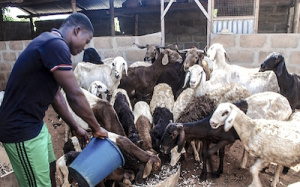
In the framework of the project to support agriculture sector (projet d’Appui au Secteur Agricole-PASA), government disbursed CFA1.2 billion to support the husbandry sector. The project falls under the national program for investment in the agriculture and food security sectors (Programme National d’Investissement Agricole et de Sécurité Alimentaire- PNIASA).
This was revealed by an official from the ministry of agriculture during a campaign to sensitize the population about agropoles and TIRSAL.
Most of the monies spent by the government was used to support 59 poultry and small ruminants’ farmers and thanks to this, husbandry was considerably boosted.
Indeed, thanks to this project and others, the population of small ruminants in the country has increased from 1,500,000 in 2011 to 4,800,000 in 2017. Similarly, the number of chicken has increased from 8,000,000 to 22,500,000 over the same period.
Séna Akoda
ADOYI Esso-Wavana Ahmed: “OTR has done everything to develop a culture of integrity and fight against fraud and corruption”

Adoyi Esso-Wavana Ahmed (photo), tax commissioner of the Togolese revenue office (OTR), product of the merger between tax and customs in 2014, provides an insight on various measures undertaken by his administration as well as upcoming ones. OTR has considerably helped boost the country’s tax earnings, recalling that these were barely above CFA400 billion in 2013.
Togo First : OTR’s current focus is to achieve tax compliance. How exactly does it plan to do that?
ADOYI Esso-Wavana Ahmed (AEA): Considering that Togo’s tax system is based on self-assessment, OTR’s strategy is to promote a tax culture that allows people and businesses to adhere to its activities. The office will focus on teaching businesses about their declaration and payment obligations, as well as about tax and custom procedures. Additionally, the office intends to regularly collect data on tax and custom revenues, and continue raising citizens’ awareness concerning tax’s importance. The main goal is to get businesses and individuals to spontaneously declare and pay their taxes.
Togo First : It’s been three years since the tax and custom offices merged, in 2014. What is your review of OTR’s activities since then?
AEA : Indeed, since its creation in 2014, four years ago, OTR has produced some very encouraging results. For example, as compared to 2013, tax revenues soared by 39.5% in 2017. Also, tax revenue, which is the proportion of taxes in GDP, has exceeded 20% over the period. This is a reference in the region. All these achievements are attributed to the various reforms implemented as a result of the merger.
Togo First : Fighting corruption is part of the office’s missions. What measures are taken in this regard and what are Togo’s achievements in this framework?
AEA : OTR has done everything to develop a culture of integrity and fight against fraud and corruption. Various actions taken to fight corruption mainly consisted putting in place modern tools for prevention and investigation. Besides, the office wish to get each of its agent involved in the fight against corruption. I would like to remind that at OTR, we have a department that fully dedicates to fighting and preventing fraud and corruption.
We have also invested in programs that align with this objective, with all the tax system actors, and also to improve partnership between local and international partners such as CENTIF, the High Authority for Prevention and Fight against Corruption and Related Offenses, Anti-Corruption Maritime Network (MACN), the U.S. embassy near Togo, etc.
Togo First : Last year, the government started implementing a battery of measures for tax relief. How did this measures impact tax revenues?
AEA : These tax relief measures include :
- 10% cut on VAT (art 323 CGI, article 4 LOFI 2017) for commodity basket, affecting a number of products and services ;
- VAT exemption for sale and import of mobile handsets and IT equipment for end-users ;
- VAT reduction for basic commodities ;
- VAT exemption for car leasing activities ;
- Reduction of corporate tax from 29% to 28%.
Among these measures, those aiming to bring down prices of commodity basket did not have the expected effect, they did not fall. This led the government to revise some of these measures in 2018.
Meanwhile, measures aiming to ease SME’s access to funding and investments will in the medium term help boost the economy and at the same time make SMEs more competitive. They will lead to the broadening of tax base, thus contribute to a greater mobilization of taxes.
Togo First : Despite the many reforms initiated by OTR, some still claim it is discouraging small businesses. What do you think of this?
AEA : Since OTR started operating, many actions and measures were implemented to benefit small businesses. These include:
- Sensitization of various companies;
- Public sensitization in markets ;
- A reform to ease access to financing;
- Reduction of fees for property access;
- Amendment of rules governing small businesses, with exemption of business tax during first year of activity ;
- Pedagogic visits to listen and answer issues of small taxpayers.
All these measures are paired with training workshops and open houses that back the various actions taken by the Delegation in charge of Informal Sector’s Organization (DOSI) to benefit small businesses.
This year, an event was held to reward best taxpayers. Yet, there is more to do and OTR is well aware of that.
Togo First : This year’s State budget is higher. This implies, supposedly, more tax revenues, and falls in line with government’s goal to reduce its deficit and depend less on debt. Last year however, forecast for taxes revenues was scaled down. Do you think 2018 would be different, especially in the actual context marked by a political crisis?
AEA : OTR trusts that the government will do what is needed to calm tensions, providing the required context for its development. This said, we will proceed with our activities.
Togo First : What are OTR’s next projects ?
AEA : OTR main upcoming projects are :
- Promoting tax compliance;
- Promoting private sector;
- Modernization of management tools and procedures ;
- Reforming land sector;
- Simplifying general tax code ;
- Fighting fraud and corruption;
- E-payment;
- Mobile payment;
Another goal is also to improve collaboration between OTR and its partners such as local communities, public treasury, private sector, civic society, national documentation office, trade court’s registrar, CNSS, PAL, mobile operators, etc.
Interview by Fiacre E. Kakpo
Government lowers cost of construction permit

Among reforms implemented by the business climate cell to make Togo’s business environment more attractive, there is the reduction of cost for construction permit.
The National laboratory for Construction and Public Works (LNBTP) has indeed in January 2018, the 10th, reduced cost for soil survey from CFA900,000 to CFA350,000, before building a warehouse. Subsequently, construction permit’s cost reduced as well.
It should be recalled that the regulation in place states that no building should be built on inappropriate land, non-stable, erosion prone, flooding or in an unhealthy environment. The survey aims to make sure this does not happen.
Similarly to warehouses, survey conducted to build a house has also its price drop to CFA250,000.
In March 2018, a promotion actually took place and on this occasion, these prices were cut by 15%.
Togo: Special commercial chambers created to handle “minor” conflicts

At the end of 2017, Lomé’s court of first instance created commercial courts to handle minor conflicts involving sums ranging between zero and one million cfa.
Via the decree n° 2699 I2OI7, the president of Lomé’s court appointed two magistrates to oversee these cases. This is to ensure they are rapidly processed.
The decree states that related hearings will be taking place every second and fourth of every Tuesday of the month, at the small hearing room at the commercial courts of the former Supreme Court.
The reform aims not only to unclog commercial courts, by separating cases based on amounts involved, but also diligently process minor conflicts.
Moreover, it will improve traders’ trust in the legal system, a factor that is crucial in business environment and to attract investments in Togo.
Togo : Government alleviates requirements for youths and women eligible for public procurements

DNCMP has released a note listing requirements that will be alleviated in the framework of the reform to provide 20% of public procurement to youth and women in Togo.
The document said that in regard to the requirement for a guarantee and a proof of financial ability, youth desiring loans will be backed by the national agency for the promotion and guarantee of financing for small and medium enterprises and industries, the national fund for inclusive finance (FNFI), and the fund for support to youths’ economic initiatives.
Also, no experience will be demanded for contracts to provide non-complex maintenance services. However, DNCMP advised interested entrepreneurs, starters to be exact, to team up with those with a minimum experience in these services.
Meanwhile, a minimum is required in terms of staff and equipment (leased), for recurring maintenance services.
As intellectual services are also included in the public procurement concerned, any youth or women desiring to secure such contracts will be asked a minimum such as a degree and qualified staff.
It should be emphasized that all these conditions and criteria do not apply to all procurements. According to DNCMP, they only apply to procurements financed by local resources, thus involving contracts which can be carried out by Togolese youth and women.
Togo and Senegal sign agreement to improve their economic and business relations
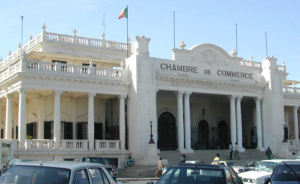
During the second edition of the Senegal-Togo economic and business days, Germain Mèba, president of Togo’s chamber of commerce and industry, and Daouda Thiam, his peer from Senegal, signed an agreement to reinforce the economic and commercial relations between the two countries.
Under the agreement, the two nations promised to improve their respective business climate, to attract more private investments.
It should be recalled that Togo, in the past few months, has initiated measures to achieve the same objective. A Business Climate Cell was even set for this purpose. It is coordinated by Sandra Ablamba Johnson.
To boost their trade relations, as mentioned earlier, Togo and Senegal decided to create a joint and strategic business committee, which will supervise the implementation of decisions and projects that will be decided during the economic and business days.
This committee would also discuss practices in regards to the free circulation of people and goods and as well focus on reducing the impact of informal activities on relations existing between the two countries’ private economic operators.
Séna Akoda