

Togo First
Ping Pong Global and the Togolese government discuss the construction of Togo's first reference hospital

On July 7, 2018, Komi Selom Klassou, the Togolese prime minister met with Siddhart Jaain, managing director of the Indian company Ping Pong Global, to discuss the planning and construction of a reference hospital in Togo.
Announced in March 2018 after a memorandum between the Indian company and the government, this meeting is the concretization of the project. This hospital of international standard will host 300 beds with modern equipment.
This project “will help resolve health problems not only in Togo but also in the sub-region”, said Siddhart Jaain at the end of the meeting. “We will invite Indian doctors to work there and Togolese of the diaspora as well to contribute to the resolution of health problems in Togo”, he added.
With this project, the government just confirmed its will to improve the country’s health system by upgrading sanitary infrastructures and encouraging Public-private partnerships.
Though the location where this infrastructure should be built is not confirmed yet, the managing director of Ping Pong Global is optimistic. “We have the government’s support. On behalf of the president of the republic, the prime minister assured us that he will rapidly take all the appropriate measures to prepare the place to ensure that the project is effective”, he said.
2018-19 agricultural season : Volumes of subsidized input rise by 53% to 46,000 tons
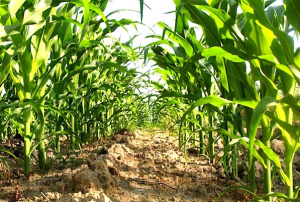
In line with its goal to make agriculture one of the country’s growth pillar and job provider, Togo’s government launched in 2016 AgriPME, an initiative that leverages on new technologies to develop agriculture, enabling farmers to get input subsidies from the State, via mobile phones.
Through this initiative, more than 30,000 and 40,000 tons of input were subsidized during the past and ongoing seasons.
During a field visit last Friday, in the Kozah prefecture, to be sure that the input were effectively provided to farmers and also inform them about initiatives implemented by the government to boost agriculture, the minister of agriculture and husbandry, Ouro Koura-Agadazi, declared : “From 30,000 tons of input mobilized, Togo was able to increase this capacity to more than 40,000 tons. For the 2018-19 season, the private sector mobilized about 46,000 tons. Also, the number of retail stores grew from 112 to 309”
This truly translates government’s will to make agriculture an economic pillar.
UN Under-secretary General Izumi Nakamitsu, inaugurates UNREC’s new headquarters in Lomé

UN Under-secretary General of Disarmament Affairs, Izumi Nakamitsu, inaugurated yesterday, July 5, the new headquarters of the UN Regional Center for Peace and Disarmament (UNREC), in Lomé. This was after meeting with Togo’s Prime Minister, Selom Komi Klassou.
The building was fully financed by the Togolese State and aims to facilitate tackling peace and security issues in the region and Africa as a whole. Its inauguration takes place just a few days after Togo joined African Union’s Peace and Security Council (PSC).
“I told the Prime Minister that the United Nations wishes to deepen cooperation with Togo to do more for peace and disarmament in Africa,” Nakamitsu said at the end of her meeting with the PM.
UNREC, let’s recall, was created by the UN in 1986. Its objective is to provide support, when demanded, to initiatives and efforts led by African member states of the UN regarding peace, security, arm control and disarmament.
Togo’s cashew nut exports to India rose by 54% at the beginning of 2018
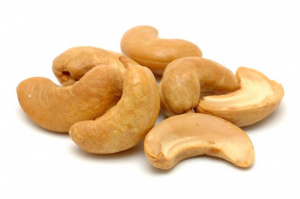
Togo’s raw cashew exports to India, the world’s largest processor, soared by 54% to 9,088 tons at the beginning of 2018, Rongead revealed in its N’kalo report released end-June.
Beside Côte d’Ivoire and Nigeria whose exports to the Asian nation slumped recently, other West African cashew producers recorded good performances this year.
Ghana’s exports to India grew 71%, standing at 45,418 tons over the period reviewed. As a result, it stole Côte d’Ivoire’s position, as the leading West African cashew supplier to India (volumes of cashew exported by Côte d’Ivoire fell 11% as compared to 2017).
Over the first five months of 2018, Nigeria exported 12,303 tons of cashew to India, as against 6,730 tons at the beginning of 2016.
Volumes exported by Benin, Burkina Faso, Guinea, Guinea Bissau, Gambia and Senegal stood at 10,593 tons (+42% from 2016), 4,950 tons (+101%), 1,336 tons (+912%), 577 tons (+173%), 52 tons (+4%) and 63 tons respectively, at the beginning of this year.
Fiacre E. Kakpo
Togo: Moov follows Togocel’s steps in launching 4G

Since last Sunday, Moov Togo’s users have had access to 4G and so far, more than 2,000 people enjoy the technology, following test stage carried out at the beginning of the week.
“With this, our users and the Togolese people generally will be able to stream, and use apps that require high-speed internet. With 4G comes new opportunities for our users and this confirms our commitment to revolutionize Togo’s mobile sector,” declared Abdellah Tabhiret, managing director Moov Togo which recently celebrated having three million users in the country.
Moov announced it will spend billions to modernize its national network as it aims to have 200,000 4G users by the end of 2018.
Deploying 4G aligns with the government’s goal to stimulate digital economy. License for the technology was actually granted to the country’s two leading mobile firms, Moov and Togocel last June 11 and last week, Moov was preceded by Togocel which launched 4G on the sidelines of its 20th anniversary.
Though 4G can be used by users living in Lomé and its surroundings, Moov’s MD promised to expand its coverage radius to other towns and regions, shortly. 3G SIM cards, let’s note, are compatible with 4G on recent smartphones. However, older phones will require a 4G SIM to enjoy the technology.
Fiacre E. Kakpo
Togolese minister of agriculture lauds the sector’s performances
Togo’s agricultural sector has recorded some positive results these past two years. Data disclosed at the recent national farmer forum launched in Kara yesterday, revealed.
The data indicates that food supply, compared to needs improved relatively well. For example, for grains, the supply and demand coverage ratio which was at 105.9% in 2015 rose to 106.35% in 2017. Over the same period, this ratio for meat and fishery products grew also to 58% and 35% respectively, against 55% and 24% in 2015.
The various improvements helped reduce poverty rate from 61.7% in 2006 to 53.5% in 2017.
Lauding the performances, Ouro-Koura Agadazi, minister of agriculture, said: “I am convinced that agriculture is a major lever for wealth and job creation, one that will spur inclusive development and economic growth”.
In fact, the sector contributes nearly 40% of gross domestic product. A figure which should improve gradually with new schemes such as the Incentive Mechanism for Agricultural Funding (MIFA) or the Agropole Development Project (PRODAT).
Séna Akoda
Soybean producers and seed-bearers were given 48,000 kg of basic and certified seeds for 2018/19 season
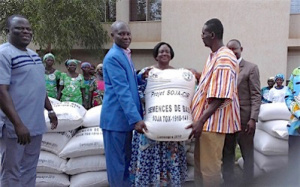
Like each year, the government just ended its tour across Togo’s various economic regions to distribute soybean seeds to seed-bearers and producers.
The last place the authorities visited in that framework was Dapaong in the Northern region, last Friday. Authorities from the ministries of trade, private sector promotion and agriculture distributed the last batch of seeds for the 2018/19 season.
Overall, 48,000 kg of seeds (basic and certified) were distributed to 49 seed-bearers, 67 farmers associations and cooperatives. This is 20% more than the past season.
Distributing quality soybean seeds to farmers is one way through which the Togolese government aims to make this sector one of the most important, in terms of export, thus increasing soybean farmers’ revenues and reduce poverty.
Fiacre E. Kakpo
French giant Total teams up with Solergie to develop solar energy solution in Togo
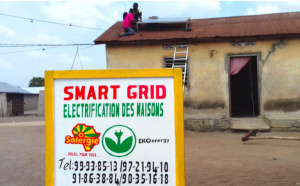
Total teamed up with Solergie to provide Togolese people a new power solution based on solar energy: SolergieBox. This is a 220V system whose capacities can be increased depending on customers’ needs.
Solergie’s Managing Director, Marie Dominique Lodens commenting on the development said: “SolergieBox is a solar-based power system that generates 220V for up to 8 people. Each of these has access to his or her own box and own meter”.
“By paying CFA15,000, each customer gets access to an installation enabling connection to two rooms with one lamp, a socket and a switch respectively, and CFA5000 of power credit. Solergie will take care of the connection part and guarantees maintenance and repair on the box,” added Bert Bernolet, CEO Solergie.
According to Adrien Bechomet, managing director Total Togo, venturing into renewables was driven by “pertinence of investments in clean energy and its socioeconomic impact, in rural areas particularly”.
At the end of this year, Solergie expects to install 240 SolergieBoxes and 3,000 by end-2023, impacting 24,000 households which is more than 200,000 people.
Séna Akoda
Togo records 21% food surplus during 2018 agricultural season
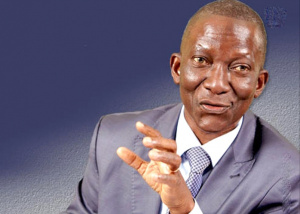
Togo recorded during the 2018 agricultural season a food surplus of about 21% spurred mainly by strategic speculations such as sorghum, millet and tubers.
According to Col. Ouro-Koura Agadazi, the sector should aim for better results, considering that focus will be soon shifted to processing. The new challenge will thus be, not only keep improving production, but also and most importantly enhance skills to provide guarantees to new actors who will enter the rising processing sector.
The new incentive mechanism for agricultural funding (MIFA) should greatly contribute in this regard. Based on risk-sharing, it aims at reassuring new agricultural actors, and falls under the government’s goal to boost agricultural growth by 10% over the next 10 years.
Séna Akoda
Togo: Coris Bank International has a new managing director
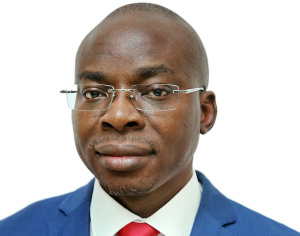
Since last Monday, Alassane Kaboré became the new managing director of Coris Bank International’s Togolese subsidiary, Confidentiel Afrique reports.
Prior to being appointed this position, Kaboré was the bank’s risk director in Mali.
In Togo, he replaces Sanou Seydou who was moved to the Group’s holding, the website revealed. Seydou, let’s recall, was the managing director of Coris Bank International Togo since its establishment in January 2015.
At the moment, there are four Coris Bank branches in Lomé. However, the group is working to rapidly expand its presence all over the country.
Séna Akoda