
Togo First
The first ever Afrofuturism in Togo to be held on July 25, 2018

On July 25, 2018, at 8 AM, the US embassy in Togo and the Goethe Institute in Lomé, in collaboration with the cultural association Tre-kah, will launch a big event on the concept named Afrofuturism at Canal Olympia Lomé.
The director of Goethe Institute, the US ambassador, the Togolese minister of communication and renowned officials of the political, cultural, literature, scientific and philosophy world will take part in the event during which, debates, panels, conferences and film projections will be organized.
According to the organizers, this event which is a first in Togo will initiate decisions at the national level between political, university actors and artists as well as social entrepreneurs to pave the way for a new society in Togo and Africa in general.
Five panels will be held around specific themes namely, architecture and urbanism, political institutions, Afrofuturism in art, medicine, health and agriculture as well as religion, solidarity and African values.
Let’s remind that the Afrofuturism concept is based on the idea that the solution to human problems lies in Culture, tradition and African ingeniosity. The term was coined half a century ago by the author Mark Dery in his essay “Black to the Future”. It was brought back to life by the movie Black Panther, with its representation of the Wakanda.
By the way, the theme “Afrofuturisme, quel est ton rêve, quel est ton Wakanda”?(Afrofuturism: what is your dream, what is your Wakanda?) is inspired by the idea vehiculated by the film which will be shown at the end.
Registration is open and will be closed on July 23, 2018. It is free and can be done here by anybody wishing to participate.
US equips Togo with Anti-Drug and Narcotic Equipment
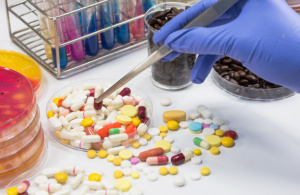
Togolese Ministry of Security and Civil Protection received July 16 a batch of anti-drug equipment provided by the US, Togo First learned.
This donation, estimated at CFA300 million, is to help the country fight more effectively drug and narcotics trade. It includes a number of microscopes, an autoclave, a scale and other accessories for police laboratory.
“It (ed: the grant) will make it possible to detect in a short time the harmful substances which arrive from other countries at the airport, to carry out toxicology tests, and distinguish pharmacy drugs from those illicitly sold on the market,” Commander Comi Djobo, head of the anti-drug department, said in the presence of the US ambassador David Gilmour.
Fiacre E. Kakpo
Togo: World Bank provides CFA16bn for Infrastructure and Urban Development Project
World Bank approved, via the International Development Agency (IDA), $30 million (over CFA16 billion) in financing to Togo to help implement the Infrastructure and Urban Development Project (PIDU). The latter was designed to renovate, rehabilitate and improve infrastructures in underserviced neighborhoods in the three cities of Lome, Kara, and Dapaong.
The fund will also be used to strengthen the institutional capacity of the seven most populous cities which include, in addition to the three above-mentioned, Kpalime, Tsevie, Atakpame, and Sokode. The strategy is set to be achieved through technical assistance and training aimed at ensuring sustainable urban development management in the cities.
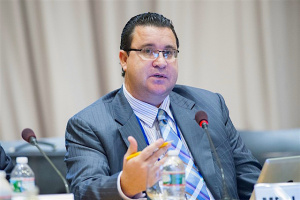
“Togo is experiencing rapid urban development, but infrastructure services are inadequate in most secondary cities. This new investment will focus on improving people’s living standard in certain cities. The project also targets the improvement of urban development services, and could eventually lead to other investments,” said Pierre Laporte (photo), World Bank’s country Director of Operations for Togo.
About 2.3 million people are expected to benefit from this initiative, which aims to reduce gaps in the public services’ delivery in the focus cities. According to the Bretton Woods Institution, PIDU could cover the development of road networks and public spaces, drinking water access points, sewage and rainwater disposal systems, as well as small economic and social infrastructures (such as markets, schools and health facilities).
Let’s note that the project (PIDU) is in line with World Bank Group's new 2017-20 partnership framework with Togo. This partnership is expected to put the country on the path to more inclusive and sustainable growth, driven by the private sector and more effective public investments.
Fiacre E. Kakpo
Togo, following IMF’s recommendations, launched a page to disseminate its macroeconomic data

Togo just moved another step forward in regards to data transparency and modernization of its statistics system.
Indeed, a national summary data page (NSDP) was just created to that end. It will help implement recommendations of the enhanced general data dissemination system (eGDDS) which aims to help adhering nations boost their data’s transparency as well as their governance’s, by publishing information that is key to the assessment of macroeconomic conditions.
Data published on the NSDP will be available in various formats so that it can be read by various devices. This page is on the national statistics office’s website and on the IMF’s dissemination standards bulletin board at the following link:
https://dsbb.imf.org/egdds/country/TGO/category
According to the IMF, releasing key macroeconomic data on the NSDP will enable Togo’s decision-makers and other important parties, such as foreign investors and rating agencies, to easily access information that its board considers to be of high value.
Data released on the NSDP will be based on a defined schedule, thus contributing to the development of adequate macroeconomic policies and help obtain good feedback from financial markets.
Louis Marc Ducharme, Head of Statistics Division IMF, lauded this major step towards statistical development in Togo. “I applaud Togolese authorities for launching the NSDP. It is a significant milestone in regards to data dissemination. I am convinced that Togo will benefit from using the eGDDS to further improve its statistical system,” he said.
The eGDDS was established by the IMF’s executive board in May 2015 to support improved data transparency, encourage statistical development and help create synergies between data dissemination and surveillance.
Fiacre E. Kakpo
Togo and Ghana at risk of border dispute over an ultra-deep oil block
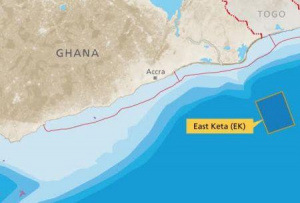
Togo and Ghana could instigate a legal battle over oil exploration in the East Keta ultra-deep block. This situation worries the Public Interest and Accountability Committee (PIAC), one of Ghana’s oil regulatory authorities, which published July 16 its 2017 annual report.
Let’s recall that a few months ago, the Ghanaian government awarded the operation of an oil block in East keta to a joint venture made of Blue Star Exploration, Ghana National Petroleum Corporation (GNPC) and Heritage E & P. But Togolese authorities are disputing the move, claiming that the maritime boundary covering the awarded block is a Togolese territory.
PIAC said explorers are being intimidated by the Togolese coastguards anytime they attempt to explore close to the border. “PIAC has noted adverse claims being made by the Togolese authorities concerning the maritime boundary with Ghana in respect to the East Keta Ultra Deep Block and urges government to initiate urgent steps to delineate Ghana's maritime border with Togo,” the report explained.
Let’s note that Ghana just emerged last September from an 8-year maritime dispute with Côte d'Ivoire over a vast oil zone located in the maritime boundary between the two countries. Finally, the verdict handed down by the International Tribunal for the Law of the Sea was in favor of Ghana. Drilling is planned to begin before the end of this year.
Olivier de Souza
Ecobank to suspend its Eurobond, amid difficult conditions in emerging markets
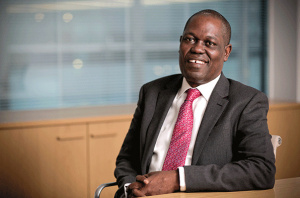
Due to actual difficult market conditions, Ecobank announced it will suspend the roadshow it started for its Eurobond last month.
In an interview conducted last Thursday, Ade Ayeyemi, CEO of the Lomé-based pan-African group, said market conditions in emerging countries hardened over the past three months. “There was no trade war when we started… There were no issues in Turkey. Now, we wait. If things do not calm down, we will just postpone to next year,” Ayeyemi said.
He added that since the group recorded a 50% increase of its post-tax profit this year, it no more needs to seek external funding at the moment.
Ecobank also estimates it has improved its loan portfolio with the volume of its bad debts having slumped. It also plans to reduce its cost/revenue ratio from 60% to 50% in the mid-term.
“Once we have done that, we will be able to produce a return on equity of over 20%,” Adé Ayeyemi said.
Present in about 30 African countries, Ecobank recorded a post-tax profit of $228 million in 2017, and a 10% return on equity, according to Bloomberg. A performance that it owes to a growing number of its digital services users.
Fiacre E. Kakpo
Coris Bank International-Togo starts building a new branch in Kara
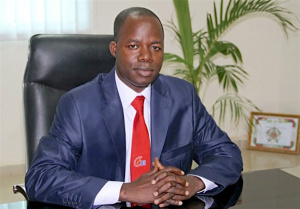
Coris Bank International-Togo is, according to reliable sources, commencing the construction of a new branch in the northern part of the country, in Kara which is situated 400km from Lomé, the capital. Sources claim that dimensioning for the project is already underway. ArchiLUX and CIMEX are in charge of the construction.
Opening a new branch in Kara is part of the bank’s expansion plan across the country where it has been operating for 3½ years. This will be Coris’ fifth branch in Togo.
Indeed, the lender presently covers Lomé with four branches, knowingly the main branch, the Grand Marché branch, the Hedzranawoe branch and the Port branch. However, sources close to the institution indicate that another branch is almost fully built in Agoè. In Cinkassè, works are at the same stage as those for the Kara branch.
Let it be recalled that on April 25, 2017, Coris Bank International raised its social capital from CFA5.5 billion to 12.5 billion. This aligns with regulations in place which requires local banks to raise their social capital to at least 10 billion. Moreover, the lender aims through the move to commit more to the whole Togolese population and particularly to its customers.
Séna Akoda
Togo : 57% of the population had access to drinking water in 2017, up 15% compared to 2013
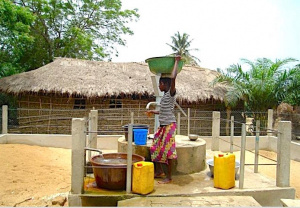
Over the past five years, access to drinking water in Togo has improved from 42% in 2013 to 57.22% in 2017. However, supply of water and sanitization services remain a major challenge.
According to the 2017 public assistance report (RAPD 2017), government’s efforts to implement action plan for the water and sanitization sector (PANSEA) helped achieve significant results, in line with sustainable development goals (SDGs) and SCAPE.
In details, rate of access to drinking water in rural areas soared from 47.3% in 2013 to about 65.77% in 2017. In semi-urban areas, this rate rose from 42% in 2013 to 58.94% in 2016, then slumped to 57.7% in 2017.
In urban areas, though this rate increased by 9% between 2013 (40%) and 2017, it also slightly decreased from 2016 to 2017, according to the RAPD.
In regards to sanitization, significant improvements were recorded.
Access to drinking water and sanitization for all is the sixth sustainable development goal (SDG 6).
Fiacre E. Kakpo
Togo conducts the Pilot Stage of AfDB Pan-African Manioc Development Project

Togo will receive technical support from the International Institute of Tropical Agriculture (IITA) under the African Agricultural Transformation Technologies (AATT) initiative. The latter is part of the “Feeding Africa” strategy.
In this framework, Togo welcomed July 9-10, a delegation of the institute based in Abuja, which works with partners to improve crop quality and productivity, and reduce risks for producers and consumers.
This visit, which is the second of the sort (the one held from June 18 to 21 being the first), enabled the IITA delegation to take stock of the cassava sector in Togo, chosen between 35 countries to serve as the program’s starting point.
Let’s note that during these two visit days, the delegation checked existing facilities, analyzed production data, as well as specific studies conducted by ITRA. It also organized information sessions for the youth. Subsequently, an action plan was established to provide the cassava sector with a refined technical assistance, focusing on the introduction of SAH (Enhanced Intensive Plant Material Production) technology and the delivery of bred seeds.
Specifically, the AATT initiative aims to implement actions that can speed up the agricultural transformation in Africa, through higher productivity of rice, cassava, millet, sorghum, groundnut, cowpea, livestock, corn, soya, yam, cocoa, coffee, cashew nuts, palm oil, horticultural products, beans, wheat and fish.
Ultimately, all these actions pulled should generate nearly 513 million tons of additional food and lift nearly 250 million Africans out of poverty by 2025.
Fiacre E. Kakpo
Togo: Government supports cultural industry with CFA400M

Togo plans to infuse the plural cultural industry with new energy through a call for proposals under the Culture Assistance Fund, which amounts to CFA400 million.
Launched by the Ministry of Culture, this initiative intends to support heritage promotion and cultural/creative industries by boosting their potential. Moreover, it aims to support the sub-sectors’ professionals in efforts towards harmonious socio-economic development.
According to document seen by Togo First, eligible subsectors include performing arts, plastic arts, cinema and audiovisual, literature and cultural heritage. Although cultural actors plead for an upward review of this fund, the project itself reflects government’s desire to develop a sector that could generate jobs and drive growth.
For the record, Togo adopted last May 8 a draft law on cinema and moving image code during a Minister’s Council. The objective is to foster the emergence of the local film industry over the “too strong” consumption of foreign films which “convey exogenous ways of thinking and acting that are gradually replacing endogenous cultural values”. Furthermore, the government plans to make cinema a growth and development booster.
Séna Akoda