
Togo First
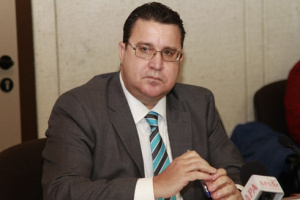
Marc Ably-Bidamon: “Togo’s ambition is to provide electricity to its whole population by 2030”
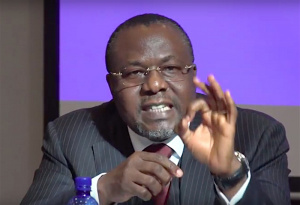
At the close of June 2018, Togo’s government launched a new national electrification strategy for the next 12 years; a strategy backed by major lenders under which authorities plan to provide power to all Togolese by 2030. In this interview with the minister of energy, Marc Ably-Bidamon, more details are provided regarding the electrification strategy which is one of the key axis of Togo’s recently adopted 2018-2022 National Development Plan.
Togo First: How is Togo’s power sector doing?
Marc Ably-Bidamon (MAB): First, I would like to sincerely thank you for your interest in our activities at the ministry of mines and energy. Now, regarding your question, Togo’s power sector is doing well. Led by the President, our government has made access to power for all, a priority. This is in line with the United Nations’ objective to achieve, by 2030, universal access to power ; power that is cheap yet of quality, and mostly that preserves the environment. In this framework, the Togolese government is doing everything to provide populations with better living conditions by ensuring constant power supply. In addition, many projects and initiatives will be launched to boost the local power sector and improve its management.
Togo First: In effect, what are the major actions that are being put in place by the government to achieve this goal?
MAB: The launch of the electrification strategy followed by the meeting of lenders and investors, held June 27 and 28, 2018, I believe, constitutes a good response to the government’s objectives.
Truly, Togo’s electrification strategy contains the government’s vision regarding national electrification by 2030. This vision aligns with SDG7 which aims to ensure access to affordable, reliable, sustainable and modern energy for all. Togo actually wants to provide all Togolese full access to electricity by 2030.
To this end, we plan to combine on-grid and off-grid (mini solar grids and solar kits) power sources.
There are also various projects that are being implemented or about to be, all over the country. The CIZO project is an example of such projects. Initiated by the President himself, this project aims to provide power to more than two million Togolese by 2022, supplying them solar kits. Another example is a project that will see 185 communities electrified.
Togo First: What is your review of the previously mentioned roundtable?
MAB: The roundtable which gathered global actors focused on assessing Togo’s electrification strategy. I would like to emphasize that it was the Head of State, Faure Essozimna Gnassingbé, who was the main initiator of the electrification strategy’s elaboration, its official launch as well as the model drawn to raise the funds needed for its effective implementation. I now get back to your question which was my assessment of this roundtable. Straight forward, I can say it was a true success, in regards to its organization; goals were met and regarding its benefits, we already recorded some, such as AfDB’s financial support but also commitments from other development partners. Testimonies from national and international participants have proven how successful the event was. Full of experience and skill sharing, this meeting is one that is highly satisfactory.
Togo First: Do you believe Togo can achieve universal power access by 2030?
MAB: This is something that the government has committed to and intends to achieve using all appropriate and necessary means. That is why we are calling our technical and financial partners, and any other willing parties, to support us in the process. These partners’ trust and the President’s own involvement are factors that reassure us and make us strongly believe that this ambition will become a reality.
Togo First: Under its new electrification strategy, Togo bets on clean energy. In fact, the roadmap plans for this type of energy to contribute 50% of its mix by 2030. What assets would you say Togo can currently leverage on to develop renewable energies?
MAB: Our first asset, I would say, is a strong sunshine exposure; this eases the exploitation of solar facilities such as individual kits and solar mini grids. The other main asset is the availability of water bodies which can host hydropower dams.
In addition to these, there is again the electrification strategy and the clean energy law which also is a key tool to ensure the emergence of energy infrastructures.
Togo First: You just mentioned that Togo adopted a law to promote and develop clean energy. What opportunities does this new law offer?
MAB: This law sets the general legal framework related to projects that will help generate power from clean sources, be it for self-use or export.
It gives the government a reliable legal tool that focuses on the management of the clean energy sector in Togo. It also is a lever that will help, efficiently and effectively, implement the various components of the national electrification strategy, launched last June 27. This strategy is based on a public-private partnership in which local private investors play a significant role.
This law will help implement our power strategy as this one relies strongly on clean energies, especially solar and hydropower, while ensuring environmental protection, in accordance with the seventh sustainable development goal.
Its application will facilitate power supply, in a significant manner, to vulnerable populations.
Interview by Fiacre E. Kakpo
Since it was launched, Coton 4+ project has helped train more than 500 farmers in Togo
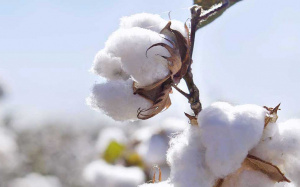
Initiated by Brazil, the Coton 4 + Togo project aims to provide producers and other actors of Togo’s cotton sector with key information and quality training.
Since it was launched, more than 500 Togolese farmers have benefited from the project and had their skills regarding improved seeds cultivation techniques strengthened. This was disclosed on August 6, 2018, during the opening of the third meeting of actors involved in the project, in Lomé. It was also revealed that the project enabled the introduction of resilient tested crops in Togo.
In terms of prospects, it aims to enhance technology transfer, as well as foster experience sharing and good practices between the sector’s various actors. In the long term, it will enable the mobilization of $5.5 million which will be used by benefiting countries to improve the quality and volume of their respective cotton output. It also aligns with Togo’s strategic plan for the cotton sector.
According to the minister of agriculture, Ouro-Koura Agadazi, the “Coton4+ project whose goal is to help sustainably improve cotton production and competitiveness, aligns with the strategic plan for the sector that falls under the National Development Plan (PND)”.
Meanwhile, Antonio Carlos De Salles Menezes, Brazil’s ambassador to Togo, praised Togo’s efforts to boost the quality and quantity of its cotton production.
During the meeting which will last five days, key actors of the cotton sector of various nations benefiting from the project will review the 2017-2018 crop year and define new prospects to boost cotton output.
In line with its agricultural development strategy, Togo eyes a cotton output of 200,000 metric tons by 2022.
Séna Akoda and Caleb Akponou (Intern)
Togo adopts a new national development plan (PND 2018-2022)
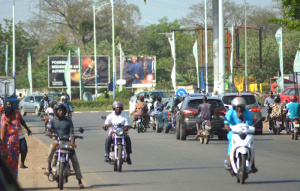
Last Friday during a ministers’ council, Togo’s government adopted a new five-year roadmap which is the 2018-2020 National Development Plan (PND 2018-2020 in French). The document will replace the SCAPE which helped the nation initiate deep economic transformations, such as modernizing infrastructures.
Major projects
The PND aims to make Togo an economic reference in West Africa. It results from a process that involved key actors of the public administration, private sector, civil society, regional leaders but also technical and financial partners.
The 5-year program will be used as a guiding reference for government’s actions and all interactions with Togo’s partners. It will, according to relevant sources, help make the country a top-class logistics and business hub.
Under its first axis, this new strategy will focus on improving infrastructures and processes at the Port of Lomé, which is currently the only deep-water port in West Africa, as well as boost road infrastructures and aviation. Regarding the latter, Asky, which is partners with Ethiopian Airlines and other major African airlines, is quite active in the sector. Moreover, many projects are expected in the digital industry. Some will help improve key infrastructures subsequently raising quality of services provided to users in the sector.
The National Development Plan also aims to make Togo a business and tourism hub and turn Lomé, which already hosts headquarters of major financial institutions (BOAD, BIDC, Orabank, Ecobank, African Guarantee Fund), into a top-class business centre in Africa.
Under its second axis, the plan will focus on creating poles for agricultural processing, manufacturing and mining in various parts of Togo. The following align with this objective: the agropoles project backed by South Korea, BOAD, AfDB; the industrial parks project; the national electrification strategy under which the country intends to achieve 50% and 75% electrification rates by 2020 and 2025 respectively; reviving mining industry, promoting artisanal entrepreneurship and all sorts of businesses.
Finally, the government’s new action plan seeks to consolidate social development and boost inclusion mechanisms.
The third axis will focus on improving educational system and professional training, but also the provision of basic social services (health, water and power), youth employment, financial inclusion, gender equity, social and environmental protection.
Over five years, the plan will require about $8.3 billion (4,622.2 billion CFA) to make Togo’s economy more resilient, sustainable, inclusive and robust while creating more jobs and improving populations’ social welfare.
Target: A 7.6% growth rate and 500,000 direct and decent jobs
With the PND, the government expects economic growth to rise to 7.6% in 2022, from 6.6% now. This should, according to authorities, create more jobs, redistribute national wealth and thus significantly reduce poverty and help the country achieve a greater human development level, mainly by improving access to basic services as mentioned earlier.
In detail, the PND should help provide more than 500,000 people with a stable and decent job. Meanwhile, as the economy will become more competitive and productive, per capita income is expected to rise by 9.7% to $670, with a better distribution.
Togo, let’s note, wishes to rise 10 places on the Mo Ibrahim Governance Index which already identifies the country as the second African nation to have implemented reforms the most after Côte d’Ivoire in the past 10 years. On World Bank’s Doing Business Index, Togo aims to rise 10 ranks every year throughout the PND’s implementation period. To this end, the government created at the end of 2017 the business climate cell (CCA) which coordinates various reforms that aim to improve Togo’s business climate.
Private sector, greatest contributor
As said previously, the PND will require $8.3 billion. Private sector will contribute greatly to this amount; $5.4 billion (CFA2, 999.1 billion) or 65% of the overall projected financing to be exact. The government will provide remaining 35% ($2.9 billion).
According to the statement released by the minister’s council following the PND’s adoption, President Faure Gnassingbé “has urged the government to strengthen dialogue with all key actors of the Togolese society, namely private sector, political actors, syndicates and civil society organizations, in order to promote a better appropriation of the PND and to ensure their participation in its implementation and the achievement of desired goals”.
A strong support
Given its quite ambitious nature, the PND is getting supports from various entities. The World Bank for example is one of those, along with the IMF. Indeed, while the first announced under its new partnership framework that it will increase its support to Togo to back the PND, the second, pleased with the roadmap’s finalization, raised the country’s economic outlook in its latest review. The PNUD also lauded the plan and the International Finance Corporation (IFC) which is the World Bank’s arm in charge of private sector, with the International Solar Alliance (ISA) both said Togo’s 2030 electrification strategy, which aligns with the PND, is quite realistic and “the first of a kind in Africa”. In addition to all these are AfDB and BOAD which support Togo’s new incentive scheme for agricultural funding (MIFA) in addition to the agropole creation project.
More partners, such as Afreximbank and China could join current backers once the PND is effectively on track.
Fiacre E. Kakpo
Togo sets CONAC to intensify the fight against money laundering and terrorism financing

Held on August 3, 2018, under the supervision of Faure Gnassingbé, Togo’s president, the ministerial council issued a decree for the creation of a national committee coordinating activities against money laundering and the financing of terrorism (CONAC).
The creation of CONAC, which is to replace the interministerial council supervising the anti-money laundering and the financing of terrorism, will provide Togo with the appropriate tools to fight against this issue the country and its neighbors are confronted with.
Constituted of representatives of various ministerial departments as well as private and public institutions, CONAC will take appropriate measures to identify, review and alleviate the threat of money laundering and the financing of terrorism. Placed under the supervision of the finance and economy minister, it will also coordinate the country’s actions in that fight.
Togo adopts measures to boost the air transportation sector

On August 3, 2018, during the ministerial council, Togo enacted four draft bills aimed at the development of the air transportation sector.
The first bill authorizes the ratification of the air transport agreement signed on April 7, 2015, by Togo and the United States in Lomé. With this agreement, which is one of those new generation ones called “open sky agreements”, the two countries will consider ways to considerably increase their traffic. Its ratification should confirm Togo’s status of leading air transport hub and create a legal framework for cooperation between the two countries in this sector.
A second draft was adopted during the above-mentioned ministerial council to authorize the ratification of the air transportation agreement signed in Jeddah, Saudi Arabia on February 24, 2016, by this country and Togo. This agreement was aimed at promoting competition between the companies operating in air transport with no or less government’s involvement. By ratifying it, Togo will integrate it into its air transportation’s legal system and establish a permanent framework for consultation between the two parties involved in that agreement.
As far as the third draft bill is concerned, it authorizes the ratification of the Bilateral Air Services Agreement, signed in Lomé on June 9, 2016, by Togo and Burkina Faso. The major components of this agreement are based on the air transportation guidelines stated by the International Civil Aviation Organization (ICAO), and, it sets the rules defining commercial air transportation between Togo and Burkina Faso. It will provide the air transportation operators indicated by the two parties an enhanced legal certainty and a regulatory framework that conforms more closely to international standards.
The last draft bill authorizes Togo to sign the revised constitution of the African Civil Aviation Commission (AFCAC). Established on January 17, 1969, in Addis-Ababa, the AFCAC is aimed at strengthening the cooperation with ICAO and all the institutions ensuring the promotion and development of civil aviation in Africa.
According to the ministerial council, the emergence of new civil aviation norms compelled the AFCAC to adopt new statuses, in Dakar on December 16, 2009. The council also indicated that by adopting this revised constitution, Togo would be able to foster the development of its air transport companies and enhance their presence in the international market.
Séna Akoda
"Dispositif Pme" kicked off in Togo to boost SMEs and SMIs
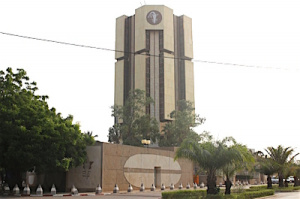
On August 2, 2018, in Lomé, Togo’s trade and private sector’s development ministry, in partnership with BCEAO, kicked off the national launch of a scheme, aimed at supporting the financing of WAEMU’s SMEs and SMIs.
Initiated by BCEAO, “ Dispositif Pme”, which should be implemented in each of WAEMU member countries, is aimed at setting an ecosystem favorable to SMEs’ funding by banks in order to improve their contribution to GDP and their job creation capacity.
This scheme provides an appropriate solution to SMEs’ funding problems, via incentives offered by BCEAO to credit institutions. “When credits are offered to eligible companies, BCEAO can, in return, refinance those credits to the banks at more attractive conditions”, Kossi Ténou, BCEAO’s resident representative in Togo, explained.
The goals of this scheme are to promote SMEs by improving their management and refinance eligible companies’ loans as well as diversify the financial instruments adapted to their needs.
To be eligible for that scheme, the company should be a non-financial institution producing market goods or services with less than CFA1 billion as operating capital. The company must also fulfill the legal obligations to publish financial reports according to WAEMU’s rules.
The Togolese ministry of trade and private sector development Bernadette Legzim-Balouki informs that the government will take all the required measures to allow the operationalization of this scheme in Togo.
Let’s remind that this scheme falls in line with the permission granted to the Central Bank in 2012 by WAEMU heads of States in the framework of the action plan to finance the union’s economies.
Séna Akoda
U.S retailer Whole Foods Market eyes Togolese market
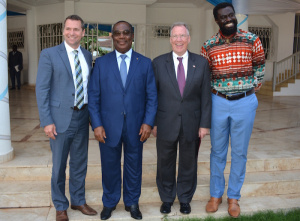
Whole Foods Market is interested in Togo’s market and has, to this end, come to explore business opportunities that the country has to offer. This was disclosed by the firm’s vice president, Don Clark, last Thursday after meeting with Togo’s Prime Minister, Komi Selom Klassou. At the meeting were also present U.S ambassador to Togo, David Gilmour and Olow-n’djo Tchala who heads Alafia, a local NGO.
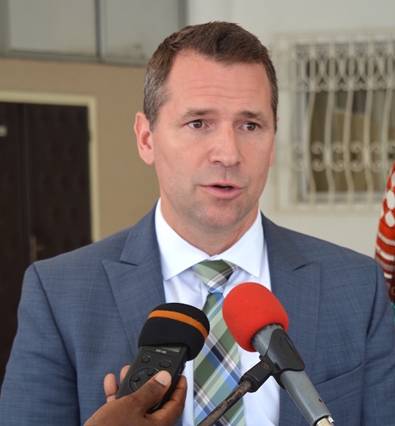
Alafia’s presence is due to the fact that it already collaborates with the U.S retailer. The NGO makes soaps, shampoos, shea butter-based products and coco oil, which it sends to Canada, U.K and the States.
Besides the Prime Minister, Don Clark also met various entrepreneurs whom Whole Foods Market could partner with to export organic products to the United States.
“We also discussed opportunities that we could leverage on in Togo to build other partnerships similar to the one we have with Alafia,” Clark said.
With close to 500 stores around the world, Whole Foods Market is a global retailer of organic food products. Founded in 1980 and based in Austin, Texas, the company was acquired in June 2017 by Amazon for $13.7 billion.
Fiacre E. Kakpo
Togo: From 2008 to 2017, rice output rose by more than 64%
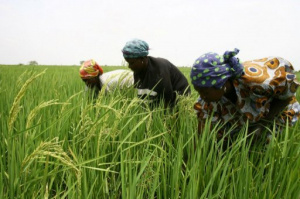
From 2008 to 2017, Togo’s rice output soared by more than 64%, from 85,637 metric tons to 140,519 metric tons (Mt). This was revealed July 31, 2018, during a meeting gathering various actors of the sector.
On this occasion, the actors set output target for 2018 at 232,750 Mt, including 139,650 Mt of milled rice.
In order to achieve this goal, sown areas would be increased. Meanwhile, producers are asking for tax exemptions on agricultural equipment and inputs as well as better access to bank loans.
Actors present at the meeting recommended the use of rice varieties that are more suited to rainfed farming and a better organization of the sector.
Séna Akoda
World Bank finances the creation of an agricultural research centre in West Africa
World Bank will finance the creation of an agricultural research centre in West Africa. This was announced by Pierre Laporte, the institution’s director of operations in Togo, Benin, Burkina Faso, Guinea and Côte d’Ivoire, last week during a press conference in Abidjan.
The centre which will cost $70 million should help countries in the region to better develop their agricultural policy, and “better address farming issues”, Laporte indicated.
In the long term, the project would help modernize farming and improve farmer’s connectivity, via e-farming. The latter aims to boost farmers’ visibility, both physically and virtually, thus allowing them to sell their products more easily.
In line with its vision to support Africa’s development, the World Bank actively intervenes in key sectors such as agriculture and education. The institution in Togo is engaged in many projects and plans under its new 2017-2020 partnership framework to boost its support to the country, knowingly by investing more in agriculture.
Ecowas issues recommendations to end the ongoing political crisis in Togo
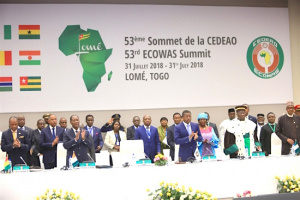
During the just-ended Conference of Ecowas Heads of States and Governments held in Lomé last Tuesday, various recommendations were adopted to ensure the end of political crises in Togo.
First, the conference congratulated the crisis’ facilitators, namely Ghana and Guinea’s Presidents, Nana Akufo-Addo and Alpha Condé, for their achievements in the framework of the mission they were trusted with during the previous meeting held on April 14, 2018. It also lauded commitments of the various parties concerned, in regards to the resolution of the crisis. However, it urges Togo’s government to continue making efforts to boost trust and appease tensions, by accelerating legal procedures related to those arrested during past political protests. The conference recommends that the government looks at additional measures to favor the detained, all to ensure peace and stability in Togo.
The Conference also condemns acts of violence, urging protesters to return all weapons stolen from the police and other security forces. Still to ensure sustainable peace, the conference requested that political actors and civil society refrain from issuing any statements or taking any action that might spark new conflicts, thus impairing efforts made so far.
Similarly, Ecowas heads of States and governments’ summit “calls security forces to remain professional while working to protect goods and people”. Another point the summit insists on is the full revision of the electoral registry. It has actually urged the government to proceed to this revision before the next legislative elections on December 20, 2018.
Regarding constitutional reforms, the summit calls all political actors and the government to work to adopt the two-turn election model for Presidential elections, reduce to two the maximum number of presidential mandates, recompose the Constitutional Court, set a maximum number of terms for its members and improving electoral process.
Concerning elections, African heads of States and governments say they are happy with the “measures planned by Togo’s government” in the framework of their preparations, organization and conduct. The leaders believe the polls will take place in transparent, credible and open conditions.
Some of these measures include accelerating and finalizing electoral census to get a reliable voters list, enabling Togolese living outside the country to vote during coming elections and deploying election observers.
Ecowas leaders also congratulated opposition in Togo for its openness and sense of responsibility and for having agreed to discuss ways to meet its claims. Same goes for President Gnassingbé whom the conference applauded for collaborating with all competent authorities and institutions to end the crisis, peacefully.
Still in order to solve what Togo is going through at the moment, these leaders urged all involved parties to respect the constitution in place. To this end, the Summit requested, via a public statement, Ecowas’ support and technical expertise in the coming elections.
Ecowas leaders again pledged their support to the mediators of the political dialogue in Togo while asking these mediators to keep on going with their efforts and submit a report of their progress at the next session of the conference.
To ensure that these recommendations are followed, a follow-up committee regrouping representatives of the mediators, of the ruling party, of the opposition (a coalition of 14 parties) and of the Ecowas commission, will be set up.