

Togo First
Togo and Ghana will soon connect their customs IT systems
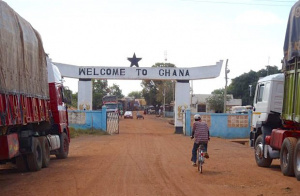
Togo and Ghana will soon connect their customs IT systems, in the framework of the First Port Duty Project.
Initiated by the Ghana Revenue Authority, this project aims to better secure customs transactions. In effect, it will help improve customs controls and ease data exchange between both countries’ customs services.
To speed up the project’s implementation, a joint committee will be set up. This was revealed after a meeting between the concerned parties on August 16, at the headquarters of the Togolese Revenue Office – OTR.
Besides interconnecting the two neighbors’ customs IT systems, First Port Duty will require physical collaboration between both administrations. It is a major milestone in their fight against tax fraud which, according to recent data, cost Ghana significant sums.
Octave A. Bruce
Arab Parliament asks Togo and two others to reconsider moving their embassies to Jerusalem
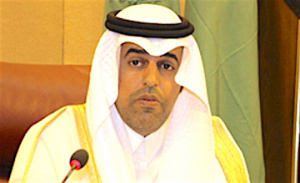
The President of the Arab Parliament, Mishaal bin Fahm Al-Salmi, urged Togolese authorities, as well as those of Romania and Honduras to reconsider their decision to move their respective embassies to Jerusalem.
According to Bahrain News Agency, the AP president, in a letter addressed to the three nations’ parliaments, asked them to comply with the UN resolutions, adopted on December 21, 2017, which “oppose any encroachment on the historical and legal status of the occupied city”.
Al-Salmi warned that any measure aimed at changing Al-Quds (Jerusalem)’s status would have no legal impact and will be null and void.
Let’s recall that on December 21, 2017, nine countries, including Togo, voted against the United Nations’ resolution to condemn US’ decision to recognize Jerusalem as Israel’s official capital.
Fiacre E. Kakpo
Togo : Husbandry contributes 6.73% to GDP
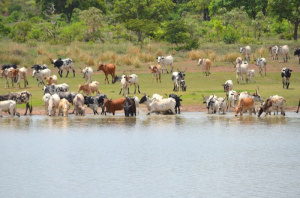
In Togo, husbandry contributes 6.73% to national GDP, according to data from the Ministry of Agriculture, Husbandry and Fisheries.
The sector thus participates highly to agriculture’s contribution to national GDP, which is estimated at 40%. Specific to agricultural GDP, husbandry represents 16.4% of the figure.
These good performances are mainly attributed to the Agriculture Support Program (PASA). The latter falls under the National Program for Investment in Agriculture and Food Security (PNIASA).
PNIASA indeed captured a global investment of more than a billion and two hundred million CFA; A sum that was injected in the husbandry sector, causing its productivity to rise significantly.
In details, the number of small ruminants (sheep and goats) rose from 1.5 million in 2011 to 4.8 million in 2017. As for poultry, their number grew from 8 million to 22.5 million in 2017.
It should however be indicated that despite contributing greatly to wealth and job creation in the country, the sector still is not much valued, especially by the youth.
Séna Akoda
Togo: Keras to begin bulk sampling testwork program at Nayega manganese project, on August 27

Keras Resources will at last commence its 10,000 tonne bulk sampling metallurgical testwork program at the Nayega Manganese Project in the Kpendjal prefecture, in northern Togo.
The AIM-listed British firm is active on the project through its subsidiary Société Générale des Mines SARL (SGM). The latter which detains 85% of the project, announced in a statement released last Wednesday that it has reached a major milestone in its development.
Keras appointed as head of the project Graham Stacey. Stacey before that was Project Head at Keaton Energy Holdings. He was also director at Chromex Mining and Venmyn Rand; and spent eight years at Anglo American.
In its statement, the mineral resource company further indicated that Stacey would collaborate with CMTP, a local firm specialized in quarry management, mining, extraction and logistics, to plan the program.
Keras revealed it signed a deal with South African firm Appropriate Process Technologies (APT), in the framework of the project. APT will, under agreed terms, build a bulk sampling factory, as well as deliver equipment needed for the program. The latter should be available soon for operations to begin next August 27.
The bulk sampling program will, according to estimations, cost $1.5 million, and should be completed mid-January, next year.
The Nayega project is an open-pit, low-capex project. It covers an area of 92,390 ha and hosts a deposit that is 2.2 km long and 500 m large, with an average depth of 3.3 m.
Fiacre E. Kakpo
Togo: Key actors of mining industry meet again in Lomé, to discuss the sector’s environmental and social impact
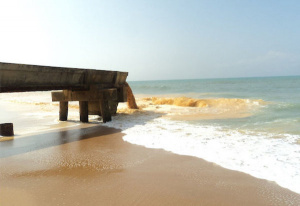
Today, Aug 20, the coordinating team in charge of Togo’s mining development and governance project (PDGM) has launched a second meeting to assess the social and environmental impact of mining in Togo. The first meeting was held in March, this year.
The gathering aims to promote better practices in the sector, so as to reduce its negative impacts on populations and the environment.
Marcel Sogle, Head of Mining and Geology, indicated that the project also aims at making extractive industries more profitable and transparent. “Under this project’s implementation, an environmental and social impact assessment (ESIA) of the sector is planned. This is to raise the attention of all parties concerned on social and environmental issues related to the growth of Togo’s mining sector,” Sogle said.
The World Bank, it should be recalled, disbursed $15 million via its IDA fund to support the PDGM.
President Faure Gnassingbé to visit China, from September 2-10
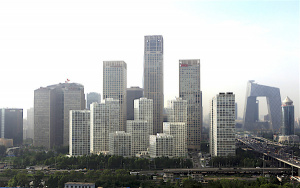
From September 2-10, Togo’s President Faure Gnassingbé will be visiting China in the framework of the China-Africa Cooperation Forum (Focac), to discuss ways to broaden the nation’s cooperation with the Asian giant.
First, the Head of State will attend a high-level dialogue with his Chinese counterpart and the business community in Beijing, where the forum will be held from September 3-4. A round table is also planned.
Next, Gnassingbé will attend on September 5, hearings with Chinese financial and state institutions, including China Merchant Group, which is active in maritime, financial and real estate sectors. Meetings with managers of Eximbank of China (which is very active in Togo) and China Development Bank as well as the Managing Director of BRICS Bank are also planned.
Following hearings which are set to end September 6, a bilateral meeting between the two Heads of State will notch the Togolese president’s stay in the Chinese capital.
The next place, Zhiejan which is the country’s fourth-largest economic province, will witness the signing of a strategic partnership. This agreement is expected to attract Chinese investors, an important move in the implementation of the National Development Plan (PND). In addition, Faure Gnassingbé will meet with Jack Ma, the province’s Governor and CEO of Alibaba, the global e-commerce giant.
Let’s mention that Gnassingbé will lead works of the Business Forum organized by Togo. About thirty companies operating in the PND’s strategic sectors are invited. A visit to companies such as Alibaba, Hangzou Economic & Technological Development Area and others will conclude his stay in Zhiejan Province.
The Togolese presidential delegation will finally visit Guangdong province, China's 8th largest economic province, where it will establish partnerships in textile sectors.
Togo: A pool of business opportunities, according to Eagle Scientific Ltd
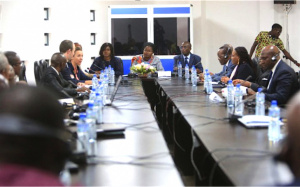
The British group Eagle Scientific Ltd is eying Togo in the framework of its activities. Specialized in the manufacturing of scientific equipment and world-leading provider of scientific, vocational and medical training, this company is planning to establish operations in Togo in the coming months to support the industrial sector’s development and create jobs.
Indeed, during an exploratory visit realized last week to explore business opportunities, the group’s managers and British parliamentarians had discussions with many members of the government.
Many ministers such as Victoire Tomégah-Dogbé, the development, craft, youth, and employment minister, Ninsao Gnofam, the transport minister and Sandra Ablamaba Johnson the president’s adviser and coordinator of the corporate affairs commission participated in this high-level meeting.
According to the group’s representatives, with the infrastructures, geography and its president’s leadership, Togo is a pool of business opportunities for investors.
The planned investments should have a significant impact on the country’s economic development, Emmanuel Finndoro-Obasi, head of the UK delegation, indicated.
Togolese Evelyne Hohoeto was recently sworn in as one of five Judges at OHADA’s CCJA

Appointed last November as one of the five judges of the Common Court of Justice and Arbitration of the Organization for the Harmonization of Business Law in Africa (OHADA), Evelyne Hohoeto, High Magistrate and Executive Secretary of the National OHADA commission met with the press on August 16, at the Ministry of Justice. We thus had the opportunity to ask her a few questions regarding her new position.
Togo First: You were recently made magistrate at the Common Court of Justice and Arbitration (CCJA) of OHADA. How did this happen?
Evelyne Hohoeto (E.H) : First, I am grateful to the President for allowing our Minister of Justice to submit my application when the position at CCJA was opened. We were 13 applicants and out of these, five were picked. We were appointed by OHADA’s ministers’ council, held on November 23 and 24, 2017, in Conakry, Guinea. We were later on June 28 sworn in in Abidjan.
T.F : So, what are your main responsibilities ?
E.H : Let me emphasize that candidates must come from different countries. Given that the court is Ohada’s highest court and since it acts as a court of cassation and Supreme Court for all 17 member states of the organization, our role and mission as judges is to build the Ohada’s jurisprudence. This jurisprudence‘s purpose is to harmonize laws and practices within Ohada which is actively engaged in the improvement of business climate in member states making them more attractive for investors. CCJA hence intervenes when two distinct parties are having a conflict related to business law, for example regarding corporate law. During the legal process, when one or both parties is not satisfied in first instance and files for appeal, it has to submit the case to the CCJA which plays a key role in the elaboration of the OHADA law.
T.F : You are the first Togolese to fill this position. It is therefore both an honor for you and for Togo as well…
E.H : Of course, it is an honor for my country, and for me also. I will represent Togo proudly and with much dynamism in order to honor it even more.
T.F : How long will you be holding this position ?
E.H : Judges are appointed for a 7-year non-renewable term, therefore I will hold this position for 7 years.
T.F : Have you already moved to Abidjan ?
E.H : Yes, I have since June 28, 2018, when I was sworn into office.
T.F : What do you have to say to close this interview ?
E.H : My country has always contributed to the expansion of Ohada. As permanent secretary, Togo was the one to lay the organization’s foundations, and help it walk its first steps. I am proud to represent Togo because I know I have its support and also I can rely on the seriousness of Togolese when it comes to doing a job well.
Caleb Akponou (Intern)
Espace Culturel Level to train young people in tire recycling in Lomé, end-August
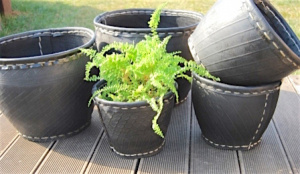
From August 27 to 30, Espace Culturel Level will organize in Lomé, a workshop to train young people in recycling tires into artwork. This, of course, it will do, while taking into consideration environmental concerns.
During the workshop, participants will be equipped with technical knowledge which will allow them to recycle old tires, turning those into chairs and tables. Pneumatic craft will be studied as well.
Formerly known as “Fil Bleu Aréma”, Espace Culturel Level hosts shows, cultural events and various workshops focused on culture-related professions.
“Technologies to achieve Africa’s green revolution exist, but are mostly just sitting on the shelves” -Akinwumi Adesina
African Development Bank’s (AfDB) President, Akinwumi Adesina, made a call to equip African farmers with new technologies that are able to transform the continent’s agricultural production. “Technologies to achieve Africa’s green revolution exist, but are mostly just sitting on the shelves. The challenge is a lack of supportive policies to ensure that they are scaled up to reach millions of farmers,” said Adesina.
Emphasizing the Bank’s determination to transform African agriculture to unlock new sources of wealth, the President declared: “There is no reason why Africa should be spending US$ 35 billion a year importing food. All it needs to do is to harness the available technologies with the right policies and rapidly raise agricultural productivity and incomes for farmers, as well as assure low food prices for consumers.”
Through its Enable Youth initiative, the AfDB has spent over the past two years around $300 million to develop Africa’s next generation of agribusiness holders and farmer-traders.
“With the rapid pace of growth of the use of drones, automated tractors, artificial intelligence, robotics and block chains, agriculture as we know it today will change,” Adesina said. “It is more likely that the future farmers will be sitting in their homes with computer applications using drones to determine the size of their farms, monitor and guide the applications of farm inputs, and with driverless combine harvesters bringing in the harvest.”