
Togo First
Togo: World Bank announces $40M financing will be effective “in a few months”
Hawa Cissé Wagué, World Bank resident representative in Togo, who has replaced Joëlle Dehasse at the office last June 30, confirmed July 24th the $40 million budget support announced by her predecessor, saying it should be effective “in a few months”. This was during a meeting with Prime Minister, Komi Sélom Klassou.
The facility, it may be recalled, was lauded by the Prime Minister two months ago when announced by World Bank’s Country Director for Togo, Pierre Laporte. “This $40 million financing would ensure good relations between the institution and our country,” Komi Sélom Klassou had said.
Let’s recall also that just a few days ago, the World Bank provided Togo a $30 million credit to improve urban infrastructures and management.
From $150 million in 2015, World Bank’s portfolio in Togo doubled to $350 million in 2018.
Séna Akoda
Parliament adopts bill to boost clean energy production
On July 24th, Togo’s parliament adopted a bill to promote power generation from clean sources. This is in line with the government’s 2018-2030 electrification strategy under which it plans to bring renewables’ share in the country’s energy mix to 50%.
The new bill will surely help boost investment in clean energies, but also efficiently tackle various challenges related to generation, commercialization and use of clean energy.
The present law sets a global legal framework to implement clean energy projects, be it for local consumption or export. “The government is quite satisfied of the parliament’s decision as this law will help it move from theory to action and implement strategic axes of the new national electrification plan,” said André Johnson, the minister of environment and forest resources.
Under Togo’s plan to provide access to reliable, modern energy for all by 2030, 300 mini solar plants are to be set via private-public partnerships, hydropower dams are to be built and 550,000 households are to be provided with solar kits. The new bill, authorities believe, will greatly contribute to the concretization of these various goals.
“Today’s vote will support the implementation of our energy strategy which is based, among others, on clean energy development, namely solar and hydropower, as well as on environmental protection, in line with the sustainable development goal 7 (SDG7). Indeed, this goal aims to ensure access to affordable, reliable, sustainable and modern energy for all,” Johnson said after the adoption.
Fiacre E. Kakpo
Togo: Moov to spend CFA28bn on newly-acquired 2G/3G/4G licenses
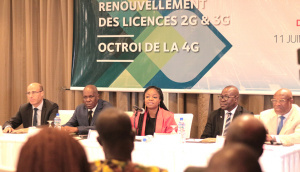
Mobile operator Atlantique Télécom, also known as Moov, will have to pay CFA28 billion for the early renewal of its 2G and 3G licenses and their extension to 4G. This was reported in the H1-2018 Consolidated Financial Report published by Maroc Télécom, Moov’s parent company.
The money will be disbursed under three annual payments starting this month, the report said. The second-largest mobile operator in Togo which is estimated to handle over 3, 151, 000 subscribers, through June 30, has already spent MAD28 million (about CFA1.6 billion) for the second and last tranche of its 3G license obtained in 2016.
Let’s recall that the newly obtained licenses (June 11) are set to run till December 31, 2036. The company is 95%-owned by Maroc Télécom.
Fiacre E. Kakpo
Moov Togo, among others, drives Maroc Telecom’s turnover up in H1 2018
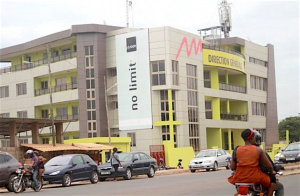
Over the first half of 2018, Maroc Telecom which owns telecom operator Moov has recorded a turnover of CFA1,065 billion, which represents a 5% increase compared to the same period in 2017. Moov’s Togolese subsidiary, along with those present in Benin and Côte d’Ivoire mostly contributed to the performance.
In these countries, Moov’s performances were driven by a greater data consumption and mobile money transactions. Besides the three nations, the group’s six other sub-Saharan subsidiaries in Niger, Mali, Central African Republic, Burkina Faso, Mauritania and Gabon also fared well over the period reviewed.
As at June 30, 2018, these units generated CFA483.68 billion of revenues (7% rise compared to H1 2017) with a customer base of 38,239,000 users. This represented nearly 48% of Maroc Telecom’s overall turnover.
Regarding Moov Togo, its customer base grew by 19.6%, from about 2.6 million users a year before, to 3.1 million users at the end of the past semester.
Fiacre E. Kakpo
ASECNA-Togo has safely guided 6300 flights between January and July 2018
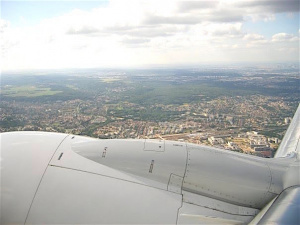
Togo’s subsidiary of the Agency for the Safety of Air Navigation in Africa and Madagascar (ASECNA) has safely guided 6,300 flight between January and July 2018.
These flights include commercial and military flights, that of cargos and others, heading to the country’s two airports (Lomé and Niamtougou) or crossing Togo’s airspace.
The rising performance was attributed to the adoption of radar vectoring on March 1, 2018.
Séna Akoda
Emerging Capital Partners picks BNP Paribas to arrange the sale of its stake in Orabank
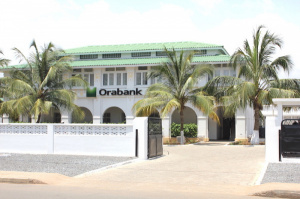
U.S fund Emerging Capital Partners (ECP), major shareholder of Oragroup, has picked BNP Paribas to lead the sale of its 59.84% stake in the Lomé-based company, La Lettre du Continent reveals.
Due to its good performances over the past two years, Orabank is eyed by many investors such as Beltone Financial. Indeed, the Egyptian firm which is held by billionaire Naguib Sawiris, announced last May that it wishes to acquire shares in Oragroup.
However, Beltone Financial which operates Egypt’s investment and assets management bank did not provide details about the volume of shares it eyes.
Present in 12 countries with 143 branches and 400,000 clients, Oragroup has recorded a 45% increase of its net profit in 2017, standing at $40.1 million.
Recently, Orabank got its first financial rating. The lender was rated A with a long-term stable outlook, by the Ivorian rating agency Bloomfield Investment.
Regarding its shareholding, so far, besides ECP, the bank is held by Proparco (9.92%), BOAD (2.47%), EBID (2.43%) and various minor stakeholders who hold 14.12% combined.
Fiacre E. Kakpo
African Guarantee Fund to establish reference incubator in Togo
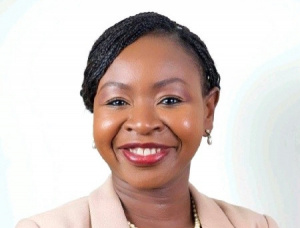
Adidjatou Zanouvi, Managing Director African Guarantee Fund West Africa, revealed that the institution will soon build a reference incubator in Lomé.
The project is in line with African Guarantee Fund’s vision to make Lomé a reference in terms of private sector across West Africa.
With the new incubator, the fund also plans to support local SMEs as well as financial institutions, to help them grow.
Besides technical support, African Guarantee Fund will be granting guarantees to about 2000 SMEs a year, in West Africa, as against 1000 at the moment.
AGF West Africa has “contributed at least 40% of guarantees provided in the region over the past few years”. Now, it wants to “increase this volume five-fold in the next three years”, Zanouvi declared.
The institution’s greatest challenge however is to enable “SMEs, in the various countries it operates, to create between 30,000 and 50,000 jobs in the five coming years”.
Séna Akoda
Keras Resources gets Togo’s approval to conduct testwork programme at Nayega manganese project
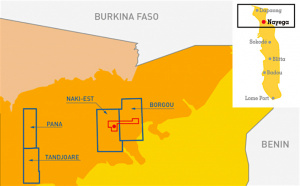
AIM-listed Keras Resources announced last Monday that it got approval to undertake a bulk sampling metallurgical testwork programme at its Nageya manganese project, Northern Togo.
For the firm, obtaining permission on the project which it controls (85%) via its subsidiary Société Générale des Mines SARL (SGM).
The testwork programme is estimated at $1.5 million and includes the processing of 10,000 t of beneficiated manganese ore by a major producer of manganese-based alloys, to assess how suitable the ore is in its smelting facilities.
Keras also revealed that it is targeting a beneficiated +10mm to 75mm manganese product through a simplified washing, scrubbing and screening operation.
Costs related to the programme, such as equipment, operating, logistics and management costs are fully funded by an end-user which the British says it reached an agreement with. Actually, an initial financing was provided to cover long-term fixed assets and management costs. “We have secured a funding agreement with a third-party end-user that potentially may share significant synergies with a West African manganese producer,” said Keras CEO, Russell Lamming.
“We believe this is a huge endorsement for both the project and our team’s ability to identify quality assets and we look forward to working closely with the end-user through the metallurgical testwork process,” he added.
Keras has completed the tender process with local mining contractors and logistics companies that are able to start the operation immediately. Contracts will be awarded by late July.
The company, which wishes to expand its manganese assets in Togo, said it is discussing with Togolese authorities to boost the profitability of its operations in the country. “Over the past several months we have been engaged in constructive discussions with the Ministry of Mines and other regulatory bodies in Togo on how to progress the Nayega project into a profitable mine,” Russell Lamming said.
Keras’ shares soared by 15% in value after the nod announcement.
Open-pit low-capex Nayega project covers an area of 92,390 ha. It is situated on a deposit that covers 2.2km by 500m and averages 3.3 thick.
Fiacre E. Kakpo
“Africa Energy Generation Prize” awards the laureate of its second edition in Lomé

On July 20, 2018, the French Institute in Lomé hosted the prize award ceremony to the three project holders with the best idea for the second edition of African Energy Generation Prize, a pan African competition to reward unconventional energy sources inventions.
This initiative is aimed at promoting and supporting technical innovation as well as social entrepreneurship locally to identify, develop and propagate Made in Africa energy solutions on a larger scale.
After a coaching for about a year to transform their idea into concrete projects via the creation of functional prototypes, five candidates from five countries alternatively presented their projects in front of a jury of energy experts constituted for that purpose.
The Nigerian Abiola Ajala was awarded the first prize (€5,000 in value) for his project Sunbox which ambitions to set kiosks with solar panels which will allow traders to charge their phones and LED lights as well as protect themselves from mosquito bites while at the same time avoiding sunlight.
The second laureate was the Beninese Annette Adanmenou (prize: €3,000) with her project Energy Bio Foods, an integrated solution for the production of biogas. This will help cook while at the same time providing organic fertilizers to farmers.
The last laureate is the Zambian Victor Masumba (price: €2000) thanks to his project M.D. Hybrib Wind Turbine, a wind power generating system for remote farms in Zambia.
At the end of the ceremony, Astria Fataki, president of Energy Generation, declared that she was “very proud of the various laureate and for the project ideas they presented”. She also added that her institution will support them for two years in the development of their project. “We are also setting an investment fund, which will allow us to invest in those projects once they are sufficiently mature to receive an investment, so as to be present for all the value chain for those projects from ideation to the creation of a viable business”, she added.
Let’s remind that the Africa Energy Generation Prize has been organized with the support of its partners such as the ministry of post and digital economy, Schneider Electric, EDF, ENGIE Akon Lighting Africa.
Togo is doing very well on the regional financial market
Following a strong performance at the end of June this year, when it succeeded in raising CFA21 billion, Togo concluded July 20 a simultaneous issue by targeted auction of OATs fungible treasury bonds. The operation has seen CFA57.49 billion mobilized against CFA50 billion initially required. A bid to cover ratio of 114.98%, which reflects the interest of investors in a market which was still tepid at the beginning of the year. Togo will capture CFA55 billion, thus 95.67% of the total amount.In detail, the first 3-year bond with a fixed coupon of 6.25%, mobilized CFA51.04 billion including CFA48.55 billion retained. The second, maturing in 5 years (July 23, 2023) and offering a fixed interest rate of 6.5%, raised CFA6.45 billion. The average price of the 3-year OAT was CFA9, 655 with an average return of 7.57%. The 5-year OAT, whose average price is estimated at CFA9, 650, offers a return of 7.36%. Most of the sales were carried out by Togo’s primary dealers (SVTs) (Boa Togo, Coris Bank, Ecobank, Orabank and UTB), which provided CFA45.34 billion, including CFA43.86 billion retained on the 3-year bond and the integration of the 5-year bond.
Let’s note that Burkinabe primary dealers also invested CFA5.7 billion in 3-year OATs. In Q3 2018, Togo plans to raise CFA130 billion, of which CFA110 billion as OATs and CFA20 billion in treasury bills (BATs). Next issue worth CFA40 billion is scheduled for August in Lomé.
Fiacre E. Kakpo