

Togo First
Togo: 4G in…at last!

So much awaited, 4G has been made a reality today, June 11, in Lomé.
This was disclosed in an invitation notice initialed by the director of the regulatory authority for posts and telecommunications of Togo (ART&P).
According to the notice, this Monday, a ceremony for the signing of 4G licenses and the renewal of 2G and 3G licenses with Togo Cellulaire and Atlantique Telecom Togo (MOOV) will be held at Hôtel 2 Février.
With 4G’s arrival, a new era dawns on Togo’s connectivity sector. Good news for the Togolese people who will enjoy broadband.
Last May 8, the ministers’ council allowed Cina Lawson, minister of posts and digital economy, to grant the mentioned licenses to Moov and Togocel.
Fiacre E. Kakpo
Togo : Despite recent sociopolitical protests, growth should reach 4.9% in 2018, and 5.2% in 2019, IMF reports
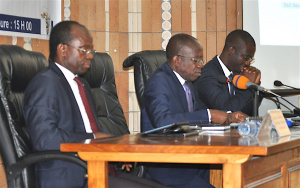
The International Monetary Fund (IMF) office in Togo released May 7th a report on economic outlook for the sub-Saharan Africa region, in the presence of the minister of planning and development, Kossi Assimaidou.
The document forecasts a slight recovery of economies in the region. Economic activity is expected to rise by 3.4% and demography by 2.7-3%.
The timid rise can be attributed both to situational and structural reasons. Truly, the drop in prices of commodities and decline in terms of trade started since 2015, and keeps weighing on African economies which, for the most part, still have a lot of structural challenges.
Also, the economies have issues raising funds on their own via tax collection, or attracting private and foreign investments mainly due to poor infrastructures and business climate.
According to Kossi Assimaidou, each country should make more efforts to reverse this trend by achieving a more robust growth.
Concerning Togo, the timid restart report indicates that despite sociopolitical protests recorded in Q2 2017 which impaired performances of the tertiary sector, local economy should grow by 4.9% in 2018, against 4.4% last year. In 2019, it should grow by 5.2% according to IMF. In sight of these promising projections, the minister of planning ensured that the Togolese government will relentlessly keep improving public finances and implementing reforms to achieve a more inclusive and sustainable growth.
Fiacre E. Kakpo
Togo: In Central region, 13 shea farming cooperatives secured pre-financing facility to boost and secure shea sector

The ministry of agriculture, husbandry and fishery, and Société Togolaise de Karité (Togo’s Shea Corporation) initiated a vast program to pre-finance the shea sector.
According to local newspapers Togo Press, the project will be developed in three regions which are the Central region, Kara and the Savannah region. It aims to boost and protect local shea production against foreign speculators.
Long-term goal is to empower women that work in the sector and make sure it is more viable.
The first region to benefit from the project is the Central region where 13 shea farming cooperatives got a pre-financing facility valued at CFA6,280,000, as well as protective equipment (boots and gloves). “Farmers, I urge you to more perseverance and I promise cooperatives the support of Société Togolaise de Karité, STK, for their growth, said Elisabeth Pali-Tchalla, President of the Shea sector in Togo.
For his part, Moussibaou Séidou, Director General of Agriculture, Husbandry and Fishery said “the pre-financing operation, which aims at securing this key sector, contributes to the country’s economic growth”.
Togo, let’s recall, joined the Global Shea Alliance in March 2018. The West African nation which is currently the 7th largest shea nut producer in Africa is also among countries that are likely to host the 12th global meeting in this sector.
Séna Akoda
Togo’s Office for the Development and Exploitation of Forests reforested 12,000 ha State lands since it was established

From June 5 to 7, 2018, the Office for the Development and Exploitation of Forests (ODEF) held open days to inform the public about its activities over the past 40 years.
During the event, exchange sessions and furniture exhibitions took place. ODEF revealed that so far it has reforested, enriched or developed about 12,000 hectares of State lands.
Between 2013 and 2016, the office indeed produced 500,000 seedlings including 255,000 teak stumps. It also purchased 3 million seedlings and stumps for its reforestation programmes.
“ODEF is committed to a sustainable management of Togolese forests, with the support of local communities. This is why, we want the people to be at the heart of exchanges regarding all our operations across the country,” said ODEF’s managing director, Gbadoé Edjidomélé.
With ODEF’s contribution, the size of protected ecosystems increased over the past three years, from 7% to 7.4%. Meanwhile, the size of restored areas (previously degraded) expanded to 210 ha in 2015, from 171.5 ha in 2014.
Séna Akoda
Dakar-based incubator CTIC presents results of feasibility study to Tech Hub project

West Africa’s leading incubator, CTIC-Dakar, which has been appointed by the Togolese ministry of posts and digital economy to conduct feasibility study for a Tech Hub project in Lomé released yesterday the results of this study.
The results’ presentation took place in the capital in the presence of the minister of digital economy, public and private actors, Tech communities, various associations, banks and also actors of the Tech industry.
In detail, the study looks at advantages and challenges of the project, potential support mechanisms and its structure.
It will serve as a roadmap for the tech hub’s installation. The facility, let’s emphasize will be built on a 3,000 m2 dedicated area. It will include a “Fablab”, modular conference rooms, co-working spaces, meeting and training rooms, recreational areas, etc.
“The facility will be a hybrid, multipurpose and open space to foster meetings, exchanges, debates, creativity and innovation among entrepreneurs, investors and other decision-makers of all sectors,” the minister of digital economy said.
According to Togolese authorities, setting up the tech hub is part of various projects developed by the ministry of posts and digital economy, such as “Wifi Campus”, or the “Digital Working Environment (ENT)”.
Fiacre E. Kakpo
Spurred by its geographic position and recent reforms, the Port of Lomé absorbs traffic of Nigerian ports
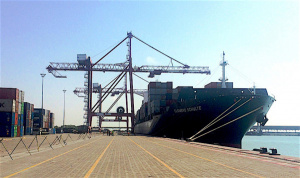
According to data from the Nigerian Ports Authority (NPA), volumes of oil and food products as well as building materials and other goods passing by the port of Lomé to reach Nigerian ports have increased by 181% in 2017.
This is mainly due to the fact that the Togolese port is the only deep-water port of the region and the only one along the West African coast through which goods can be sent in a single day, to many of the region’s capitals.
This major advantage, paired with the Togolese government’s efforts to make Lomé a true logistics hub in West Africa, has led to the implementation of many reforms at the port in the past few years.
These include for example simplification of processes, slight reduction of handling delays, modernization of the port with the construction of a third dock; Achievements which subsequently helped cut costs and make the infrastructure more competitive.
Also in sight of these reforms, the UNCTAD recently released a report where it ranked the Port of Lomé as one that recorded the most progress in the sub-Saharan Africa region, in terms of maritime connectivity.
Fiacre E. Kakpo
Bank of Africa (BOA) gets $60 million funding from IFC to support SMEs in eight African countries, Togo included
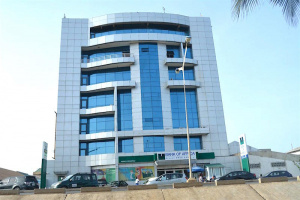
World Bank’s private sector arm, the International Finance Corporation, promised last Monday a $60 million financing to the Bank of Africa group (BOA).
This facility will be used to cover half of risks on a $120 million loan portfolio targeting SMEs across eight African nations, including Togo.
Half of the funds will be allocated to women-led businesses, and projects fighting global warming.
IFC’s director for Africa, Oumar Seydi said “the facility will help BOA grant more than 5,000 loans, over the next five years, to SMEs that actually have difficulties securing loans”.
Let it be noted that the financing could not have been possible without the support of the Women Entrepreneurs Opportunity (WEOF) which was initiated by IFC via its Banking on Women program. Beside Togo, other countries that will benefit from the funds are Burkina, Ghana, Madagascar, Mali, Senegal and Tanzania.
BOA-Togo, let it be recalled, is the group’s 16th subsidiary and it started operating in 2013.
At end-2016, the bank which is detained by BOA West Africa (+94% stake) had more than CFA117 billion worth of assets, CFA32 billion of deposits, CFA55 billion of customer debts and 10 branches across Togo.
The Bank of Africa Group’s major stakeholder is the Moroccan lender BMCE Bank which detains 72% of the group’s shareholding.
Fiacre E. Kakpo
HAAC reminds public media that it is compulsory to get its approval before advertising any product or service
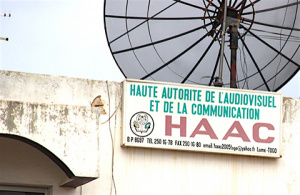
Yesterday, June 6, a delegation of the High Authority for Broadcasting and Communication (HAAC) visited headquarters of public media. These are the Togolese Television, Radio Lomé, Togo’s Press Agency (ATOP) and Editogo.
The purpose of this visit was to urge top executives of the media towards more professionalism. HAAC’s president, Willibronde Pitalounani Télou, particularly reminded them that they need the institution’s approval before advertising any product or brand.
By monitoring what is advertised via the various media, HAAC wishes to make sure message or product advertised complies with regulation in place.
HAAC also recalled that it is forbidden to advertise any sort of traditional medicine, or products such as tobacco or alcohol.
Togo : Telecom Ministry teams up with CTIC-Dakar to set up Tech Hub in Lomé
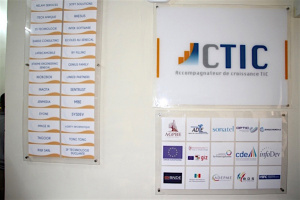
In line with its mission to support youth active in the ICT sector in Togo, the ministry of posts and digital economy is working to put in place a Tech Hub in Lomé. In this framework, the ministry partnered with CTIC-Dakar to leverage its expertise in the domain.
CTIC-Dakar is a Dakar-based incubator and its management is currently in Lomé to demonstrate that the Tech Hub project is technically feasible and economically viable as well.
Indeed, according to already carried out technical feasibility study, the facility can, not only boost innovation in Togo, but also help make ICT one of its economic pillars.
Togo’s government is quite aware of the need to provide its youth, involved in the tech industry, an appropriate working environment to bloom.
Actually, there are already many private startup incubators working with young Togolese techpreneurs seeking efficient support. Some of these incubators that helped put Togolese startups in the spotlight internationally during global contests are Woelab, Ecohub, Innov’Up.
Muriel Edjo
Costs of construction permit lowered to ensure buildings are well built

Beside the reduction of the cost of construction permit, automation of issuance processes of this permit are the main reforms initiated by Togolese government to improve its business environment and attract investors.
In regards to the permit’s cost, national construction and public works laboratory reduced fee needed for soil survey, for a one/two level warehouse, from Cfa900,000 to Cfa350,000.
As a result, the cost of construction permit for households also sharply dropped, to a minimum of Cfa250,000.
In addition, delay for the permit’s issuance was reduced, and application process was simplified. Indeed, it is now possible to apply from home since the process has been digitalized. This aligns with the new guidelines of WAEMU regarding actors’ mobility, especially architects.
To this move pairs a greater monitoring of constructions with the reinforcement of capacities in terms of equipment and human resources at concerned administrations. The government wishes through this to make construction safer.
Many other decisions were taken under the decree 2016-043/PR of April 1, 2016. They also positively impact issuance of construction permits. Among others, they relate to insurance policy and other requirements needed to ensure good work quality, etc.