

Togo First
Togo organizes a forum to boost transparency and accountability in mining industries

The Technical Secretariat for Transparency in Extractive Industries initiated a forum which began May 16 in Lomé to discuss ways to achieve transparency and accountability in mining industries, in Togo.
According to Didier Kokou Agbémadon, recommendations that will stem from the meeting will enable relevant services to better adapt mining governance to local realities. This comes after 8 years of implementation of the Extractive Industries Transparency Initiative (EITI).
In the same vein, Boukari Ayessaki, national coordinator of the Mining Governance Development Project (PDGM) said the forum will make governance of mining more transparent.
Séna Akoda
JICA invests CFA1bn in Togo-Burkina project for trade facilitation
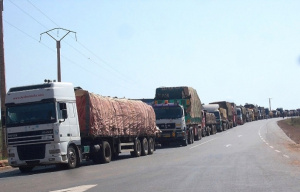
Japan International Cooperation Agency (JICA) will invest around CFA1 billion in a project to connect IT systems of Burkina and Togolese customs. The project aims to shorten time spent at the two nations’ customs office, while crossing their shared border; in addition, it should prevent issues on the road.
The project’s main goal is to facilitate trade, especially transiting of goods between Burkina and Togo,and as well Mali and Niger. In effect, it would reduce to two hours, from two days time spent previously to handle formalities along the Lomé-Ouagadougou corridor. Subsequently, it would help lower transportation costs, improve road safety and capacities of custom authorities in both countries.
In this framework, WAEMU’s commission, with JICA’s support, has provided Burkina’s customs 80 desktops, 80 printers, 6 laptops, 80 inverters with a capacity of 1,500 VA each, 2 of 10 KVA each, 3 servers, and 10 network equipment.
Still in this regard, awareness raising campaigns are being organized for some weeks now with actors of the transport sector, knowingly importers, exporters, hauliers and certified custom commissioners.
Séna Akoda
Local firm secures €2.6M to produce top-quality natural pineapple juice
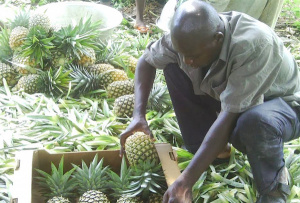
Togolese firm Jus Délice just raised from Moringa fund €2.6 million (CFA1.7 billion) making it the third largest African investment of the fund ever.
The firm will use the monies to produce top-quality natural (organic) pineapple juice. It targets the Europe which represents more than 50% of global consumption for organic healthy juices. This market is expected to grow by about 10% yearly.
In detail, Moringa’s financing will be used to build Togo’s most sophisticated juice-processing factory. It will also help Jus Délice develop a large network of farmers practicing organic farming. This will be done with Label d’Or, a local firm created in 2012, which exports most of the country’s organic products. The projected network should count more than 7,500 farmers regrouped as cooperatives and operating in diverse sectors, namely pineapple, mangoes, and oleaginous.
All these align with the firm’s goal to become the region’s leading natural juice producer. Commenting on the development, Clément Chenost, Investment Director at Moringa, said: “We want to make the company a reference in terms of organic juice”.
Moringa is an investment fund which targets agroforestry projects in Sub-Saharan Africa and Latin America. It is sponsored by La Compagnie Benjamin de Rothschild (CBR), and supported by the African Development Bank (AfDB).
Fiacre E. Kakpo
Lack of New Land Code Impeding MCA Threshold program
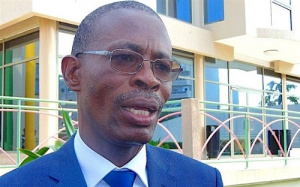
Under the Threshold program of the Millennium Challenge Account, Togo should have started implementing various reforms in its land and ICT sectors. This, backed by a $35 million financing.
However, newspapers L’Union pour la Patrie, revealed on May 15, 2018, that the prerequisite for the program’s effective launch, which is the adoption of a new land code, has not been met yet.
This was actually said by Grace Morgan, head of a delegation that met last May 11 with Fiatuwo Kwadjo Sessenou, minister of urbanism and housing.
Morgan added that MCC and MCA-Togo are getting ready for the program but emphasized related works would begin only after relevant contract is signed, mid-June, and the parliament passes the new land code. To this, the minister answered that the condition would be met very soon.
Séna Akoda
Togo to create two industrial parks
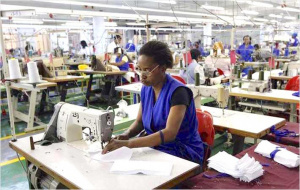
Under its 2018-2022 national development plan which is being finalized, Togo’s government plans to establish a manufacturing hub and two industrial parks in the country. Each of the parks will have 15 intensive factories producing textile, shoes, among others, for export.
Indeed, the plan should help boost Togolese textile exports to many countries, such as the U.S (in line with AGOA).
The current project will focus on boosting local know-how, cotton production and improve the search for strategic foreign partners.
It is expected to capture up to CFA1,000 billion of foreign direct investments from 2018 to 2022. Efforts to improve business climate should contribute to that.
The project aims at creating 100,000 jobs over the considered period. In this framework, the government intends to develop value chains of major subsectors of Togo’s agroindustry. Based on this, it eyes an annual growth of 10% of industrial and manufacturing sectors.
Séna Akoda
Togo : Banks becoming firms’ first financial sponsors ?
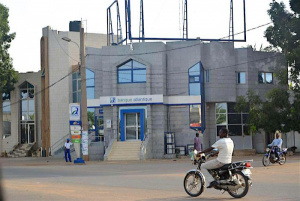
Apparently, in Togo, commercial banks are the main financial contributors to firms’ investments in secondary and tertiary sectors.
Indeed, according to the 5th edition of the macroeconomic forecast investigation (a study based on a sample of 200 firms), local banks are about to become the leading funders (both internally and externally) of Togolese companies.
30% surge
Between 2015 and 2016, the study indicates that banks’ contribution to investment projects grew from 15% to 24.5%. The next year, this figure almost doubled to 44.7%. Let it be recalled that financing via own funds was in 2015 forecast at 79.3%. Meanwhile, equity financing stagnated, growing by 1% only to 3% in 2017.
A rise driven by banks’ appetite
Ministry of economy and finance attributed the greater contribution of banks in firm’s investments to a better performance of the lenders over the past years. Truly, data from BCEAO (West Africa’s Central Bank), loans contracted from banks increased by 22% as interest on these loans slumped (from 15.8% to 11.5%).
In fact, in the first quarter of 2018, this interest rate was below 10%, quite contrasting given the global challenges. Regardless, it attracted much investors, allowing lenders to collect more revenues for interests and related products (+9.2%).
...Still difficult to secure loans
Nevertheless, firms still have issues securing bank loans, according to the document which mentions a lack of guarantee requested by banks. Data shows that 47.1% of firms whose loan application was dismissed claim it is because of a lack of guarantee or one deemed non-credible. Regarding the latter, about 17.6% of firms applying saw their application rejected due to that factor.
Another reason for banks refusing to grant loans to firms is insufficiency of social capital, or investor’s share in a given investment.
However, regarding the lack of information on applicants, the creation of an information bureau for loan (BIC) helped make significant progress.
Fiacre E. Kakpo
Togo: Agropole project should help reduce trade deficit to 38%, from 44%

In Togo, the agropole development project will significantly impact trade balance, decreasing trade deficit from -44% to -38%.
These agropoles will help the country boost its agricultural output and agricultural processing capacity. Locally processed products should be enough to meet local demand but they will mostly be exported.
Pilot stage for the agropoles development will be carried out in Kara, Northern Togo, and will cost CFA64 billion, out of which private sector is to provide 20 billion.
Séna Akoda
Togo : head of husbandry calls for more entrepreneurial initiatives for greater output
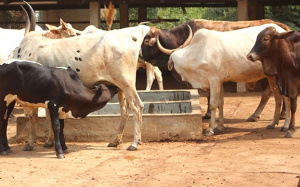
Togo’s head of husbandry, Dr. Komlan Batawui wishes for more entrepreneurial initiatives in this sub-sector. He said this in an interview with local TV channel TVT.
According to the official, though entrepreneurship is taking over the agricultural industry overall, it should focus more on husbandry, to boost related output.
From 2002 to 2015, output in the sector grew relatively well. In 2002-2007, it rose by 6.52% average; 6.72% in 2010-2015 (against a forecast of 6.9%).
With the various actions undertaken by the government, such as PNIASA and PASA, the figures improved significantly. Actually, Dr. Batawui declared that the increase was maintained till 2017 as a result of the introduction of improved breeds in production areas. Hence, from 300,000 herds, number of cattle grew to 450,000 in 2017. Meanwhile, the population of small ruminants which was at 1.5 million herds in 2011 soared to 4.8 million last year.
Séna Akoda
Female Tech Camp Togo : Nanatechs want to surprise the world
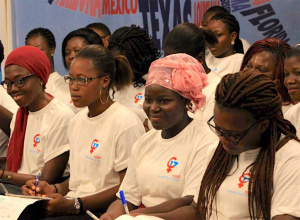
After being in Kara last month, young high school and college students, women-entrepreneurs and digital lovers are in Lomé since last Monday for the 5th edition of the Female Techcamp. The event is organized by Education Citoyenne et Changement (E2C Togo), a non-profit organization which invests in education, in Togo.
The techcamp can be followed using the hashtag « #FTCLome2018 », or by going to its twitter page. The Female TechCamp TOGO project was launched by the minister of digital economy, Cina Lawson, in the presence of U.S. ambassador, David Gilmour.
This fifth edition is themed “Surprise us girls”. It aims to foster digital inclusion of women and bridge gap between men and women in the sector, thus ensuring the latter’s empowerment.
During the four days over which it will take place, participants will be trained and taught about issues related to e-commerce, new e-payment solutions and methods to secure online transactions. In this framewok will be organized panels, workshops, a fair and various contests.
Already, last Monday, a workshop of blogging involving trendy management tools such as CMS WordPress was held. On Tuesday, nanatechs will be trained to Adobe Illustrator, along another workshop to teach them website creation with HTLM.
Female Tech Camp Togo aligns with the fourth sustainable development goal (SDG 4) for quality in education, SDG 5 (for gender equality and women empowerment) and SDG 10 (to tackle inequalities between countries).
Fiacre E. Kakpo
Edem Bessanh, promoter of Champiso drinks, invited to a coaching session at Innov’Up, in Lomé

NUTRI-TOGO, a successful enterprise, headed by Edem Bessanh, has a business model that draws more and more attention in Togo. The firm produces Champiso, a mushroom-based drink.
To let those it incubates know more about entrepreneurship, Innov’Up, an incubator of women-entrepreneurs, has invited M. Bessanh for a training session called Innov Up Coach. It will take place on May 23, 2018.
This is to get young people more interested in entrepreneurship, to motivate them. They will be able to learn from the mistakes and various challenges faced by the invited entrepreneur. Most importantly they will learn about sacrifices he made to achieve his goal.
Those interested can register for the coaching session by sending their names and surnames to the following number (via WhatsApp): 99 82 43 76.
Séna Akoda