
Togo First
Agriculture : TIRSAL Fund renamed MIFA

The TIRSAL fund which was put in place to cover risks and provide guarantees related to loans in the agricultural sector, in Togo, was re-baptized. The initiative which is inspired from the Nirsal in Nigeria, is now called MIFA which stands for Mécanisme Incitatif de Financement Agricole (Incentive Scheme for Agricultural Financing).
The name change occurs as the scheme is about to enter its pilot phase.
Launched last April 25, by the Togolese President, the TIRSAL is a tool which the government wishes to leverage in the framework of its 2018-2022 national development plan (PND 2018-2022) to boost agricultural loans. Actually, these loans represent about 0.3% of all loans granted by banks in Togo. The fund aims to bring this figure to 5%.
President Faure Gnassingbé said the MIFA will in the long term, benefit from a €100 million financing. A significant part of this monies will be provided by the State, private sector and development partners. Overall, more than one million actors, farmers mostly, are expected to benefit from the initiative.
Agriculture is a pillar of Togo’s economy. It contributed around 38% of its GDP in 2017. Meanwhile, loans in this sector are not much accessible. Between 2011 and 2016, only 0.3% of all bank loans provided were granted to the sector. Microfinance institutions which were supposed to help reverse that trend backed out.
Fiacre E. Kakpo
Togolese-led project Aimes Afrique wins awards in Bayern, Germany

Bayern in Germany awarded last Saturday in Nuremberg the award for the “best cooperation project for a better world” to NGO Aimes-Afrique founded by Togolese Serge Michel N. Kodom.
The Togolese won the award with the 10 Aimes Afriqe villages project it developed in partnership with Aktion Pit Togohilfe, a non-profit humanitarian German association installed in Togo.
10 Aimes Afrique villages is a 10-year pilot project to develop communities. It aims to make populations more resilient and transform rural economy by empowering grassroot communities. The project was launched in 2015 and covers five Togolese regions.
Marseille-based Incubator Start Aid to open co-working space in Lomé, in July

French-Togo startup Start-Aid, which is based in Marseille, France, will open a co-working space in Lomé next July 4, 2018.
Starting that day and during the six following weeks, the Startup whose goal is to “boost innovation”, will offer training programs and top-quality workshops as well as a 20Mbps internet connection.
Baptized ‘Start to go’, the event will help many young entrepreneurs launch their startup. It aligns with Start-Aid’s ambitions to start incubating in Lomé.
“Our purpose is to support entrepreneurship and innovation in Africa, starting with Togo,” a statement released on startup’s website reads.
For more information, visit the Start-Aid page.
Fiacre E. Kakpo
Togolese people feel safer than Ghanaians, according to the 2018 Gallup Global Law And Order
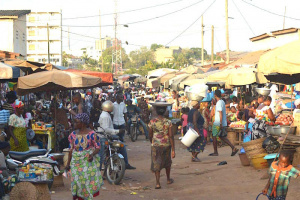
According to the 2018 Land and Order index of Gallup Institute which assesses the feeling of safety worldwide, in 2017, with a note of 69 over 100, Togo came ahead of its West African neighbours, Guinea, Mali and Ghana which had 68, 66 and 66 respectively.
Togo’s is on par with Senegal but lags behind Burkina Faso, Niger and Benin, which respectively have 73, 74 and 74. Yet, the nation remains slightly above average in Sub-Saharan Africa (68/100).
Gallup’s rankings was produced based on phone interviews and face-to-face meetings, carried out in 142 countries, with 148,000 people. The study involves a questionnaire that assesses people’s trust in police authorities and how safe they feel at night.
Worldwide, it is Singapore which is once more the top ranked country with a score of 97 out of 100. The Asian nation is followed by Norway, Iceland and Finland with each having 93 out of 100.
In Africa, the top five nations on the rankings is composed of Egypt (1st), Mauritania (2nd), Morocco (3rd), Algeria and Ethiopia.
In the lowest sphere, Venezuela remains the least safe nation around the world with a score of 44. It is followed by Afghanistan (45) and South Sudan.
The institute establishes tight links between data reported and economic outlooks of countries. Its data should actually impact their business environment.
Séna Akoda
Togo : Government examines bill to promote leasing as financing tool for SMEs
Diversifying financing tools for small and medium enterprises (SMEs) in order to help them fully contribute to economic growth is one of the main goals of the Togolese government. In this framework, it decided to rely on leasing which is the alternative to traditional loans taken within West African Economic and Monetary Union (WAEMU).
During a ministers’ council held June 13, 2018, a bill related to leasing in WAEMU’s state members was examined.
According to the government, “there is a need to diversify ways to finance small and medium enterprises (SMEs) given the WAEMU’s actual economic context”. The bill on the table thus aims at promoting leasing by driving local SMEs to adopt it, and leverage on its conditions which are more flexible than those of traditional loans.
The council indicated that using the financing method will positively impact other financial transactions (venture capital, factoring and bank loans) which guarantee SMEs funds.
A leasing contract involves a lessor and a lessee (or tenant). The first grants to the second the right to use a particular good for a period of time against rent payments over a fixed period. After that period the tenant can buy the asset leased at a price set in advance by both parties.
Togo : Legal interest rate set at 4.5%
Government set during the council of ministers held June 13, 2018, the legal interest rate for this year. From 3.5437% in 2017, this rate will thus stand at 4.5% as recommended by Central Bank of West African States (BCEAO).
Report of the ministers’ council states that “the legal interests represent indemnities owed to lenders, for damages or default interests, by a debtor who reimburses late. They stand in the stead of a preliminary rate set by involved parties when a debtor does not meet deadline for debt payment”.
For this year, “it equals average of maximum rates for refunding imposed on loans granted by BCEAO during the previous civil year, over corresponding periods”.
Fiacre E. Kakpo
Togo to soon effectively join Afreximbank ?
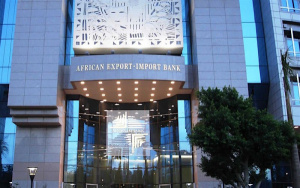
In 2016, Nov. 4, Togo’s government and Afreximbank signed an adhesion agreement enabling the nation to become the 40th member of the bank. However, the document had not been ratified since. Now, a council of ministers met, June 13, to examine the convention.
After Togo effectively joins Afreximbank, it will be able to benefit from its financial support. This will considerably help the nation boost its private sector, develop new transport and logistics infrastructures, as well as increase its power production capacity.
The convention, let’s recall, was inked a little after Faure Gnassingbé met with Afreximbank’s chairman, Benedict Oramah on October 31, 2016. On that occasion, the bank’s head said the institution had identified many opportunities in Togo, notably in regards to trade, logistics infrastructures and industrial parks development. The related projects had been valued between 500 million and $1 billion.
In fact, according to Coface, most of this funding could be released this year. Recently, a delegation from Afreximbank was in Lomé, where it met with the minister of industry, Yawovi Attigbé Ihou, to discuss Togo’s industrialization.
The African Import Export Bank –Afreximbank- was founded in 1993 to facilitate, finance and improve trade between African countries and also between the continent and the rest of the world.
Fiacre E. Kakpo
Togo : OTR to boost tax collection in mining sector
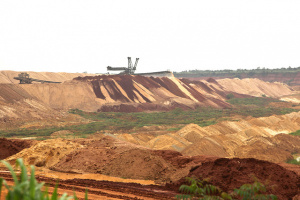
Togo’s Revenue Office (OTR) wishes to improve taxes it collects from the mining sector. In that order, it is studying with State officials and executives from the private extractive industries, a possibility to amend mining tax regime, at Notsé, in the Plateaux region.
It was established that fluctuations in prices of mining products paired with non-reliability of data provided by mining industries impede tax collection in the sector.
The Mining Development and Governance Project (PDGM) aims to boost accountability and transparency in the sector’s management. It also leverages on mining data to amend tax regime imposed on private companies operating in the mining sector.
The amendment should align with a model established by IMF which lets States compare tax regimes looking at tax base and tax rate, for information sharing between government and investors.
Séna Akoda
Land: OTR proceeds to delegation of signature to speed up processes and boost revenues

Togo’s Revenue Office (OTR) pursues reform implementation to improve fund mobilization.
After attaching the land conservation and cadaster to the tax office, OTR moved just another step forward. In a statement released June 7, 2018, the tax commissioner announced the delegation of his signature to Bali Komi, Head of the Land Conservation Department, regarding the issuance of any document related to post-registration operations.
This should accelerate processes and considerably shorten delays for property transfer, mortgaging, and any other transaction often undertaken by private investors.
It is part of various reforms implemented by the government, since the beginning of the year, to provide Togolese populations a more transparent service.
According to authorities, the delegation will also indirectly facilitate access to loans to the private sector which is a key component of Togo’s economy.
The delegation of signature concerns:
- Full transfer
- Mortgage registration
- Mortgage cancellation
- Provisional entry
- Cancellation of provisional entries
- Order for attachment for real property
- Cancellation of order for attachment for real property
- Duplicates
- Additions of names
- Amendment of names
Let it be recalled that to boost transparency, information on land titles and cadastral plans were made accessible, at no cost, to populations, on the DADC’s website.
Fiacre E. Kakpo
Togo : Parliament passes new customs code
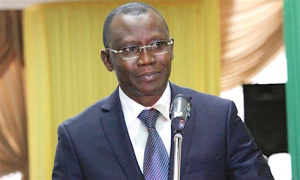
Tuesday, June 12, the Togolese parliament adopted a new customs code. The document aims to modernize custom administration, amid multiple changes in the global environment, economic and institutional realities that the country itself experiences.
“The newly passed law tackles needs set by the economic environment and share responsibilities between the minister of finance, the general commissioner of OTR, and the commissioner of customs and indirect taxation, for more efficiency and reactivity in processing of cases,” the minister of finance, Sani Yaya told deputies.
The new law particularly focuses on speed, transparency and fairness. It aims to “provide economic operators a transaction regulatory framework that fosters a service of quality”.
Furthermore, it includes measures that reinforce rights of individuals and partners of the customs administration.
Besides benefits for businesses, the new customs code should equip the customs administration with adequate tools to better mobilize local resources thus allowing government to finance its development strategy. The previous code was, let’s remind, enacted in 2014.
Fiacre E. Kakpo