
Togo First
Togo to ratify agreements to create Islamic Corporation for Private Sector Development
Togo’s government, during a ministers’ council held last Thursday, has adopted a bill to approve the ratification of an agreement to establish the Islamic Corporation for Private Sector Development (SID).
The tool which was created with a $4 billion capital in Jeddah, Saudi Arabia, on November 3, 1999, is a subsidiary of the Islamic Development Bank (IDB). Its shareholders are IBD (45%), 53 adhering States (46%) and five public financial institutions (9%).
The SID exists to foster the economic development of its adhering States by supporting the creation, expansion and modernization of private firms, in pair with IDB’s actions.
In detail, the SID’s main goals consist in identifying opportunities in the private sector that could spur the growth of its member States, providing a wide range of financial services and products, developing Islamic finance and financial markets.
Ratifying the agreement for the creation of this institution will “enable Togo’s private sector to benefit from various opportunities and assets brought about by the new institution, especially in the sectors of agriculture, fishery, infrastructures, technology, power supply, education, health, real estate, trade and finance,” the ministers’ council said.
Séna Akoda
Togo among top 10 sukuk issuers in Africa (Moody’s)
Togo is part of the Top 10 African countries that raised the most funds by issuing sukuks, according to US rating agency Moody’s.
According to the rankings, in sub-Saharan Africa, Togo is fifth and comes after Côte d’Ivoire ($501 million), South Africa ($500 million), Nigeria ($351 million) and Mali ($285 million).
Issued in 2016 on the regional stock market, Togo’s sukuk helped the country raise $254 million (CFA150 billion).
Among the three WAEMU nations present in Moody’s top 10 is Senegal.
More globally, many ECOWAS countries sought this type of bonds. Indeed, nations like Gambia or institutions such as the Africa Finance Corporation (based in Nigeria) are some of the top sukuk issuers.
According to Moody’s, since 2014, $2.3 billion worth of sukuk have been issued by African nations. This shows how great the growth potential of the sharia-compliant bond is on the continent.
However, despite the optimistic prospects, Africa still has much to do to follow the global pace, Moody’s added. Indeed, sukuks constitute less than 5% of all of the continent’s banking assets, the New-York-based agency said. Moreover, this volume represents only 0.5% of sukuks issued worldwide.
Fiacre E. Kakpo
Togo’s government to map all artisanal and illegal mines
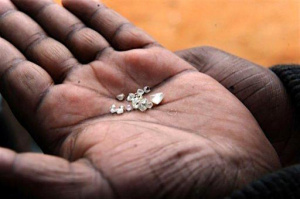
Togo’s government wishes to map all artisanal and illegal mines present across the country, in order to improve the sector’s governance.
According to various reports, including those of the Extractive Industries Transparency Initiative (EITI) and the Directorate General of Mines and Geology (DGMG), gold and diamond mining in Togo is done traditionally at many alluvial sites. The documents however indicate that despite the sales of these resources contributing more to Togo’s exports in the past years, most of the ores exported still come from neighboring nations.
The map projected by the government, Togo First learned, will include two main axes. First, a card will be designed to identify and localize all illegal small-scale mines and quarries (sand, gravel, laterite and quartzite) across the territory.
The second axis consists in developing a database compatible with the current ArcGIS and SIG, which will contain all key information related to the sites, ranging from administrations overseeing them, their area, ore and other construction materials mined there.
The project will be financed by Mining Governance and Development Programme. The latter has actually issued a recruitment notice to hire a consultant to this end.
Séna Akoda
Togo to get CFA10bn from BOAD for water supply project

The West African Development Bank (BOAD) will pour CFA10 billion into a water supply project in Togo. The project will benefit 89 semi-urban centres.
The financing was approved during the bank’s board meeting last Wednesday in Abidjan, for its 110th ordinary session.
The monies will be used to build 35 water supply systems to serve 46 semi-urban centres. In detail, the project will involve drilling wells, river intakes, installing treatment facilities, drinking water adduction and distribution pipes, BOAD revealed.
Also is projected the construction of 39 water towers to serve 546 standpipes and 700 special water services.
Targeted centres are those with a low coverage rate, around 20%. It should be recalled that in the country, less than 60% of populations have access to drinking water, according to an official development assistance released last July.
Beside the announced financing, BOAD also committed to invest CFA4 billion in the upgrade of Hôtel 2 Février, which is now managed by Emaar Hospitality Group.
Fiacre E. Kakpo
Togolese officials in Addis Ababa for agricultural statistics training workshop

Since last Monday, 70 officials of agriculture ministries and statistics institutes from 20 African countries are being trained to agricultural statistics in Addis Ababa, Ethiopia.
Initiated by the African Centre for Statistics of the African Economic Commission (AEC), the training falls under UN’s global strategy to improve agricultural and rural statistics. It also aims to help achieve Sustainable Development Goals and continental integration via the 2063 Agenda.
According to the program’s promoters, the meeting will help participants hone their skills in a context where agriculture contributes more than 40% of Africa’s GDP and employs more than 70% of its population.
“Statistics will now, more than it ever did in the past, play a key role as monitoring and progress measurement tool,” said Lilia Hachem Naas, Head of AEC-North Africa.
Throughout the week, the program’s participants will study and exchange their experience regarding the analysis of agricultural, fishery and post-harvest performances.
Along with seven other countries from the sub-region, Togo is also in attendance.
AEC is one of five regional commissions that are part of the UN’s Social and Economic Council. It was established in 1958 to promote economic cooperation between its member-States.
Octave A. Bruce
BOAD to provide Togo CFA4bn to upgrade five-star 2 Février Hotel

On the sidelines of its 110th ordinary session last Wednesday in Abidjan, the West African Development Bank (BOAD) approved a CFA4 billion financing to upgrade Togo’s 2 Février Hotel in Lomé.
The regional bank, highlighting that the funds would be soon disbursed, added that they will mainly be used to purchase and install equipment for the upgrade. These include fire alarm, air-conditioning, heating and ventilation systems as well as elevators.
The infrastructure was trusted to the care of Emirati Emaar Hospitality Group last June and was subsequently renamed Address Hotel 2. Opened in 1980, it was fully rehabilitated by Kalyan Group which secured the related operating license for the 30 years. It is one of the major assets for business tourism in Togo, one that the nation wishes to leverage on to become a regional business hub.
Fiacre E. Kakpo
Vlisco Fashion Fund: Application deadline extended to September 30

Initially set for September 16, 2018, closing of applications to the Vlisco Fashion Fund contest has been extended to September 30, a note released on the event’s official page reveals.
African designers thus still have the chance to apply and possibly win the €5000 reward the challenge offers.
Beside the money, winning candidates will benefit from a two-week professional internship in Holland. However, they will have to reinvest the funds in their own business.
Let’s recall that to apply, designers must have a professional experience of at least three years in the fashion industry, have at least two employees and be able to show in what way their business needs the €5000 prize to grow.
Séna Akoda
Togo : IFAD considers supporting MIFA
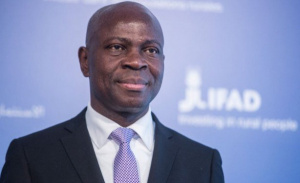
The International Fund for Agricultural Development (IFAD) will soon be providing Togo support for its Agricultural Financing Incentive Scheme (MIFA).
Truth is, a delegation of experts from the institution, led by its Director for West and Central Africa, was recently in Lomé in this framework.
During its visits, IFAD experts met with various officials engaged in the MIFA, to better understand the scheme and its projections. This way, the UN institution would apprehend the scheme’s needs.
Let it be recalled that IFAD’s incumbent president, Gilbert Fossoun Houngbo, decided a few months ago to help Togo, both financially and technically, in implementing the MIFA.
Octave A. Bruce
Keras Resources discovers new outcropping mineralisation at Nayega project
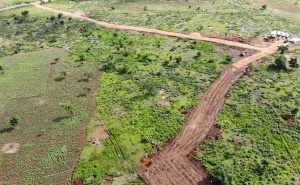
Keras Resources announced on Tuesday it has identified a new outcropping mineralisation at its Nayega manganese project in northern Togo.
Eight additional hectares have been discovered at Ogaro, few kilometers from the main Nayega deposit, the AIM-listed company revealed.
Samples taken from 14 wells with a 35-m depth to test Ogaro’s central mineralization area have shown positive results, according to Keras’ executives. They believe this new discovery show that Nayega holds more significant prospects.
“The identification of a significant new area of outcropping mineralisation at Nayega further lays the foundation and increases our expectations for what we believe will become a new low capex, low operating cost manganese producer,” Keras Resources CEO, Russell Lamming, said.
The firm plans to immediately start phase I of its project which spans 100m x 100m. Quite content of its recent collaboration with local communities, on its recent 10,000 t bulk sampling testing programme, the firm will rely once more on local labor.
“We have now employed a team from the local community which has, to date, been involved in the preparation of the bulk sample site and will now move over to the Ogaro area to commence a pitting exercise,” Lamming added.
Keras Resources operates the Nayega project through its Togolese subsidiary, Société Générale des Mines (SGM), in which it owns an 85% stake.
Fiacre E. Kakpo
In Togo, “e-ID Togo” project gets CFA20 billion budget

Twenty billion CFA. That is the budget dedicated to the e-ID Togo project announced last April during a council of ministers. This project will provide each Togolese, and any person residing in the country, a unique biometric ID number.
It (the project) will also help the government have reliable data on populations, thus enable it better provide them public and social services. Led by the ministry of posts and digital economy, the project falls under a process to modernize and reform Togo’s public administration.
Private partners are expected to get involved in the project. Let it be recalled that the latter aligns with the third axis of Togo’s national development which aims at consolidating social development and improving inclusion mechanisms.
Octave A. Bruce