
Togo First
Energy Generation launches the third edition of its Pan-African challenge
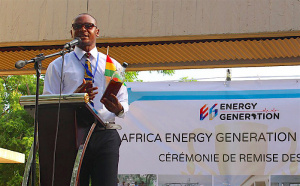
Togo-based Pan-African organization Energy Generation just launched the third edition of its Africa Energy Generation Prize challenge.
Aiming to promote power access in Africa, the contest rewards innovative and entrepreneurial solutions developed by youths living in Africa. This, in a context where 57% of Africans, more than 600 million people, have no access to electricity.
Those interested in applying can have access to information on the challenge’s various steps and application form at : http://www.energy-generation.org/aegp. Application period started on September 15 and will end December 15, 2018 midnight.
Selected applicants will be announced on December 22. They will receive a two-year scholarship at the Energy Generation Academy.
After their scholarship comes to an end, the youths will present their respective projects to win seed-funding valued at : $100,000 for the first prize, $50,000 for the second and $25,000 for the third prize.
The initiative it should be noted is backed by institutions like Schneider Electric, Engie, European Union, EDF, Akon Lighting Africa and SABER.
Séna Akoda
Togo: EU celebrates European climate diplomacy week in Lomé on Sep 24-29
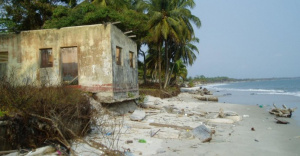
Until September 29, 2018, the European Union will be celebrating the climate diplomacy week. On September 24, the EU delegation in Togo launched the event in Lomé.
Hanses Bruno, Minister-Counsellor of the European Union, Christoph Sanders, German ambassador, and Marc Vizy, French ambassador to Togo, were present at the launching ceremony. From their statements, it appears that the initiative’s vision is to fight climate change.
Marc Vizy lauded efforts made in this regard. These efforts translated into the adoption of a law to promote clean energy which shows that though it is a small polluter, Togo is very conscious of the huge responsibility – shared yet differentiated, as the dedicated formula prescribes – and has decided to tackle the major challenges related to climate change.
Similarly, the national electrification strategy, in which renewable energies hold a prominent place and Togo’s admission to the International Solar Alliance, earned the head of state, an invitation from Emmanuel Macron, the French president, to “One Planet Summit”.
In the European Union, however, though the goal is a 40% decrease by 2030, leading to an automatic integration of the climate change aspect within every project, it is to be noted that some factors, political and economic notably, do not always facilitate the implementation or adoption of some measures in line with that goal, the German ambassador explains.
An OSC-Climate press conference held on September 25 has been held in the framework of the European climate diplomacy week. A radio show with prizes to be given away on Lomé and Kara radio stations, as well as a conference on climate change in Togo, will be organized on September 26-27. To conclude, an ECO Jogging section is planned.
AfDB assesses its 2016-2020 country strategy paper for Togo two years after its launch
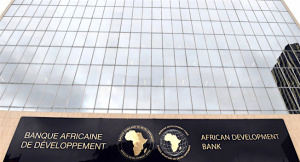
On September 25, the African Development Bank (AfDB) held in Lomé a dialogue focusing on the 2018-2022 Country Strategy Paper (CSP) and to assess the performance of the bank’s portfolio in Togo.
Approved in October 2016 for a five-year period, the bank’s strategy in Togo revolved around two pillars which are: developing agro-industrial inclusive and competitive growth poles and supporting financial, sectoral and local governance.
“The major goal of this strategy is to help Togo improve living conditions of its populations in rural areas, via an integrated development of agricultural poles and by improving access to power,” said Kahdidia Diabi, Country Representative of AfDB.
In this framework, during the first two years of this strategy’s implementation, it focused on various axes. Regarding economic development, AfDB financed the Agropole project and another to rehabilitate roads and preserve coasts. Both aimed to improve regional integration and climate resilience of infrastructures and populations of coastal areas.
In the social sector, the institution was engaged in five major projects focusing on youth insertion, employment, inclusion of vulnerable women, training integration (CERFER), constructing markets (Lomé and Kara) and toilets in Sokodé.
These projects brought AfDB’s commitments in the country to about CF190 billion, 55.3% of which have already been disbursed. The transport sector captured 70% of these commitments.
Lauding the integrated vision of the new national development plan, Kahdidia Diabi urged Togolese authorities to increase their efforts to improve disbursements.
If the African Development Bank plans to increase its support to the Togolese economy in the next two years, it will condition this support to progress made in implementing projects to which it is associated.
Among these projects is the CIZO. Olivier Manlan, the bank’s country economist for Togo, AfDB will increase its interventions through counseling support for the implementation of the CSP and other projects, in line with the PND.
Fiacre E. Kakpo
EU commits €5.5M as direct subsidies to fight climate change in Togo
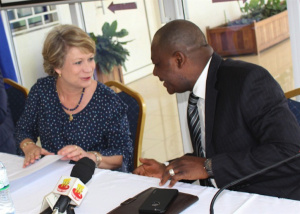
Yesterday, a delegation of the European Union (EU) in Togo signed in Lomé, conventions with organizations and associations engaged in the fight against global warming. Overall, the institution disbursed €5.5 million for first and second axis of the Support Program to Fight Climate Change (PALCC) which is to be managed by non-governmental organizations (NGos) and civil society organizations (CSOs).
Goals: Keep sensitizing political decision-makers about climate change, assess the state of forest resources in the country, and implement measures to mitigate climate change’s impacts.
NGos and CSOs which will benefit from the facility will have to focus on the sustainable management of forest and lands as well as on power efficiency. In this framework, they must achieve 2/3 of goals set under PALCC. These include tackling issues such as the reduction of forest area, carbonisation, coastal erosion, bush fires, etc.
The program is carried out by the ministry of environment and forest resources. André Johnson, who is in charge of this project chaired the ceremony where agreements for the subsidies were signed.
On the other side, Christina Martins-Barreira, head of EU delegation in Togo, urged NGos and civil society organizations to take action regarding the program.
The signing ceremony it should be noted took place ahead of the launch of European week for climate diplomacy.
Séna Akoda
Togo : Budget revenues rose during H1 2018 with grants steady and expenditures up

In Togo, budget revenues excluding grants reached CFA344.2 billion, between January and June 2018, Togo First learned. Compared to the first half of 2017, this represents an 8.9% increase.
Indeed, after standing around CFA148.7 billion in the first quarter of 2018, they grew by 31% to reach CFA195 billion between April and June.
Concerning grants provided to support budget, they were stable compared to H1 2017, standing at CFA11.8 billion.
The 8.9% total increase of State revenues was not enough to compensate high expenses incurred over the first half of the year, in the second quarter especially.
In detail, with net expenditures and borrowings valued at CFA537.2 billion, divided into current expenditures (276.4 billion) and capital expenditures (260.8 billion), overall balance on commitment basis (including grants) shows a deficit of CFA181.2 billion. A significant degradation spurred by a rise of investments or capital expenditures (+78%).
During the first semester of 2017, this deficit only stood at CFA63.2 billion. Let’s recall that in 2017, budget revenues and grants respectively amounted to CFA621.4 billion and CFA88.5 billion.
Fiacre E. Kakpo
Sandra Johnson: “Chinese banks and institutions are ready to finance and back Chinese investors who are interested in investing in Togo”
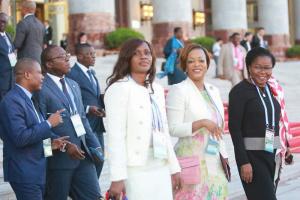
At the beginning of August 2018, Togo’s government adopted a new national development plan (2018-2022 PND). Starting September 1, Togolese authorities were in China to showcase the new plan. Hence, led by Togo’s president, Faure Gnassingbé, the delegation left Beijing for Hangzhou where the first China-Togo Business Forum was held Sept 7. Following the event, Togo First met with Sandra Johnson, National Coordinator of Business Climate Cell (CCA) to discuss its outcomes.
Togo First: Togo recently adopted a new development plan spanning the 2018-2022 period. What does this plan have to offer Togolese?
Sandra Ablamba Johnson (SAJ): The recently adopted national development plan is based on a paradigm shift which involves having a clear and precise vision of our objective, while focusing on rapidly implementing key projects. This plan focuses on three main axes. The first concerns the development of a major logistics hub. The second on agricultural, manufacturing and industrial transformation while the third focuses mainly on achieving social development via social inclusion, that means engaging in areas such as health, education, training, etc.
Togo First: We just ended the first China-Togo Business Forum ever. What happened during this event?
SAJ : The Business Forum was very rich. First, there was the President’s intervention which is proof of true leadership. There was also another intervention, of the vice-governor of this province (Ed’s note: Zhiejang), which is one of China’s leading provinces in terms of contribution to the country’s GDP or per capita income. The vice-governor urged Chinese private investors to invest in Togo, a beautiful and attractive country. He emphasized most importantly on the shared vision Togo and China have.
This business forum gathered many Chinese and Togolese investors since what matters to us is not only attracting foreign investors but also allowing our private sector to boost its capacities and enter strategic partnerships. That is why our President wished for the private sector to be part of the trip, in order to build new partnerships.
Thus, there were many interventions of both private and public Togolese sectors and actors of the first were able to discuss with Chinese private investors. This enabled the Chinese to learn more about Togo, and find potential Togolese partners.
Togo First: During this forum, Togo presented five major projects falling under the PND. What are those about?
SAJ : Indeed, Togo presented some of its key projects. For example, in line with its objective to become a regional logistics hub, the country presented Chinese investors the project related to the construction of the National Road 1. As you are well aware of, this is a very important infrastructure since Togo is a gateway to hinterland countries. Behind the move was a need to quickly secure financings, via a public-private partnership maybe, to complete the road’s construction. Moreover, we intend to build a multimodal park with car parking lots. With traffic increasing considerably, it has become imperative to have car parks with multiple functionalities in order to enable foreign carriers passing through Togo to easily conduct their activities.
In addition, a multimodal mall with various sport centers, restaurants, high-standing hotels is to be built. This is to provide businessmen visiting Togo a facility with all they need to easily conduct their business as well.
Beside this business center, we will also have an industrial park, just like in Ethiopia, which will help create many jobs and different structures in the manufacturing sector. In the long term, this park should be replicated in all five economic regions of Togo.
China is a strategic partner and one of the best in that regard. It has built such infrastructures in other countries. What we want to do is see how to build a partnership with the Middle Empire and draw Chinese firms that are interested in investing in Africa to choose Togo for all the assets it has. To delocalize in our country and also export to other nations of the region.
Togo First : Did any Chinese investor show interest in one of these projects ?
SAJ : Yes, we had some talks. I was in charge of the project for a business and financial center of excellence. I met with some partners who are quite interested. We will continue talks to determine which types of partnerships can be built with them and how to connect them with Togo’s private sector.
Another thing is that there are already Chinese investors operating in Togo who are interested in investing in other sectors. Regarding the industrial park for example, some Chinese already in Zanguéra are looking to invest in the Akodessewa park. There is also the China-Africa Development Fund, CADFund, which said it will support us, providing us resources. You certainly know that the CADFund was one of the main financing partners that contributed to the construction of the LCT (Ed note: Lomé Container Terminal).
There is also Afreximbank (Ed note: African Import-Export Bank whose president was also in Hangzhou for the business forum) which is ready to support Togo.
Financially, Chinese banks and institutions are ready to finance and back Chinese investors who are interested in investing in Togo.
Togo First : The private sector is the PND’s driver. How do you plan to federate both foreign and local private investments to implement this program without having any of the parties frustrated?
SAJ : I don’t think anyone will be frustrated since I am happy to see that today many actors from Togo’s private sector are already working with foreign investors. We noticed they were many. This new paradigm will undoubtedly bring them a new opportunity since they will benefit, now more than ever, from the State’s support.
Various mechanisms will be put in place to facilitate these projects’ implementation. And for Togolese business operators who wanted to conduct business but could not easily build partnerships abroad, it will now be easier to do so, in China.
Togo First: Did any Togolese investor take contact?
SAJ: We will ask them. Last time, China’s president said it during the forum (Ed note: FOCAC) that it will be a win-win partnership, a respectful partnership. By a win-win and respectful partnership, I mean that the same way Chinese will be able to invest in Togo, Togolese will also, if they can, be able to invest in China.
Togo First: As Head of Togo’s Business Climate Cell, what measures do you intend to put in place in the coming days to further improve the country’s business environment?
SAJ: We will continue what we have already started. Presently, in line with our plan of actions, we are working on establishing an agency to promote investments in the franc zone. This institution aims to ease access to State facilities and departments in charge of project development.
We wish to accelerate the process of this agency’s creation. Togo has one the most attractive investment codes of the region and concerning its implementation, we are putting in place various mechanisms.
The ministry of finance just got the State’s approval to handle the “accreditation” part. So, we think this issue is already taken care of.
Our labor code is also quite performant but we suggested some recommendations to make it even more attractive.
When we talk about investing, the tax framework is very important. Through the OTR, the ministry of finance just produced a new tax code, which almost halves taxes. We are actually doing everything for our parliament to adopt this code in the days coming.
There is also a new customs code and a new land code, more suited to the actual economic reality. A new renewable energy code also.
These are all measures planned to gain Chinese and other foreign investor’s trust and reassure our economic operators also.
Interview by Fiacre E. Kakpo
Togo: Grain output reaches 1.3 million tons for 2017/18 season, up 2.7%
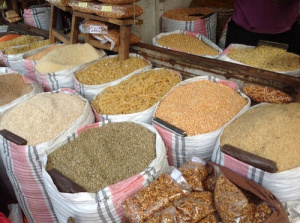
Togo’s gross grain output for the 2017/18 season exceeded 1.3 million metric tons, according to data from the Inter-States committee for the fight against drought in Sahel.
This is 2.7% more than the output recorded in 2016/17 which was 1.27 million tons.
The slight increase is mainly attributable to good weather conditions last year, in the sub-region, paired with the government’s efforts. Indeed, various agricultural projects, such as the PNIASA which replaced PNIASAN at the end of 2017, helped Togo secure regular grain surpluses since their launch.
According to the minister of agriculture, Ouro-Koura Agadazi, the country recorded a 21% surplus for the 2017-2018 season mainly as a result of greater sorghum, millet and tuber outputs.
Regionally, grain output reached around 28.7 million tons, up 2.8% compared to the previous season. Mali, Niger and Burkina Faso were the best producers with respective outputs of 9.5 million tons, 5.8 million tons and 4 million tons.
Despite output growth across WAEMU this year, it was still lower than in 2016 when it stood at 6.6%.
Fiacre E. Kakpo
Togo to benefit from $155 million regional project to boost financing of affordable housing
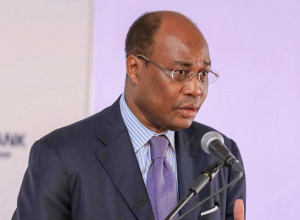
Last Friday, WAEMU’s Regional Fund for Mortgage Refinancing (CRRH-UEMOA), its commission, the West African Development Bank (BOAD) and the World Bank launched the World Bank/WAEMU regional project to promote financing of affordable housing within the WAEMU.
The launching ceremony which took place in Abidjan was chaired by Romuald Wadagni, Benin’s minister of economy and finance who is also the chairman of WAEMU’s ministers’ council.
The project which benefits from a $155 million funding, according to an official statement released by CRRH-UEMOA, aims to improve housing financing across WAEMU, especially for the people with low or irregular revenues.
It should also help cushion the shock resulting from the significant housing deficit in the region. Currently, the latter is estimated at 800,000 units per year, in a context where banks provide only around 15,000 new mortgage loans every year; that is a very small portion of what is needed. This situation should get worse considering forecasts which predict doubling of WAEMU’s population from 110 million to 220 million residents, in the next 20 years, with a great part of these living in cities.
Christian Agossa (photo), Managing Director CRRH-UEMOA, indicated that the project would enable the institution to raise concessional resources to better support low-income populations. “This project should facilitate the issuance of about 50,000 new mortgage loans, and also help raise more funds to finance housing and social housing via bonds issuances on the regional stock market and the extension of their maturities”.
In Togo, this issue is quite real and both the private and public sectors are actively engaged to overcome it. Their main goal is to provide each resident decent and affordable living conditions and if Togolese banks are able to secure a significant share of the new financing from the CRRH-UEMOA, the country’s housing sector should experience a true boom.
Séna Akoda
RFI Challenge App Afrique 2018: Dona Etchri, founder of E-agribusiness, among 10 finalists
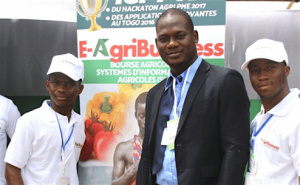
Co-recipient of the 2018 Pitch Agrihack Talent worth a €15,000 prize, Dona Etchri, founder of E-agribusiness is now running for another award worth the same value.
According to news website Ifrii, the young entrepreneur was just selected to be one of the 10 finalists of the 2018 RFI Challenge App Afrique. Organized by France Médias Monde, the contest which aims to foster new technologies’ integration in sustainable development, indeed picked Etchri’s project out of 250 others for its third edition.
However, before he grabs the big prize, the Togolese will first have to revise and improve his project’s presentation. He will be facing other projects such as Agropad Solaire, Ayanna Tech, Mobile Agribiz, Télé Irrigation and Crops Info. Once this is done, he will be among the top three entrepreneurs running for the award. In this framework, he should be in Cotonou, Benin, next November where a jury will name the contest’s final winner.
E-agribusiness is a digital platform developed to help farmers, with or without access to smartphones or internet, to have access to the market and sell their products.
Séna Akoda
Government approves TogoPay’s creation to bolster e-payment
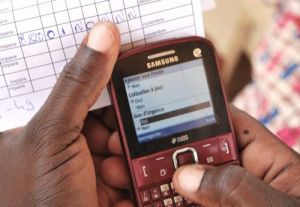
Togo’s minister of posts and digital economy, Cina Lawson, got the approval to develop TogoPay, an e-payment interoperable platform. This was during the ministers’ council held on September 20.
The project will be developed under a private-public partnership. It will allow its users to transfer funds through various providers, mobile and electronic payment operators, banks or others.
With it, users of a given mobile money service can easily interact with those of another network.
For example, TogoPay will enable a TMoney user (Togo Cellulaire) to send money to a Flooz user (Moov), and vice-versa. The other option is that it will enable a bank customer to deposit money on his or her account via his or her mobile money account (TMoney, Flooz, etc.).
Séna Akoda