Maritime Dispute: Ghana Seeks Arbitration, Togo Pledges to Defend Claims
 Sunday, 01 March 2026 14:23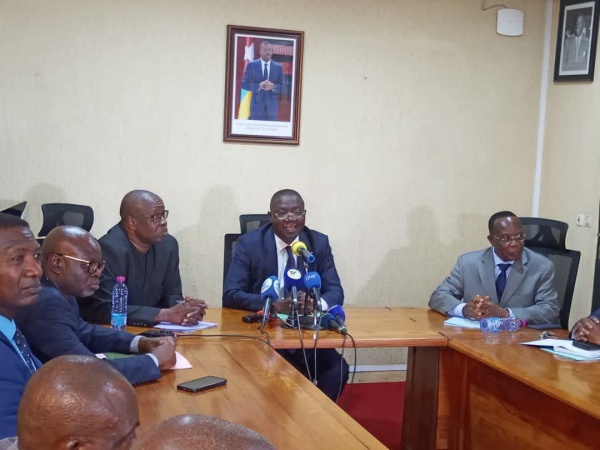
(Togo First) - Togo publicly responded to Ghana’s decision to submit their long-running maritime boundary dispute to international arbitration, reaffirming its commitment to a peaceful legal resolution while signaling it will defend its claims.
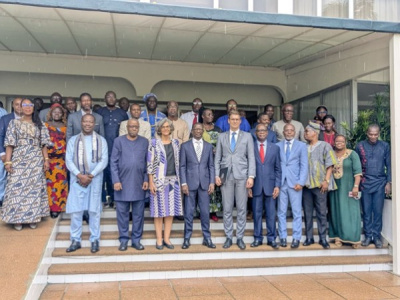
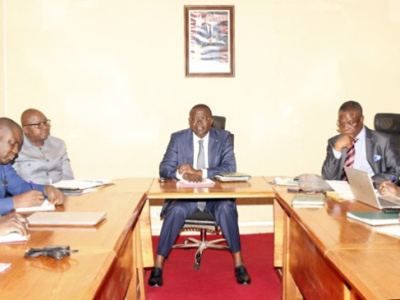
The government briefed national and international media at the Ministry of Territorial Administration, Local Governance and Customary Affairs, two days after the Council of Ministers formally acknowledged Ghana’s move.
Origins of the Dispute
The dispute stems from a series of maritime incidents between November 2016 and May 2018 in waters where the boundary between the two countries had not been formally delimited. Officials said the incidents did not escalate into armed confrontation.
Both sides subsequently agreed on operational guidelines for their navies in disputed areas to avoid escalation.
Togo says it prioritized a negotiated settlement, in line with Paragraph 3 of the UN Charter and Articles 273-281 of the UN Convention on the Law of the Sea (UNCLOS), which require disputes to be resolved peacefully by means chosen by the parties. Negotiations formally began in June 2018.
Bilateral Talks and Technical Progress
Between June 2018 and December 2023, the two countries held 11 official meetings alternately in Lomé and Accra under a bilateral negotiation framework.
According to Togolese officials, discussions led to technical progress, including agreement on the starting point of the maritime boundary, identification of the relevant baseline, and the preparation of a reference map. However, key disagreements remained.
Togo requested that additional historical, technical and security factors be taken into account to ensure what it describes as equitable access to the high seas. It argues that the boundary derived solely from standard technical calculations would effectively limit such access.
Under UNCLOS, parties may seek adjustments to a provisional boundary by invoking relevant circumstances, said Noupokou Dammipi, Togo’s Chief Negotiator. Togo submitted what it considers compelling historical and operational evidence to support a revision of the boundary line.
Among the elements cited is the historical anchorage zone used by vessels waiting to berth at the Port of Lomé, which Togo believes should be factored into any final delimitation. Officials describe this issue as the core point of divergence in the negotiations.
Following Ghana’s recent change of government and the return of President John Dramani Mahama, Togolese officials said they had been awaiting the installation of new authorities within the Ghana Boundary Commission to resume talks. Instead, they were informed of Ghana’s decision to refer the dispute to international arbitration.
Togo’s Reaction
Dammipi said resorting to arbitration is a standard legal mechanism under international law and does not in itself constitute a rupture. He said Togo will present its case in full and expressed confidence in the strength of its arguments.
Minister Hodabalo Awate reiterated the government’s commitment to peaceful dispute resolution, stating that Togo remains attached to the principles of international law, including sovereignty, territorial integrity and good-faith compliance with international obligations. He said Togo would participate in the proceedings responsibly and with the aim of safeguarding its national interests.
Economic Stakes
While the dispute is framed in legal and technical terms, it carries economic implications. The contested maritime zone lies in the Gulf of Guinea basin, a region with significant hydrocarbon potential. Ghana already operates major offshore oil and gas fields that have contributed substantially to its economy.
A boundary adjustment could influence the allocation of future exploration blocks, licensing decisions, tax revenues and energy investments. For Ghana, the priority is likely to protect existing and prospective energy assets. For Togo, which has yet to develop offshore production, the issue is strategic: securing sovereign access to potential future resources. Offshore hydrocarbons represent potential fiscal revenues, royalties, employment and foreign investment. The arbitration process will determine how these prospective benefits are geographically allocated.
S.A