African cotton stakeholders in Lomé push productivity to address sector challenges
 Tuesday, 05 May 2026 18:12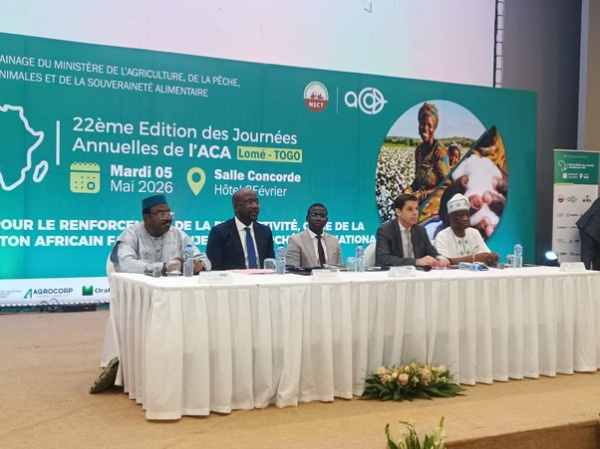
(Togo First) - Lomé on Tuesday hosted the 22nd annual conference of the African Cotton Association (ACA), bringing together key players in the sector across the continent.
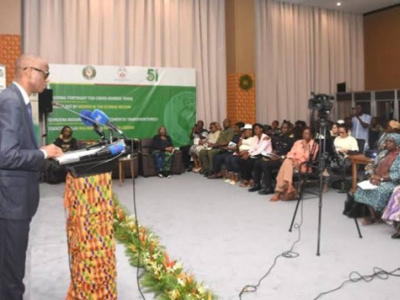
The event, organized by the Nouvelle Société Cotonnière du Togo (NSCT), was opened by Tekize Madadozi, secretary general at the agriculture ministry, representing the minister.
Over four days, participants will discuss the sector’s main challenges, share experiences and outline ways to improve productivity and competitiveness. Talks will focus on adapting to climate change, improving quality and traceability, and optimizing production systems.
“These meetings provide an opportunity to share experiences and identify practical solutions to common challenges,” NSCT Director General Martin Drevon said.
Regional summit amid sector pressures
The conference, held alongside the 18th review meeting of the Regional Program for Integrated Cotton Production in Africa (PR-PICA), takes place amid economic uncertainty marked by volatile global cotton prices and rising input costs.
Africa’s cotton industry is also facing increasing requirements on quality and traceability, as well as growing pressure from climate change, which is affecting yields, crop cycles and the sustainability of production systems.
ACA President Kassoum Koné said the sector must adapt quickly through innovation, stronger producer capacity, increased mechanization and better coordination across the value chain. He also called for stronger partnerships to support the sector’s structural transformation.
In Togo, cotton production has rebounded in recent years, supported by sector reforms and efforts to improve coordination among stakeholders. These measures aim to raise yields, strengthen support for farmers and promote more efficient and sustainable practices.
This momentum reflects broader efforts across Africa to build a more competitive and integrated cotton industry, particularly through initiatives discussed within the ACA.
Founded in 2002, the African Cotton Association aims to promote dialogue among industry players, support sustainable development and strengthen the competitiveness of African cotton on international markets.
Gautier Agbekodovi