How the Hormuz Crisis Is Reshaping Shipping — and Lifting Lomé's Port
 Tuesday, 02 June 2026 18:15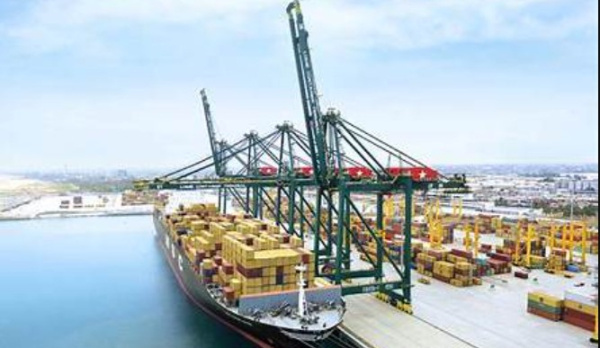
(Togo First) - Since the closure of the Strait of Hormuz on February 28, 2026, global trade has continued to face disruptions, particularly in energy supply chains on which many importing countries, including Togo, depend. However, these disruptions have also led to a partial rerouting of maritime traffic toward Africa's Atlantic coast, benefiting ports such as the Port of Lomé.
Geopolitical tensions around the Strait of Hormuz, the strategic passage linking the Persian Gulf to international markets, continue to disrupt global supply chains. Heightened security risks in the area since late February 2026 have prompted several major shipping companies to reroute their vessels, with effects felt as far away as West Africa.
A major shift in shipping traffic toward Africa
Available data underscore the scale of the rerouting. According to the International Monetary Fund's Portwatch platform, which tracks vessel GPS signals, container ship transits around the Cape of Good Hope have more than tripled in three years. Between March 1 and April 24, 2026, an average of 20 container ships per day passed through the cape, compared with six during the same period in 2023. Over the same period, transits through the Bab-el-Mandeb Strait and the Suez Canal fell by more than half.
Major container shipping lines — Maersk, MSC, CMA CGM and Hapag-Lloyd — have suspended transits through the Strait of Hormuz and related routes, including the Red Sea, where Yemen's Houthi rebels have resumed attacks on merchant vessels. Together, the four carriers account for more than 46% of global container capacity.
The rerouting has imposed a direct financial cost on the industry. According to the Drewry freight rate index, the average price to ship a standard 40-foot container on major sea lanes rose 14% in April 2026 compared with April 2025. Transit times between Asia and Europe have increased by an average of two weeks, requiring 30% to 50% more fuel and 10% to 20% more vessels to maintain the same sailing frequencies.
Lomé, a transhipment hub on the Cape route
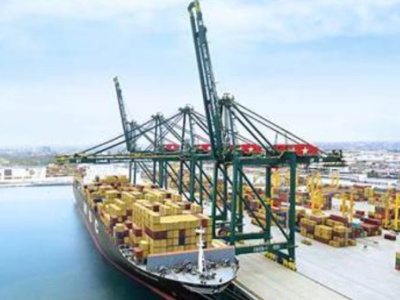
The Port of Lomé (PAL) is among the platforms benefiting from this reconfiguration. The impact is indirect but tangible: vessels taking the Cape of Good Hope route to connect Asia and Europe carry goods destined for West Africa, which are then transhipped through hubs such as Lomé or Abidjan before being forwarded by feeder services to smaller regional ports.
As early as March 2025, before the Hormuz crisis, the MSC Diletta, a 24,000-TEU container ship, had called at Lomé and Abidjan amid MSC's growing presence along the West African coast.
Togolese Minister Delegate for Maritime Economy Edem Kokou Tengue said the situation in the Persian Gulf had a favourable effect on Togolese port activity, in a post on X cited by CGTN.
"I think the current situation in the Strait of Hormuz has in fact had a positive impact on the port of Lomé. With the strait now considered unsafe for navigation, several shipping companies have shifted back to more traditional routes," he said.
An already well-positioned regional hub
No precise data yet exist to measure the specific impact of the Hormuz crisis on Lomé's traffic alone, but the disruption comes as the port has been strengthening its position as a regional logistics platform for several years.
In 2024, the port handled 30.6 million tonnes of cargo, up 1.85% from 2023, and processes more than two million TEUs annually. In November 2025, at the 45th Council of the Association of Port Management of West and Central Africa (AGPAOC), Lomé was ranked the best African port for transit traffic.
The port is also a key supply gateway for landlocked Sahelian countries. Burkina Faso, Mali and Niger each have representatives within its governance structure, reflecting the port's long-standing regional role.
Mixed effects for the Togolese economy
While shipping rerouted around the crisis is boosting activity at the Port of Lomé, the Gulf tensions also come at a cost. Like many hydrocarbon-importing countries, Togo has recently recorded higher petroleum product prices, a consequence of uncertainty in global energy markets, according to public authorities. Shipping companies have also imposed war-risk surcharges on their routes, increasing import logistics costs.
The Hormuz crisis illustrates a mixed reality for the Togolese economy. On one hand, it reinforces the Port of Lomé's role in regional and international supply chains. On the other, it is adding to the country's energy bill and increasing costs for households.
Ayi Renaud Dossavi