Lomé Talks Focus on Economic Cost of Malnutrition in West and Central Africa
 Monday, 11 May 2026 17:52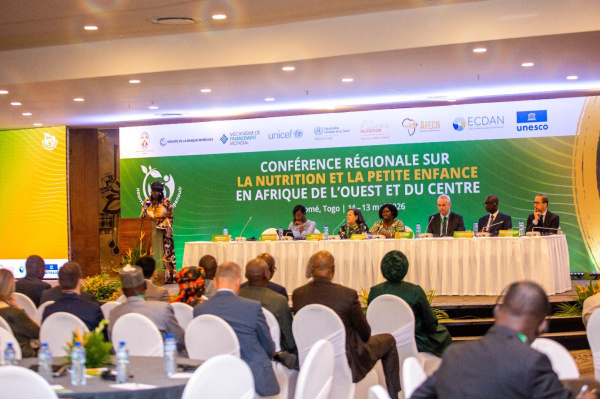
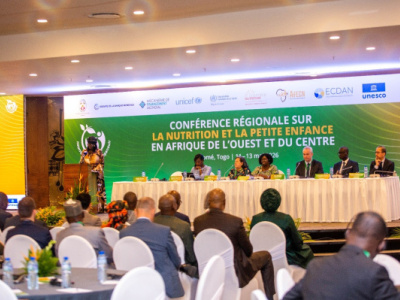
(Togo First) - Twenty West and Central African countries gathered in Lomé on Monday for a three-day conference on child nutrition and early childhood development, as governments and development partners seek ways to finance programs aimed at reducing malnutrition in the region.
The event, organized by the Togolese government and the World Bank Group, aims to assess the state of child nutrition and explore funding options for future interventions.
One in Three Children Affected by Malnutrition
Data presented at the opening session highlighted the scale of the challenge. In West and Central Africa, nearly one in three children suffers from stunting, while 65 million women are affected by anemia, according to figures cited during the ceremony.
For Tony Verheijen, the World Bank Group’s resident representative in Togo, the numbers reflect long-term economic and social losses.
“They represent lost human potential, disrupted education and jobs that will never be created,” he said.
Against that backdrop, Togo has improved several nutrition indicators in recent years. Between 2014 and 2017, the country’s stunting rate fell from 27.5% to 23.8%. Its exclusive breastfeeding rate stands at 64.3%, one of the highest in the sub-region, according to UNICEF.
Verheijen also said Togo validated a national preschool education strategy in 2024 and adopted new regulations for nurseries and daycare centers.
“Despite recent gains, more work is needed to ensure every child has access to a sufficiently diverse diet, reaches their full developmental potential and that maternal nutrition improves,” said Martine Moni Sankaredja, minister of Solidarity, Gender, Family and Child Protection, at the opening ceremony.
She added that the conference should help produce “a shared regional approach that places children and mothers at the center of public policy.”
The Economic Argument
The conference also highlighted the economic impact of nutrition. According to World Bank data, every dollar invested in integrated nutrition programs can generate returns of up to 23 dollars.
“Investing in human capital from birth is the foundation of all sustainable and inclusive growth,” Verheijen said.
Speaking on behalf of UNICEF regional director Gilles Fagninou, the organization’s deputy regional director for West and Central Africa pointed to the results of the Muskoka Fund, which operates in six countries in the region and brings together four U.N. agencies.
Between 2010 and 2024, the program contributed to a 25% increase in exclusive breastfeeding, a 28% reduction in stunting and a 74% decline in severe acute malnutrition, UNICEF said.
Focus on Domestic Financing
The conference will conclude on Wednesday with a ministerial conclave focused on domestic financing for nutrition and early childhood development programs.
“How do we sustainably and collectively mobilize the resources needed to finance nutrition and early childhood development?” Verheijen asked.
UNICEF, whose 2026-2029 Strategic Plan focuses on expanding priority interventions, said it expects the conference to produce measurable commitments from participating countries.
“No lasting transformation will be possible without stronger commitment from states themselves,” the organization’s representative said.
Ayi Renaud Dossavi