Togo’s 2026 Tax Take: VAT And Customs Lead The Forecast
 Tuesday, 20 January 2026 12:51
(Togo First) - Togo expects to collect 1,338.9 billion CFA francs in tax revenue in 2026 under the budget law. As in previous years, most of the projected revenue comes from a small number of high-yield taxes.
Indirect taxes account for the largest share, led by value-added tax (VAT) and customs-related levies. Domestic VAT is projected at 189.4 billion CFA francs, while customs VAT is expected to reach 351.2 billion.
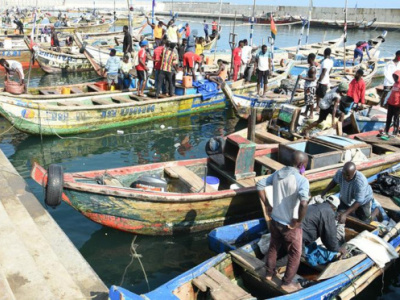
Customs duties and related taxes are the second-largest source, reflecting Togo’s role as a regional transit hub and gateway for goods bound for inland West African markets. Authorities forecast these at 211.5 billion CFA francs, keeping trade-related taxes among the main drivers of revenue for the Togolese Revenue Office (OTR).
Corporate tax ranks third, projected at 201.1 billion CFA francs. Tax on wages and salaries, withheld at source, also provides a steady stream of revenue supported by growth in formal employment.
Other taxes make up a much smaller share. Property and real estate taxes are expected to total 3.7 billion CFA francs in 2026, while registration and stamp duties are projected at 18 billion. Other revenues, including fines, penalties and sector-specific taxes, are estimated at 2.28 billion CFA francs.
Non-tax revenues are projected at about 88.9 billion CFA francs in 2026 and include royalties, proceeds from state holdings, dividends from public enterprises and administrative fees. Mining royalties are expected to reach 10.38 billion CFA francs, while airport-related royalties are estimated at 3.97 billion.
Grants and external support are projected at 166.9 billion CFA francs, mainly from international institutions including the World Bank and the International Monetary Fund.
Separately, the government plans to raise 463.5 billion CFA francs on the WAEMU regional debt market, around 17% of the annual budget.
Overall, tax revenue is expected to account for 48.7% of the 2026 budget, set at 2,751.5 billion CFA francs, up 14.8% from the previous year.
Ayi Renaud Dossavi