Togo cotton output rebounds, nears multi-year high
 Thursday, 16 April 2026 16:21
(Togo First) - Togo’s cotton sector has posted its best results in several years, following the creation of the New Cotton Company of Togo (NSCT). For the 2025–2026 season, yields reached 995 kg per hectare, up from 797 kg the previous season, a 25% increase. The performance marks a turning point after five years of turbulence and supports ambitions for 2030.
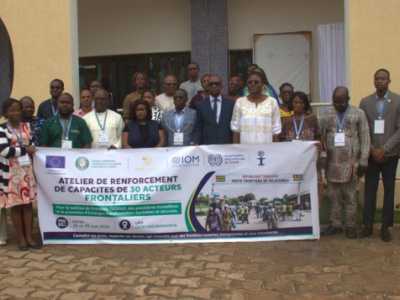
During the 18th meeting of the Regional Integrated Cotton Production Program in Africa (PR-PICA), held this week in Lomé, the NSCT briefed the press on Wednesday, April 15, 2026, at its headquarters. The director general, the president of the National Federation of Cotton Producers’ Groups (FNGPC), and the director of agricultural production outlined a more positive outlook after several disappointing years following Olam Agri’s entry into the company’s capital in December 2020.
A record yield
Early figures for the 2025–2026 campaign show strong growth. The NSCT projects production of 74,000 tons of seed cotton, compared with 60,000 tons last season, an increase of 23%.
Average yield reached 995 kg per hectare, approaching the symbolic one-ton threshold. Company executives said this level sets a new record.
“Five years ago, we were at barely 600 kg per hectare. This is very significant for us,” said Martin Drevon, director general of the NSCT. A total of 74,000 hectares were planted, involving just over 68,000 producers.
This is notable given that the campaign began under poor conditions. An early drought in the Savanes region disrupted sowing in the north, limiting yields there to around 850 kg per hectare, while other regions exceeded one ton.
The turnaround is notable. When Olam Agri acquired a 51% stake in the NSCT in December 2020 for around 22 billion CFA FRANC, the sector was producing 116,000 tons. The goal was to accelerate output toward 200,000 tons. Instead, production declined to 67,185 tons in 2020–2021, then to 52,528 tons in 2021–2022, before hitting a low of 46,549 tons in 2022–2023.
Several factors contributed, officials said. These included a reduction in the farmgate price of seed cotton from 265 to 225 CFA FRANC per kilo, supply disruptions linked to COVID-19, a surge in fertilizer prices following the Russia-Ukraine conflict, and pest infestations—particularly whiteflies and jassids from 2022—that caused yield losses of up to 50% in some areas. More profitable soybean crops also drew farmers away.
Relations between the NSCT and the FNGPC deteriorated, with producers criticizing a lack of transparency and the absence of end-of-season bonuses. Conditions began to improve in 2023–2024, when production rose to 67,718 tons, before slipping to 60,403 tons in 2024–2025. The current campaign marks a clear acceleration.
Drivers of the recovery
The director of agricultural production, Mr. Yovogan, highlighted three key factors. First, the use of targeted treatments against jassids and lepidoptera helped control pest pressure.
Second, the mobilization of a core group of committed producers played a role. Around 68,000 farmers followed technical guidance, helping push yields higher. Top performers reached up to 2.5 tons per hectare. For example, Koussouwe Kouroufei, a farmer and president of the FNGPC, said he harvested 37,845 kg across 15 hectares, or roughly 2.5 tons per hectare.
Finally, maintaining the purchase price at 300 CFA FRANC per kilo for three consecutive seasons, combined with a state subsidy capping the price of a bag of NPK fertilizer at 14,000 CFA FRANC, helped restore confidence among farmers. Market prices for inputs ranged between 21,000 and 22,000 CFA FRANC per bag.
The state currently covers the difference, amid ongoing geopolitical tensions in the Middle East, a key fertilizer-producing region. The NSCT also said fertilizer supplies have been secured.
Improved dialogue between the NSCT and the FNGPC also contributed. In October 2025, both sides met in Kara under the Ministry of Agriculture to establish a new framework for cooperation. Drevon said their objectives are now aligned, with key decisions discussed in joint technical meetings.
Target of 150,000 hectares by 2030
On the back of these results, the NSCT is raising its ambitions, with planting intentions reflecting renewed interest among farmers. Around 100,000 hectares have already been declared for the next campaign, even though the current harvest is still ongoing and payments have not been finalized.
The target is 105,000 hectares, with expectations of exceeding that level.
The medium-term plan aims for 150,000 hectares cultivated by 150,000 producers by 2030, for output of 150,000 tons—matching previous peak levels.
To reach this goal, the strategy includes recruiting 25,000 additional producers each year, each cultivating around one hectare with yields of one ton. The current cotton variety has a theoretical potential of up to 3 tons per hectare, leaving room for further gains.
Kouroufei said farmers are already aiming for yields of 1.1 to 1.2 tons per hectare next season. He noted that Cameroon averages around 1.5 tons, and some producers in Togo are already reaching that level. Encouraged by improved profitability, farmers are preparing for the next season without waiting for final payments from the current campaign.
Persistent structural challenges
Challenges remain. The NSCT’s logistics fleet is aging, and current collection rates—between 770 and 850 tons per day—are straining processing capacity. Trucks ordered from China are not expected to arrive until June 2026, after the end of the campaign.
The FNGPC president called for easier access for private transporters to speed up collection and ensure timely payments to farmers, a key incentive.
Reliance on weather conditions also remains a structural constraint, with increasing rainfall variability affecting both sowing and harvests. Adaptation measures include earlier planting, direct seeding with herbicides, and the use of real-time rainfall forecasts. Research on regenerative agriculture is also underway in national agronomic centers. However, drought or unexpected pest outbreaks could still disrupt projections.
On export markets, Togolese cotton fiber is mainly sold in Southeast Asia, including Pakistan, India, and Vietnam, amid volatile global prices. The first factories at the Adetikope Industrial Platform (PIA) offer prospects for local processing, though these remain at an early stage. The sector is watching to see whether these investments will translate into sustained domestic demand.
Ayi Renaud Dossavi