Self-financing dominates business creation in Togo, World Bank says
 Thursday, 09 April 2026 16:17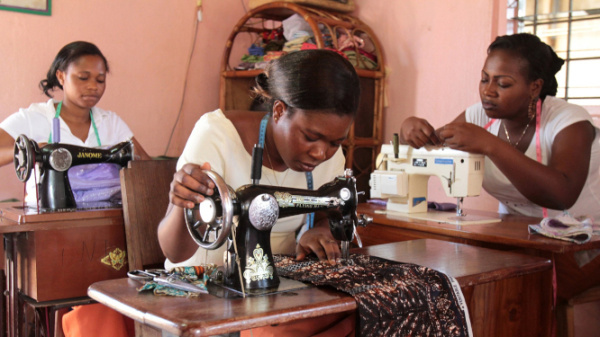
(Togo First) - Entrepreneurs in Togo overwhelmingly finance the start of their businesses using their own funds, according to the World Bank’s Africa Economic Update 2026.
The report shows that 94% of entrepreneurs rely on personal resources or support from family and close contacts. Of these, 73% use their own savings to launch their activities, while 21% depend on family or relatives.
Formal financing remains limited. Only 5% of entrepreneurs access funding from banks, microfinance institutions, public programs or other formal credit facilities. Informal sources account for 1%, while other sources are negligible.
This pattern reflects persistent barriers to credit access. The World Bank notes that most self-employed workers rely primarily on personal savings or support from family and friends to finance their startup capital.
High borrowing costs and collateral requirements that are poorly suited to small businesses remain key constraints.
Similar trends across the sub-region
Togo reflects a broader regional pattern. In Senegal, 74% of entrepreneurs rely on their own resources, compared with 76% in Guinea-Bissau and 79% in Nigeria. The figures stand at 79% in Benin, 81% in Côte d’Ivoire and 85% in Mali.
Across these countries, family support remains the second main source of funding, while formal channels are still underused. The data points to an economic structure dominated by informal enterprises. The report notes that non-agricultural employment is largely driven by informal family businesses serving local markets.
This structure limits integration into formal value chains and restricts access to structured financing.
Recent efforts
The World Bank data covers 2021 and may not reflect more recent developments. Togo has since stepped up efforts to expand financial inclusion. The inclusion rate reached 89.04% in 2024, up from 87.7% a year earlier, placing the country among the most advanced in the WAEMU.
This progress is partly driven by the National Fund for Inclusive Finance (FNFI), which said it had granted more than 1.9 million loans worth a total of about 116 to 117 billion CFA francs by end-2025.
Authorities are also promoting microfinance, mobile money and digital services to broaden access to financial services, particularly in rural areas. Other mechanisms, including the ANPGF and the MIFA, aim to reduce lending risks and support SME financing.
Ayi Renaud Dossavi