Togo rolls out new roadmap to improve policy coordination and spending efficiency
 Friday, 10 April 2026 11:00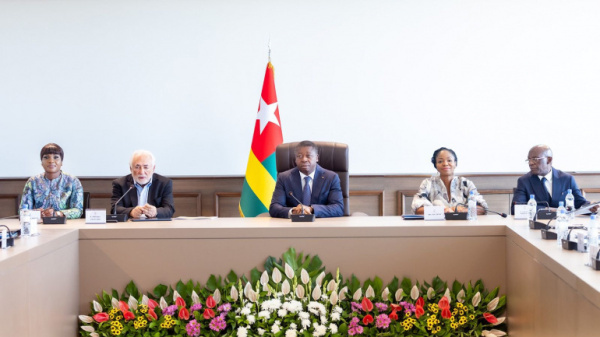
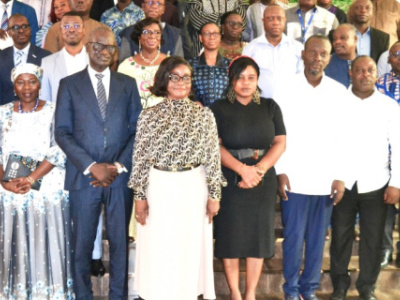
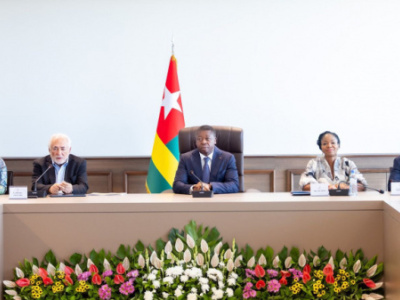
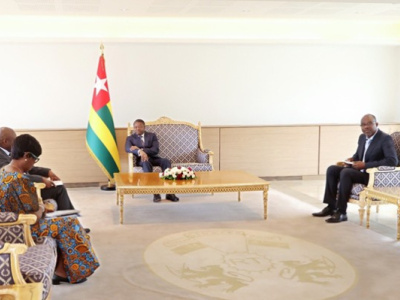
(Togo First) - Togo launched work on its 2026–2031 roadmap on Wednesday, April 8, following a two-day seminar chaired by Council President Faure Essozimna Gnassingbé.
The move comes as the country’s public debt has fallen back below the 70% of GDP ceiling set by the West African Economic and Monetary Union (WAEMU/UEMOA), although the budget deficit remains a concern. The International Monetary Fund has pushed back to the end of this year the target of reducing it to 3% of GDP.
The new strategy is built around three pillars: “Protect, Unite and Transform.” Gnassingbé first outlined these themes before Parliament, convened in Congress on Dec. 2, 2025, in his state-of-the-nation address, the first under Togo’s Fifth Republic. He reiterated them in his New Year’s address on Dec. 30, making the three pillars central to his agenda.
The April 7–8 seminar marks a shift to implementation. According to the official communiqué, the government aims to break down sectoral silos and promote cross-ministerial coordination, focusing public spending on high-impact priorities and adopting indicators that are visible in people’s daily lives.
The previous roadmap, which included 42 projects and reforms, achieved a completion rate of 68.79%, according to figures presented at the seminar. Authorities said the outcome was partly due to external shocks, including the Covid-19 pandemic, the war in Ukraine and regional security instability, although analysts have also pointed to coordination and monitoring gaps.
The government had already sought to address those weaknesses when forming the first cabinet of the Fifth Republic in October 2025, notably by creating an expanded portfolio focused on public service efficiency and digital transformation.
The seminar’s conclusions were shared with secretaries-general and chiefs of staff across ministries to ensure implementation.
Limited fiscal space
The launch comes amid ongoing fiscal consolidation after several years of pressure on public finances. Following a deficit of 7.4% of GDP in 2024, it narrowed to around 3.5% in 2025, according to a recent Moody’s analysis, which cited stronger revenue mobilisation and lower one-off spending.
Public debt, which peaked at 72% of GDP in 2024, has fallen back below 70%, reaching 65% at end-June 2025, according to official data presented by Finance Minister Essowè Georges Barcola. The IMF has since classified Togo among countries with strong debt-carrying capacity.
Moody’s expects debt to continue declining, to around 66% of GDP by 2027, provided fiscal discipline is maintained and security pressures in the north do not lead to higher military spending.
On growth, the government forecasts expansion of 6.2% in 2025 and 6.5% in 2026, according to projections set out in the budget adopted in December 2025, above UEMOA’s forecast of 5.7% and ECOWAS’s 4.1% for 2026.
The IMF is more cautious, projecting growth of 5.3% in 2025 and 5.5% in 2026. The World Bank said the outlook depends on easing global uncertainties and continued fiscal consolidation.
Fiacre E. Kakpo