New BCEAO FX Rules Reshape Trade Finance Practices in Togo
 Friday, 22 May 2026 13:56
(Togo First) - IB Bank Togo gathered its corporate clients on May 20 for a seminar on international banking operations, reflecting a broader adjustment underway since new UEMOA foreign exchange regulations came into force in December 2024.
Banks across Togo are adapting their services to help clients navigate a significantly revised regulatory environment. Importers and exporters are also being forced to reassess longstanding commercial practices.
A Revised Foreign Exchange Framework
The new regulation governing foreign exchange transactions within the West African Economic and Monetary Union (UEMOA) was adopted by the bloc’s Council of Ministers on Dec. 20, 2024, and entered into force the same day. It replaces the previous framework introduced in 2010.
Accompanied by implementation guidelines and supplementary circulars, the regulation introduces new rules covering the bank registration of import and export transactions, the repatriation of export earnings, advance payments on international transactions and foreign exchange risk hedging instruments.
The changes carry significant implications for businesses operating within the region. Transactions involving foreign counterparties are now subject to stricter documentation requirements and tighter monitoring of foreign currency flows by the Central Bank of West African States (BCEAO).
Advance Import Payments Under Tighter Control
One of the most immediate changes concerns advance payments for international transactions.
The new regulation caps advance payments at 50% of the transaction value, down from the 80% threshold — and in some cases full pre-shipment payment — tolerated under the previous regime, according to Harouna Gouba, director of payments at IB Bank Togo’s Digital and Innovation Banking division.
“The regulator wants advance payments limited to 50%,” Gouba said. “The balance can only be settled once there is proof that the goods or services are effectively on their way to the monetary union.”
The measure reflects the BCEAO’s efforts to tighten control over foreign currency outflows and ensure that payments made abroad correspond to goods or services actually entering the region.
For importers, the rule may require renegotiating payment terms with foreign suppliers, particularly those accustomed to more favorable advance payment conditions.
A Banking Sector Closely Linked to Trade
The regulatory changes come as Togo’s banking sector remains heavily oriented toward trade finance.
The country has 14 active banks, including 11 subsidiaries and three branches. According to data from the National Credit Council, credit extended to economic operators reached 966 billion CFA francs ($1.67 billion) in 2024, up 18% from the previous year.
Trade remained the largest recipient of short-term credit, accounting for nearly 200 billion CFA francs, including 141 billion for wholesale trade.
The figures highlight the importance of imports in the Togolese economy and the central role banks play in facilitating transactions with foreign partners.
Within that landscape, IB Bank Togo — formerly Banque Togolaise pour le Commerce et l’Industrie before its privatization and rebranding — says international operations are a strategic focus. The lender has created a dedicated payments division to support that objective.
Banks Expanding Their Advisory Role
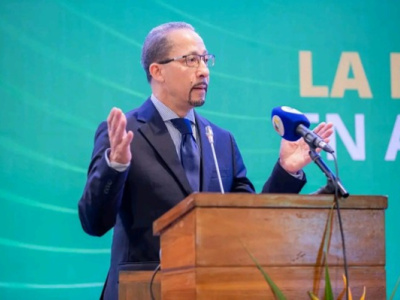
It was against that backdrop that IB Bank organized its May 20 seminar for corporate clients, which Gouba described as “perhaps a first in Togo.”
The event aimed to help clients understand the regulatory changes while allowing the bank to gather feedback from businesses facing implementation challenges.
Discussions focused on international payment instruments including documentary credits, standby letters of credit and documentary collections, as well as confirmation procedures and foreign exchange hedging tools.
Participants raised practical concerns ranging from the management of confirmation fees charged by correspondent banks to the suitability of payment instruments depending on supplier relationships and the willingness of Chinese suppliers to accept standby letters of credit.
According to Gouba, the new rules could affect relationships between local companies and their foreign partners, making early preparation essential, particularly when drafting or renegotiating international commercial contracts.
The new regulatory framework introduced by the BCEAO adds complexity to an already demanding business environment — but it may also create opportunities for banks capable of positioning themselves as trusted advisers on international trade operations.
Ayi Renaud Dossavi