Togo tests integrated approach to child nutrition and early development
 Thursday, 21 May 2026 14:56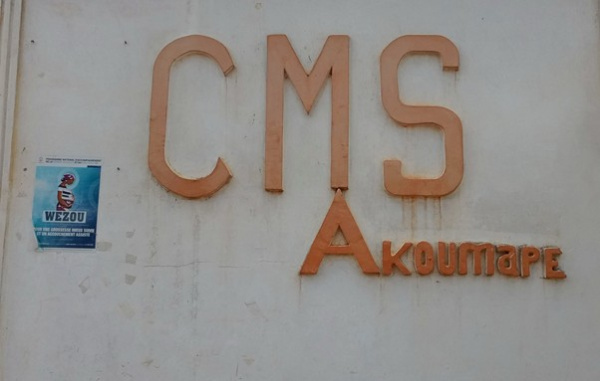
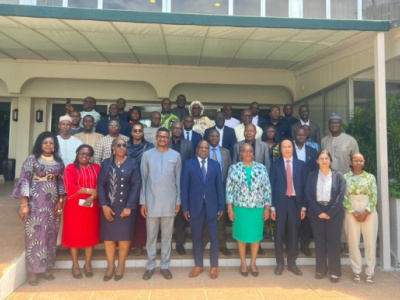
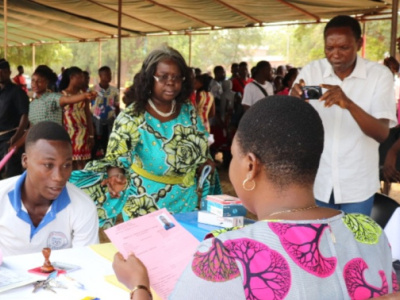
(Togo First) - On the sidelines of a regional nutrition conference bringing together 22 countries in Lomé, a field visit to the Vo prefecture on May 12, 2026, spotlighted a pilot project aiming to integrate nutrition, vaccination, early childhood stimulation and civil registration into a single system managed by local municipalities.
A Fragmented System
In Togo, roughly two in 10 children under five suffer from chronic malnutrition. Each year, 1,100 women and 16,496 children under five die, including 6,530 newborns. UNICEF says these figures reflect fragmented public health interventions, prompting the Maritime Region’s Directorate of Health to develop a more coordinated response in the Vo prefecture.
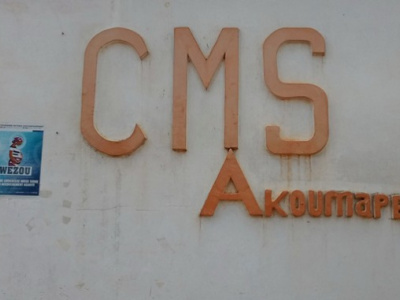
“We are currently deploying the first phase of a model we call the integrated model of basic health care and social services for child health and development, from the womb through preschool,” said Dr. Agbetiafa, the maritime region’s director of health, during a visit to Akoumapé on May 12, 2026.
A pediatrician and medical informatics specialist, Agbetiafa is the lead architect of the project, which has been rolling out since February 2026 across the four municipalities of the Vo prefecture.
A Package of Services Under One Roof
The community project, supported by partners including UNICEF Togo, the World Health Organization and UNFPA, covers the first 2,000 days of a child’s life. It combines maternal and child health, nutrition, vaccination, early stimulation, birth registration and preschool support within a single continuum of care. Health centers, kindergartens and civil registry offices in the Vo prefecture serve as operational sites.
For UNICEF’s representative in Togo, Erina Dia, who opened the project’s orientation session, the rationale is straightforward.
“You cannot take interventions in silos because the child is a whole. The child needs an integrated approach involving multiple sectors and interventions that address all of the child’s needs,” she said on May 12, 2026.
In a context of budget constraints, the objective is to maximize limited resources.
Nutrition, from the Household to the School
The nutritional component operates across four levels: the household, the community, the health center and the preschool.
At the household level, parents are trained to prepare balanced meals using locally available ingredients.
“With 500 francs, less than one euro, you can prepare a balanced meal,” Agbetiafa said, adding that many households covered by the program now know how to prepare such meals.
At the Akoumapé health center, Sabari Larba, the midwife in charge of the maternity unit, described cooking demonstration sessions organized for mothers.
“We make enriched porridge made of corn, soy and moringa because those ingredients are locally available,” she explained, adding that women learn how to measure, sort, dry and roast ingredients before preparing the flour.
Exclusive breastfeeding is recommended until six months, before introducing the enriched porridge.
The community component mobilizes health workers and women’s groups to spread nutritional education in their neighborhoods.
Agbetiafa also sees the initiative as a tool for economic empowerment.
“When a woman knows how to prepare soy milk, soy beer and other products, she can generate income from those activities,” he said.
Digitalization as an Accelerator
One of the model’s distinguishing features is the “Naissance Kéva” application, a digital platform linking maternity wards with civil registry services to speed up the issuance of birth certificates.
Data entered for a newborn at the maternity ward allows local authorities, after validation by the head of the health facility, to access the information required for parents to receive birth certificates more quickly.
Kanyaya Dacha, a state hygiene assistant and head of vaccination services at the Akoumapé health center, highlighted the impact on attendance rates.
Since the renovation of the vaccination room and improvements to reception conditions, the number of visits has increased noticeably.
“The improved environment makes them feel more comfortable and more willing to wait for treatment,” he said.
The application also sends vaccination appointment reminders to reduce drop-off rates.
Municipal Governance
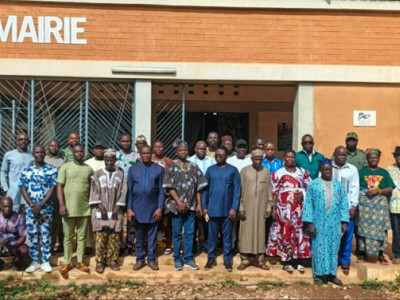
The model’s governance relies heavily on local elected officials. Mayors and prefects were involved from the outset, according to project organizers.
Community review meetings chaired by prefects also bring together women’s associations, traditional leaders and youth groups.
Certification of the best-performing health centers, conditional on meeting at least 80% of the required criteria, is planned by the Ministry of Health.
For the prefecture as a whole, certification requires that 90% of children born in health centers receive a civil registration document within eight days of birth.
The Challenge of Scaling Up
For Driss Zinédine, the World Bank’s sectoral director for Health, Nutrition and Population for West and Central Africa, the implications extend beyond Togo.
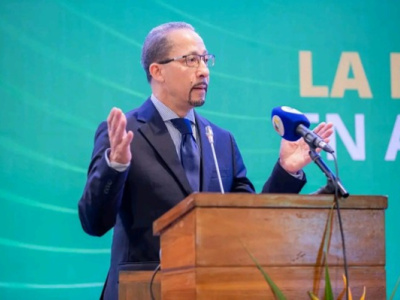
“If a population is not well nourished, if there is no early childhood development, there is no good future for the country’s development,” he said on the sidelines of the regional conference.
The World Bank also supports several initiatives aimed at improving child nutrition in Togo, including a school canteen project that has provided more than 75 million hot meals in public primary schools since its launch in 2008, benefiting vulnerable schoolchildren.
Agbetiafa outlined the project’s trajectory: first covering the entire Vo prefecture, then expanding to the Maritime Region before considering a national rollout.
“We absolutely need partners. Without partners, it is going to be complicated,” he acknowledged, while noting that UNICEF, WHO, the World Bank and several other organizations are already supporting the initiative.
The Lomé regional conference, which brought together representatives from around 22 countries in West and Central Africa, provided a platform for policymakers to discuss the model at the regional level.
The question raised in Akoumapé is now being considered more broadly across the region: can such a model be replicated in countries where vertical programs have shown their limits?
Ayi Renaud Dossavi