“Malnutrition Is Never Just About Food” — Gordon Jonathan Lewis, UNICEF
 Thursday, 21 May 2026 14:30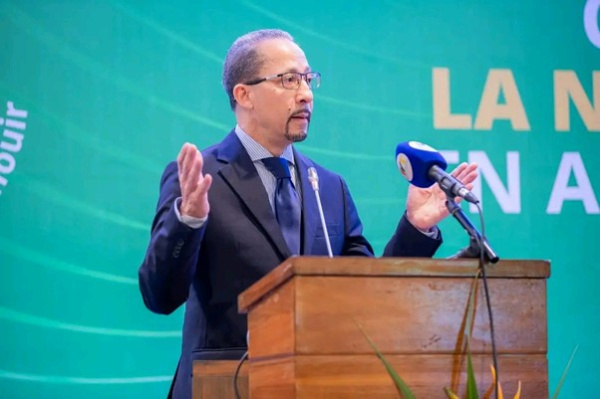
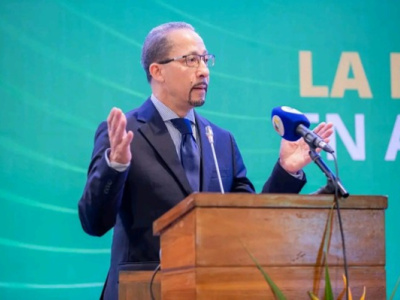
(Togo First) - Gordon Jonathan Lewis, UNICEF’s Deputy Regional Director for West and Central Africa, spoke with Togo First on the sidelines of the West and Central Africa Regional Conference on Nutrition and Early Childhood, held in Lomé from May 11 to 13, 2026. Representing Regional Director Gilles Fagninou, he discussed field realities, persistent bottlenecks and the challenges facing Togo.
TF: West and Central Africa account for a third of global deaths among children under five. What does that reality look like for a child growing up in a Sahel village or along the Gulf of Guinea coast?
Gordon Jonathan Lewis: Behind the statistics are children growing up with hunger, fatigue, and sometimes silence. A malnourished child falls sick constantly, has little energy to play or learn, fails to grow properly, and struggles at school. Some walk miles with their mothers just to reach a health clinic.
But malnutrition affects more than the child alone. Mothers who must stop working to care for sick children lose income. Children who grow up with developmental delays are more likely to struggle in school and later face difficulties finding skilled employment. At scale, this weakens productivity and slows the economic development of entire countries.
TF: We often hear terms like stunting, acute malnutrition, and undernutrition used interchangeably. What’s the difference?
GJL: Undernutrition is the broadest term. It refers to all forms of nutritional deficiency that affect a child’s health and development. Stunting and acute malnutrition are two specific forms of undernutrition.
Stunting, also known as chronic malnutrition, occurs when a child does not receive adequate food, nutrition, and care over a long period. It affects not only physical growth, but also brain development.
Malnutrition is never just about food. It is closely linked to poverty, limited access to healthcare, conflict, displacement, climate change, unsafe water, and weak social protection systems.
Acute malnutrition, by contrast, is a medical emergency. The child loses weight rapidly, becomes extremely vulnerable, and can die without prompt treatment. These conditions therefore require very different responses.
TF: What is really holding back progress in the fight against stunting?
GJL: Malnutrition is never just about food. It is closely linked to poverty, limited access to healthcare, conflict, displacement, climate change, unsafe water, and weak social protection systems.
Critically, too many children still do not receive integrated support during the earliest years of life. A child needs adequate nutrition, healthcare, stimulation, affection, and a safe environment — all at the same time.
When countries invest simultaneously in nutrition, healthcare, water, sanitation and hygiene, early childhood education, and parental support, the results tend to be far more sustainable.
TF: How do you change food practices that are deeply rooted in communities?
GJL: Behavior change cannot be imposed from the top down. It has to be built with communities. Families are far more likely to adopt new practices when they clearly understand the benefits for their children and when they feel their cultural and economic realities are being respected rather than dismissed.
In some cases, families already know what their children need but simply cannot access nutritious foods. That is why UNICEF launched the “First Foods” initiative, which aims to improve the availability and affordability of quality complementary foods.
In some cases, families already know what their children need but simply cannot access nutritious foods. That is why UNICEF launched the “First Foods” initiative, which aims to improve the availability and affordability of quality complementary foods.
We are also placing much greater emphasis on early stimulation, including talking to children, playing with them, and responding to their emotions. These may seem like simple gestures, but they are essential to brain development.
TF: How do you assess the situation in Togo?
GJL: Togo has made real and encouraging progress. The country reduced its stunting rate from 27.5% to 23.8% between 2014 and 2017, and it now has one of the highest exclusive breastfeeding rates in the sub-region, at 64.3%.
We are also seeing strong political commitment, with major reforms underway in nutrition, early childhood education, and child protection. One important step was the recent adoption of the national multisectoral nutrition strategic plan for 2026–2030.
This progress is one of the reasons UNICEF awarded the Early Childhood Champion Prize to the President of Togo’s Council of the Republic.
However, as in much of the region, major challenges remain in ensuring equitable access to integrated services, particularly in the most vulnerable communities.
TF: What is the top priority for the next two years in Togo?
GJL: The priority is to scale up quickly. That means putting in place a multisectoral program capable of coordinating all interventions targeting the first 2,000 days of life, increasing domestic investment, and expanding community-based services.
It will also require developing a local industry capable of producing therapeutic foods for children and updating university curricula to promote a truly holistic approach to early childhood care.
The objective is clear: to ensure that every child, regardless of where they are born, has access from the very beginning to adequate nutrition, quality healthcare, and a stimulating and nurturing environment.
Interview by Ayi Renaud Dossavi