Togo's 20,000-Unit Housing Program Enters Operational Phase, Adedze Says
 Friday, 12 June 2026 11:38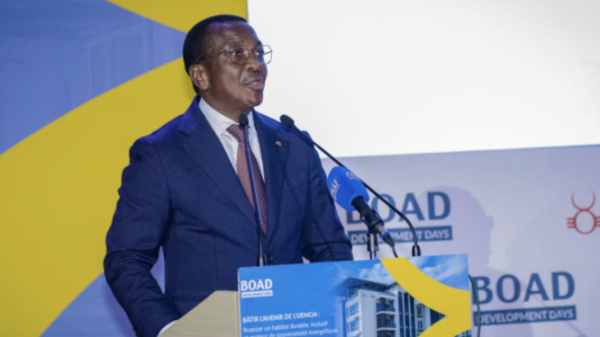
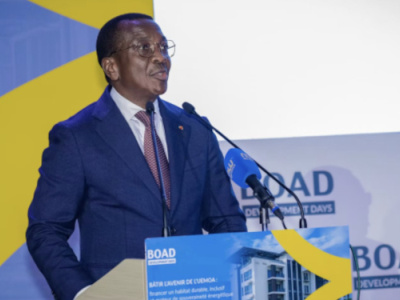
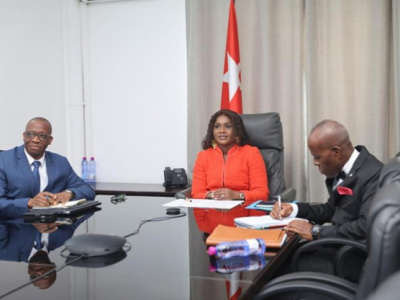
(Togo First) - Togo has moved into the implementation phase of the 20,000-unit housing program in Kpomé-Dalavé, in Zio Prefecture some 40 kilometers north of Lomé, following the completion of studies financed by the West African Development Bank (BOAD). The development was announced by Togo's Minister of Land Use Planning, Urban Development and Housing, Kodjo Sévon-Tépé Adedze, at the opening of the BOAD Development Days, held June 11-12 at the Hôtel 2 Février in Lomé.
"The studies are already complete thanks to the Bank's support, and we are now in the implementation phase of this project," the minister said.
According to African Development Bank (AfDB) estimates cited by Adedze, Togo faces a cumulative shortfall of 500,000 decent housing units. The program's initial phase would address 4% of that estimated need. Togo's urbanization rate rose from 37% in 2010 to 43% in 2022, according to figures the minister presented at the opening session.
Adedze framed housing as a public policy priority. "We can no longer respond with isolated, fragmented solutions. The approach must be comprehensive and inclusive. Housing must be viewed as a foundational component of development," he said.
Citing the adage of Martin Nadaud, he added: "When construction thrives, everything thrives."
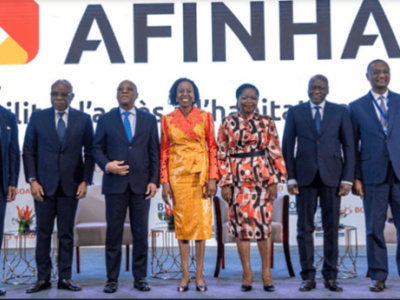
The event brought together 400 participants in Lomé under the theme "Building the Future of UEMOA: Financing Sustainable, Inclusive Housing as a Driver of Energy Sovereignty."
BOAD President Serge Ekué used the occasion to launch the Djoliba la Suite 2026-2030 strategic plan, developed with support from Boston Consulting Group, in which housing is described as "an instrument of macroeconomic policy."
Adedze also announced that a national land tenure security program is being developed to enable the systematic registration of plots and the creation of land reserves.
"If we strengthen land governance, we will be able to move forward on housing," the minister said.
Securing land titles is a prudential condition set by the BCEAO for the mobilization of mortgage credit. The initiative is part of the implementation of the National Land Use Planning Program, under the leadership of Council President Faure Essozimna Gnassingbé.
The government's housing effort rests on two complementary pillars. On the supply side, the program has received support from the AfDB ($5.13 million for feasibility studies), BOAD (technical studies of the Kpomé-Dalavé site), as well as Shelter Afrique and the International Finance Corporation (IFC), each of which plans to build 3,000 housing units.
On the demand side, the Housing Loan Guarantee (GPL), launched in Lomé on May 17, 2024, by the African Solidarity Fund and CRRH-UEMOA, covers 50% of bank losses in the event of default and accepts properties whose land titles are undergoing regularization.
At the UEMOA level, the housing deficit stands at 3.5 million to 4 million units, according to Côte d'Ivoire's Minister of Urban Planning, Housing and Living Environment, Moussa Sanogo, who represented Prime Minister Robert Beugré Mambé as guest of honor.
"The housing challenge can no longer be viewed solely through the lens of building homes. It must now be addressed through a comprehensive and integrated approach," Sanogo said at the opening.
Housing credit represents only 4% of the Union's total bank lending, compared with 27% in Morocco. The UEMOA real estate loan portfolio stood at 1.473 trillion CFA francs in 2024, equivalent to 6.8% of total credit extended by the banking sector.
"The Union's banks grant only around 15,000 mortgage loans per year, a negligible figure relative to the needs of a population set to exceed 300 million by 2050," BOAD President Ekué said.
For Côte d'Ivoire alone, the housing deficit ranges from 600,000 to 800,000 units, with investment needs estimated at between 9,000 billion and 15,000 billion CFA francs.
"No national public budget — Côte d'Ivoire's currently stands at 17.3 trillion CFA francs — and no parastatal company budget could alone mobilize such resources," Sanogo said.
Bridging the gap between housing supply and demand remains the challenge ahead.
Fiacre E. Kakpo