Togo Holds the Line on Fuel Prices Despite the Oil Shock — But for How Long? (Op-Ed)
 Tuesday, 26 May 2026 14:24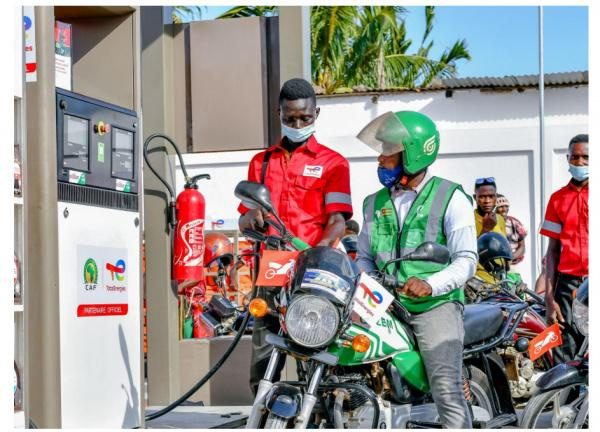
(Togo First) - With Brent crude holding above $100 a barrel for nearly three months, Togo remains one of the last countries in the sub-region where pump prices have not moved. The question is no longer whether prices will rise, but how much longer the government can sustain a subsidy scheme built for far lower oil prices.
A War-Driven Market Shock
On Feb. 28, 2026, U.S. and Israeli strikes against Iran and the subsequent blockade of the Strait of Hormuz upended global energy markets. The strait carries roughly 20% of the world's oil and 30% of its gas. Brent crude, which traded at $70 a barrel on the eve of the strikes, surged to a peak of $126 on March 20, according to Investing, before stabilizing around $104 on May 22. At that level, the barrel remains more than 50% above its pre-conflict price.
Across West Africa, governments have gradually adjusted domestic prices under mounting pressure. Benin revised its price schedule on May 1: gasoline rose to 725 CFA francs per liter from 695, diesel to 750 CFA francs, and kerosene jumped sharply from 639 to 1,040 CFA francs, according to Benin's Ministry of Industry and Commerce. The same day, Côte d'Ivoire raised unleaded premium gasoline to 875 CFA francs per liter, up 55 CFA francs, and diesel to 700 CFA francs, up 25 CFA francs, through its automatic price-setting mechanism, a regulatory formula that passes international price shocks through to consumers each month.
In Nigeria, the Dangote refinery raised its gantry price — the wholesale price at which Dangote sells gasoline to tanker trucks loading at the refinery — six times since February. A liter of PMS, the local unleaded grade, now costs between 1,350 and 1,400 naira, compared with around 774 naira in early February, according to Vanguard.
The Senegalese Case
The Senegalese situation is particularly instructive. Senegal, now an oil producer with the offshore Sangomar fields, has not yet raised its administered prices, which stand at 920 CFA francs per liter for premium gasoline and 680 CFA francs for diesel. But on Friday, May 22, before the National Assembly, then-Prime Minister Ousmane Sonko issued a warning: "We will hold as long as possible, but we must remain realistic. No one can sustain the impossible indefinitely."
The fact that even an oil-producing state may be forced to adjust illustrates the limits of producer status alone. Crude sells at spot prices — the prevailing market rate — regardless of the buyer's nationality. Senegal exports its crude at world prices and buys back refined fuel on the same terms.
The Dangote Myth
That pricing mechanism also undermines a persistent assumption: that Dangote sells its output at discounted prices. The Nigerian group, which operates Africa's largest refinery with a capacity of 650,000 barrels per day, equivalent to 103 million liters processed daily, has in fact passed on every increase in crude prices. The gantry price rose from 774 naira per liter in February to 1,350 naira in May, a 74% increase in three months, according to Vanguard.
The arithmetic is straightforward. Dangote buys its crude at world market prices, as every refiner does. Figures cited by Channels TV illustrate this: the landed price of imported premium gasoline arriving at Lomé's port — freight and insurance included — stood at 793 naira per liter in February, a margin of just 2.4% above Dangote's gantry price at the same date. Local refining competitiveness does not eliminate the cost of the raw material.
Togo's Budget Arithmetic
For Togo, the fiscal picture reinforces the bind. The 2026 Finance Law already locked in a 40% cut to the fuel subsidy allocation, reducing it to 14.2 billion CFA francs from 25 billion in 2025, according to data from the Finance Ministry reported earlier this year by Togo First.
That trajectory is embedded in the second review of the Extended Credit Facility, the International Monetary Fund program that unlocks concessional financing in exchange for structural reforms. The program caps Togo's deficit at 3% of GDP in 2026, in line with the WAEMU convergence standard. Togo's deficit, still at 6.4% of GDP in 2024 and reduced to 3.2% last year, must narrow further.
Maintaining indefinitely a subsidy mechanism calibrated for a $70-to-$75 barrel would rapidly exhaust the budgeted allocation at precisely the moment the government is trying to reduce it.
The Fertilizer Shock
The fuel shock is only part of the problem. The Strait of Hormuz blockade has disrupted fertilizer exports from Gulf countries, which account for 36% of global urea exports and 29% of ammonia exports, according to the IFPRI. Granular urea has surged from $400-$490 per ton before the war to around $700 per ton, according to consultancy CRU. This nitrogen fertilizer is essential for maize, rice and cotton production across West Africa.
Forward contracts are trading around $684 per ton, their highest level since October 2022, signaling that markets do not expect a quick easing. Prices are up 70% since January, according to Trading Economics. For an already fragile West African agricultural sector, that spike in input costs will weigh heavily on the coming crop season. The maize, cotton and rice supply chains will be among the hardest hit.
For Togolese households, this second wave may prove even more painful than higher fuel prices. After inflation peaks of 7.6% in 2022 and 5.3% in 2023 — driven largely by food prices, according to INSEED — the recent slowdown has masked persistent pressure on household food costs. A new round of food inflation, driven by higher agricultural input prices and transport costs, would hit consumers whose purchasing power has not fully recovered from previous shocks.
Ghana's Warning
Neighboring Ghana offers a preview of the cost of delayed adjustment. The country is already absorbing 0.36 Ghanaian cedis per liter of gasoline and 2 cedis per liter of diesel through cuts to the regulatory margins built into pump prices, against a backdrop of the cedi having lost 7.8% of its value since the start of the year, according to the Chamber of Oil Marketing Companies.
Gasoline is priced between 15.42 and 15.77 cedis per liter, and diesel at 17.83 cedis — well above Togo's pump prices. The bimonthly revision mechanism has not prevented persistent domestic inflation or currency depreciation. Ghana's fiscal space, weakened by the 2023 sovereign debt restructuring, no longer allows for the scale of shock absorption that Togo can still afford.
Ghana recorded its first inflation uptick since December 2024 in April 2026, ending a sixteen-month run of disinflation. The trigger was fuel: pump prices rose 17.2% in April alone.
The Political Question
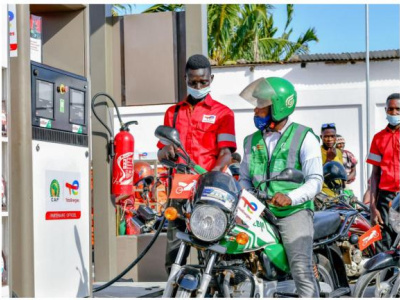
Unlike several of its neighbors, the Togolese government has so far resisted raising pump prices. But that restraint carries a growing fiscal cost. Every week that prices remain fixed at 680 CFA francs per liter for gasoline and 695 for diesel consumes part of the 14.2 billion CFA franc annual allocation. What was designed as a temporary consumer support mechanism is gradually becoming a structural budget burden.
If the Gulf conflict drags on, the fiscal room available for social spending, infrastructure investment and domestic debt servicing will narrow further.
The real question is therefore no longer whether prices will rise, but how the government manages the adjustment when it comes. It could use the moment to reform its subsidy policy more fundamentally, targeting support more narrowly toward vulnerable households, as the IMF recommends. Or it could simply pass the costs on to consumers, as neighboring countries have done.
The real test will not be at the pump. It will be at the dinner table.
Fiacre E. Kakpo