African Statisticians Gather in Lomé for 2030 Population Census Cycle Workshop
 Wednesday, 17 June 2026 14:16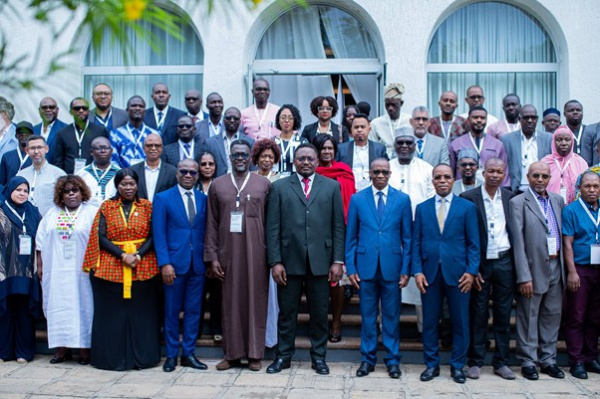
(Togo First) - Census directors, statisticians and experts from French-speaking and Portuguese-speaking African countries are meeting in Lomé through June 17, 2026, for a workshop focused on the 2030 Population and Housing Census Cycle. Over five days, participants are examining international standards, technological innovations and best practices that will shape preparations for the next phase of the global census program.
Discussions are centered on the digitalization of data collection, the use of big data, georeferencing, personal data protection and capacity building for national statistical institutes. The objective is to help participating countries produce demographic data that are more reliable, timely and detailed, providing stronger evidence for policymaking and public planning.
At the conclusion of the meeting, organized by the United Nations Population Fund (UNFPA) and the National Institute of Statistics and Economic and Demographic Studies (INSEED), each delegation is expected to leave with updated methodological guidance and a shared understanding of the implementation requirements of the 2030 Census Cycle.
Coordinated by the United Nations, the 2030 Population and Housing Census Cycle encourages all countries to conduct at least one national census between 2025 and 2034.
The initiative follows previous census cycles carried out during the 1980s, 1990s, 2000s and 2020s. For Togo, participation in the program has significant strategic value. Population census data provide public authorities with up-to-date information that is essential for planning infrastructure, social services and development policies.
The data also help guide investment decisions in key sectors, including education, health, water, energy and transportation. As part of this effort, the country conducted its fifth Population and Housing Census (RGPH-5) in 2022. The census strengthened the national statistical system and generated baseline data to support public policy planning and implementation, as well as the country's economic and social development strategies.
Esaïe Edoh