“Professionalizing Public Procurement Is the Most Important Reform for Strengthening Integrity,” Adu-Gyamfi Abunyewa, World Bank Group
 Wednesday, 24 June 2026 16:35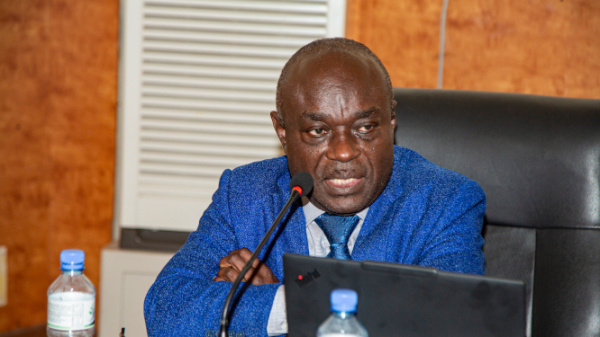
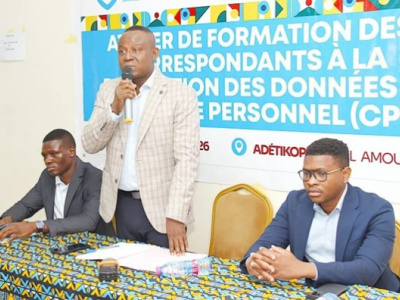
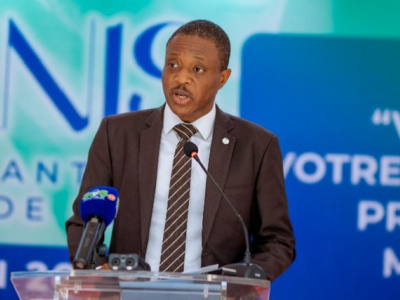
(Togo First) - As Togo accelerates public investment to support its economic transformation, questions of governance, transparency, and the effectiveness of public spending are becoming increasingly important. On the sidelines of a public procurement workshop held earlier this week, Adu-Gyamfi Abunyewa, Sector Procurement Manager for West Africa at the World Bank Group, discusses the key governance risks associated with development financing, the evolving nature of corruption in the region, and the reforms needed to improve the delivery and integrity of public projects.
TF: Togo is accelerating public investment to support its development agenda. What are the main governance and fiduciary management challenges that typically accompany this trend?
Adu-Gyamfi Abunyewa: Accelerating development creates many opportunities, but it also comes with risks. The first challenge is technical capacity. When a country lacks enough qualified professionals to prepare bidding documents or manage procurement processes, significant risks emerge from the outset.
The second issue is planning. Before launching an infrastructure project, it is essential to conduct robust studies, understand market conditions, and ensure that companies have the necessary capabilities. Many projects run into difficulties because of inadequate preparation.
Awarding a contract is not enough. Authorities must monitor implementation, manage risks, and ensure that contractual commitments are fulfilled.
Governance and accountability are also critical. When oversight mechanisms are weak, corruption risks increase and the quality of infrastructure may suffer. Finally, contract management is crucial. Awarding a contract is not enough. Authorities must monitor implementation, manage risks, and ensure that contractual commitments are fulfilled.
TF: Has Togo taken steps to address these challenges?
Adu-Gyamfi Abunyewa: Yes. First, I would like to commend the Togolese government for its efforts. There have been several positive developments. First, the government has strengthened oversight and regulatory institutions. Organizations such as the Public Procurement Regulatory Authority (ARCOP, formerly ARMP) now have a clear mandate, monitoring mechanisms, and appeals procedures.
Second, the government is investing in the professionalization of public procurement practitioners through training programs, ethical standards, and technical support. Finally, the development of an electronic procurement system represents a major step forward. Digitalization reduces direct interactions, improves traceability, and facilitates oversight and audits.
TF: Have you observed changes in fraud and corruption risks in development projects across West Africa?
Adu-Gyamfi Abunyewa: Corruption exists everywhere in the world. What is changing today is its level of sophistication. One of the main risks is collusion among bidders or between companies and individuals involved in the procurement process. These practices can be difficult to detect.
Finally, the contract implementation phase remains particularly vulnerable. Even when the contract award process has been conducted properly, some contractors may be tempted to reduce the quality of work in order to increase their profit margins.
We also see cases where technical specifications are manipulated to favor a particular bidder. This is a major concern. Attempts to interfere with procurement processes remain common, especially for high-value contracts.
Finally, the contract implementation phase remains particularly vulnerable. Even when the contract award process has been conducted properly, some contractors may be tempted to reduce the quality of work in order to increase their profit margins.
TF: Procurement procedures are often perceived as lengthy and complex. How can the right balance be found between oversight and timely execution?
Adu-Gyamfi Abunyewa: Compliance is not an end in itself. The ultimate goal is to deliver real benefits for citizens. Procedures are necessary to protect public resources and reduce fraud risks. However, they must be tailored to the risk profile of each project.
The key lies in thorough preparation, rigorous risk assessment, engagement with the market, and appropriate delegation of authority. Not every procurement decision needs approval at the highest level of government.
TF: Local companies often believe that donor-funded procurement procedures are overly complex. How can their participation be increased?
Adu-Gyamfi Abunyewa: We need to simplify procedures wherever possible, especially for local procurement. Local firms must also gradually strengthen their capabilities. They can begin with smaller contracts or work as subcontractors to gain experience.
Access to financing is another major challenge. Many companies win contracts but lack the resources needed to begin implementation. Finally, continuous training remains essential. Building skills is critical if local firms are to participate in larger and more complex projects.
TF: In a context of growing budget constraints, how does the World Bank Group assess value for money in the projects it finances?
Adu-Gyamfi Abunyewa: Value for money is at the core of our approach. For a long time, public procurement was associated with securing the lowest price. However, the lowest bid does not always provide the best solution. We assess the quality of proposals, the technical and financial capacity of firms, and the total lifecycle cost of an asset.
An infrastructure project that is more expensive upfront may prove more economical in the long run if it requires less maintenance and offers greater durability. We also consider implementation timelines, risk management, and contractors’ past performance.
TF: If you had to identify one priority reform to strengthen the integrity of development projects in West Africa, what would it be?
Adu-Gyamfi Abunyewa: The professionalization of public procurement. In many countries, public procurement officers do not belong to a structured profession with clear qualification requirements, ethical standards, and accountability mechanisms. Like certified public accountants, procurement professionals should be subject to ethical rules, competency requirements, and certification systems.
An infrastructure project that is more expensive upfront may prove more economical in the long run if it requires less maintenance and offers greater durability. We also consider implementation timelines, risk management, and contractors’ past performance.
When people know they can lose their certification for misconduct, they are more likely to follow the rules. This is probably the single most important reform for achieving lasting improvements in public procurement governance.
TF: Has the Program-for-Results (PforR) been implemented in Togo, and what lessons can be drawn from its application?
Adu-Gyamfi Abunyewa: The main lesson is that results-based financing through the Program-for-Results enables the World Bank Group to work with governments to strengthen national systems in a sustainable way.
As projects are implemented, we identify challenges and raise them with government authorities so they can be addressed not only within the project itself, but across the wider public sector. One of the key challenges we have observed relates to institutional capacity. PforR helps support capacity-building efforts within government institutions.
We also review the legal and regulatory framework. When provisions require improvement, the mechanism creates an opportunity for dialogue with the government and supports reforms that strengthen national systems.
Administrative procedures and decision-making mechanisms are also analyzed. The lessons learned are then used to formulate recommendations aimed at improving public administration. The program also helps identify institutional gaps. For example, an electronic procurement system did not previously exist. Through PforR, its development is now underway.
Likewise, monitoring and evaluation systems are gradually being established to help the government better track its actions, measure results, and assess their impact on citizens. All of these improvements are progressively identified and implemented as the program advances.
Interview by S. A