World Bank Calls for Stronger Financial Oversight in Togo's Development Projects
 Tuesday, 16 June 2026 09:03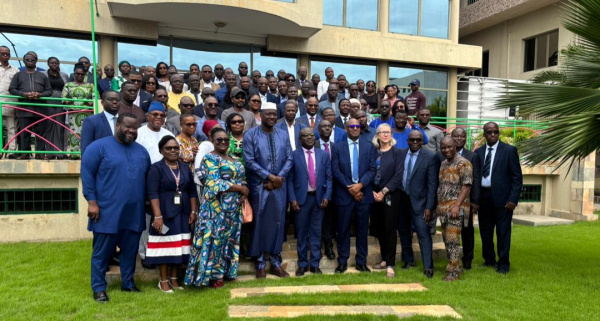
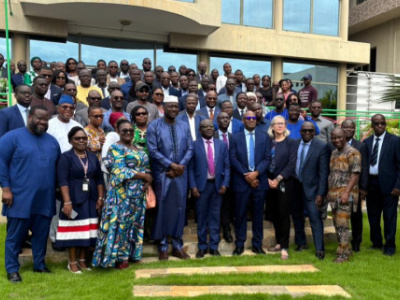
(Togo First) - Governance, integrity and sound management of public resources were at the center of a capacity-building session that opened in Lomé for stakeholders involved in implementing projects financed by the World Bank Group. Bringing together project implementation units, oversight bodies and regulators, and several public-sector partners, the meeting focused on fraud and corruption risks, prevention mechanisms and the importance of accountability in the use of development financing.
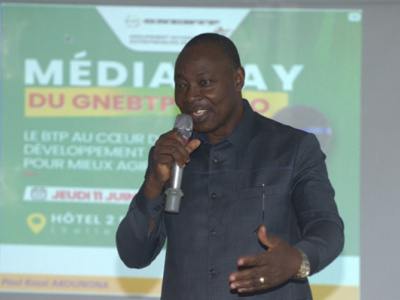
Opening the session, Adu-Gyamfi Abunyewa said public procurement was not merely an administrative formality but a strategic tool for development.
“When public procurement functions properly, projects deliver tangible results. Roads connect communities, schools educate children and hospitals save lives,” he told representatives of oversight bodies and project implementation teams.
Governance, a condition for the impact of financing
The World Bank official said every failure in integrity translates directly into a loss of impact for beneficiary populations.
Contracts awarded without genuine competition, poor-quality work, project implementation delays, unjustified cost overruns and inefficient use of public resources are among the situations that undermine the effectiveness of development investments.
“These are not simply technical failures. They are accountability failures that have a direct impact on citizens,” he said.
For the World Bank, the issue extends beyond strict compliance with procedures. It concerns confidence in public institutions and the ability of governments to turn development financing into tangible services for citizens.
A zero-tolerance policy on fraud and corruption
The session also served as a reminder of the World Bank’s zero-tolerance policy on fraud and corruption.
According to data presented by the institution’s Integrity Vice Presidency (INT), nearly 89% of irregularities detected in World Bank-financed projects occur during the procurement phase. The remaining cases mainly involve financial management, contract management and, to a lesser extent, project design.
Each year, hundreds of companies worldwide are sanctioned or debarred following investigations conducted by the World Bank’s specialized services.
The most frequently observed fraudulent schemes include the fabrication of false delivery documents, overbilling and artificial price inflation, reimbursement claims for ineligible expenditures, unauthorized salary adjustments, and accounting and financial manipulation.
Warning signs to monitor
A large portion of the discussions was devoted to identifying warning signs that may indicate fraud risks or weak governance.
Among the main indicators highlighted were the absence of segregation between authorization, recording and payment functions, excessive concentration of decision-making powers, the lack of a functional internal audit system, financial reports that are consistently incomplete or submitted late, unjustified resistance to inspections and audits, and frequent, unexplained turnover among financial management staff.
Warning signs in financial management include accounting entries lacking supporting documentation, irregular bank reconciliations, the use of designated accounts for unintended purposes, or significant discrepancies between disbursed amounts and expenditures that have actually been justified.
According to the experts, such anomalies do not necessarily constitute proof of fraud, but they require heightened vigilance.
“A warning sign is not an accusation. It is an indicator that calls for further verification,” the speakers told participants.
Traceability of funds at the center of concerns
One of the strongest messages from the meeting was the need to ensure full traceability of financial resources.
Participants stressed the importance of being able to track every payment from disbursement to the final beneficiary through reliable and verifiable supporting documentation.
This requirement for traceability also extends to complaint management, which must follow a rigorous process that includes receipt, registration, analysis, possible investigation, decision-making, communication and archiving.
The World Bank now considers such traceability to be one of the fundamental pillars of financial accountability and good project governance.
Developing a culture of integrity
Beyond procedures, the meeting highlighted the need to foster a genuine culture of integrity.
For Adu-Gyamfi Abunyewa, the most effective systems do not rely solely on rules or control mechanisms, but on consistent individual behavior.
“Strong systems do not collapse overnight; they deteriorate gradually when integrity is compromised, decision after decision,” he warned.
By contrast, strong institutions are built through a succession of responsible decisions taken every day by project managers, auditors, procurement specialists and supervisory authorities.
Removing obstacles to reporting
The discussions also highlighted barriers that continue to limit the reporting of irregularities.
Among them are limited awareness of complaint mechanisms, difficulty identifying warning signs, lack of confidence in the effectiveness of procedures, the perception that past complaints have gone unresolved, fear of retaliation from supervisors or influential actors, and insufficient protection mechanisms for whistleblowers.
For the World Bank, prevention remains the most effective strategy. Awareness-raising, continuous training, transparency and encouragement of reporting are the strongest safeguards against fraudulent practices.
In Lomé, the message delivered to project managers and oversight institutions was unequivocal: financial oversight is not an option but a shared responsibility. The capacity-building session is expected to continue and conclude on Tuesday, June 16, 2026.
S.A