Togo adopts new framework for engineering school EPL
 Thursday, 28 May 2026 10:42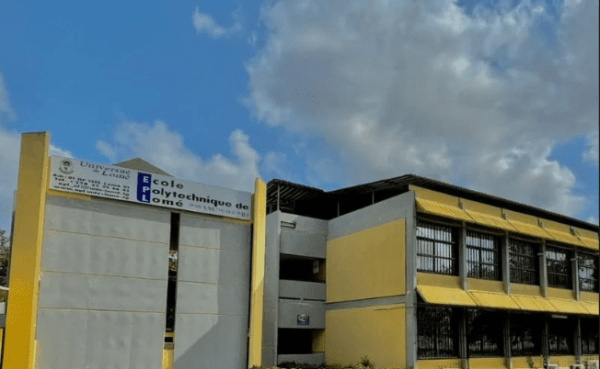
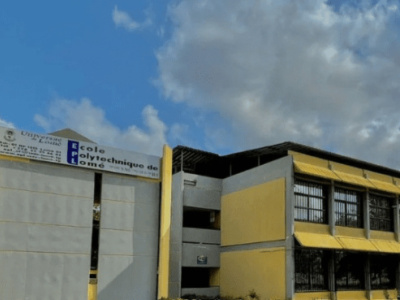
(Togo First) - The Togolese government has issued a decree defining the governance and operational framework of École Polytechnique de Lomé (EPL), reinforcing the institution’s position within the country’s higher education system.
The decree does not create a new institution. Rather, it formalizes the evolution of a school that emerged from the gradual merger of two entities historically responsible for scientific and technological training at the Université de Lomé: the École Nationale Supérieure d’Ingénieurs (ENSI) and the Centre Informatique et de Calcul (CIC).
Before the reform, the EPL already offered programs in civil engineering, computer science, telecommunications, electrical engineering and industrial technologies. The school also took part in several university cooperation and applied research initiatives aimed at addressing the technical needs of the Togolese economy.
Adopted during the Council of Ministers meeting on May 26, 2026, the decree seeks to strengthen the institution’s legal status and expand its capabilities. According to the official communiqué, the government wants the school to become “a leading center for advanced engineering and technology training.”
The restructuring comes as Togo accelerates its industrial and digital transformation agenda. In April 2026, the country launched the STELLA project, backed by 13 billion CFA francs in funding from Luxembourg, to train more than 2,000 engineers between 2026 and 2030 and modernize the EPL’s technical infrastructure.
Authorities also want academic programs to place greater emphasis on laboratory work, internships and partnerships with the private sector, with the objective of narrowing skills shortages in the industrial, energy, mining and digital sectors.
The challenge remains significant. According to the first official registry published by National Order of Engineers of Togo (ONIT), the country has slightly more than 500 licensed engineers, equivalent to fewer than one engineer per 10,000 inhabitants. The registered engineers specialize in fields including civil engineering, electrical and electronic engineering, mechanical and industrial engineering, rural engineering and agronomic engineering.
Ayi Renaud Dossavi